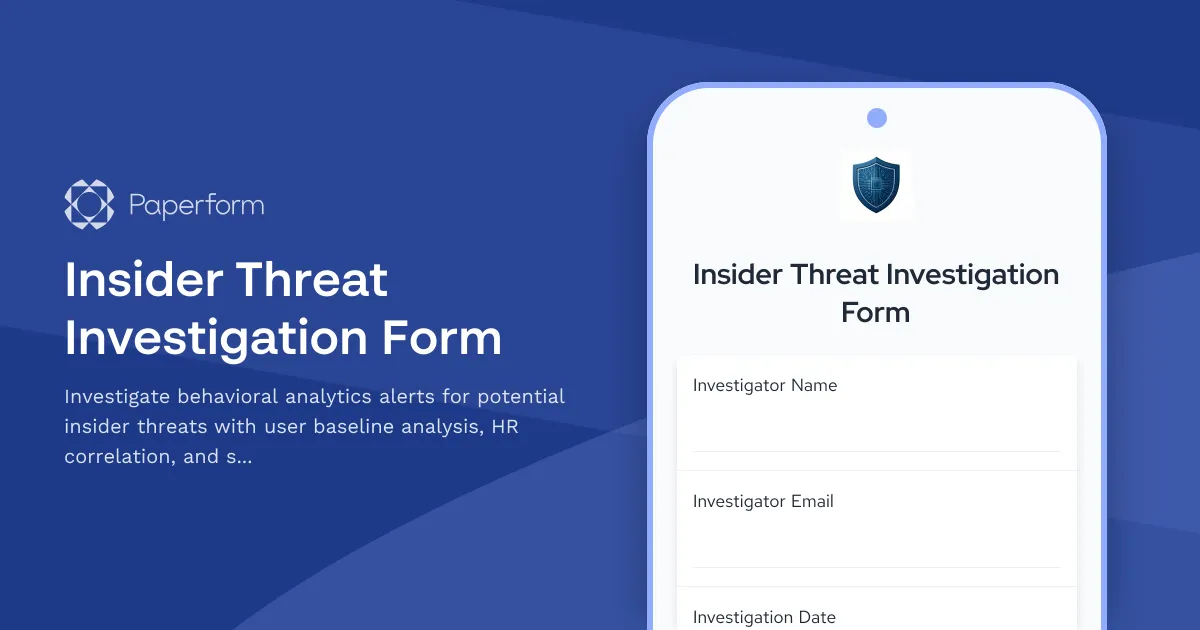
Strengthen Your Insider Threat Program with Intelligent Investigation Forms
Insider threats represent one of the most challenging security risks facing modern organizations. Whether malicious or accidental, threats from within require careful investigation, proper documentation, and coordinated response across security, HR, and management teams. Paperform's Insider Threat Investigation Form Template provides security teams with a structured, compliant approach to documenting behavioral analytics alerts, assessing risk, and making informed escalation decisions.
Why Security Teams Need Purpose-Built Investigation Forms
When your User and Entity Behavior Analytics (UEBA) system flags anomalous activity, speed and thoroughness matter. Traditional investigation methods—spreadsheets, email chains, or disconnected documentation—create gaps in your audit trail and slow down critical response times. This template gives your Security Operations Center (SOC), threat intelligence teams, and incident responders a consistent framework for evaluating alerts, correlating with HR data, and determining appropriate next steps.
Built specifically for IT security professionals, Chief Information Security Officers (CISOs), security analysts, and compliance teams, this form captures everything from initial alert details and baseline deviation metrics to investigator assessments and escalation recommendations—all in one centralized submission.
Key Features for Insider Threat Programs
Comprehensive Alert Documentation: Capture complete details about the behavioral analytics alert including affected user information, alert timestamp, detection system source, and specific behavioral indicators. Document baseline deviations across access patterns, data movement, authentication anomalies, and policy violations with structured fields that support quantitative risk scoring.
HR and Context Correlation: Integrate human context into your technical investigation with dedicated sections for employment status verification, recent HR events (performance reviews, disciplinary actions, termination notices), access level verification, and managerial input. This correlation between technical indicators and workplace context often reveals the true nature of potential threats.
Risk Assessment Framework: Guide investigators through a systematic risk evaluation using severity ratings, potential impact analysis, and likelihood assessments. Conditional logic ensures investigators address all relevant factors before making escalation recommendations, reducing both false positives and missed threats.
Structured Escalation Workflow: Document clear next steps with options for immediate escalation to incident response, HR notification, management review, continued monitoring, or case closure. Each pathway includes specific actions, timelines, and responsible parties, ensuring nothing falls through the cracks.
How Paperform Enhances Security Operations
Paperform brings modern, conversion-optimized design to security workflows. The doc-style editor lets security teams create investigation forms that match your organization's classification levels and branding, while conditional logic routes different alert types through appropriate investigation paths—privilege escalation alerts trigger different questions than data exfiltration warnings.
Seamless Integration with Your Security Stack: Connect investigation submissions directly to your SIEM (Security Information and Event Management), SOAR (Security Orchestration, Automation and Response), ticketing systems like ServiceNow or Jira, and communication tools like Slack or Microsoft Teams. When an investigation requires escalation, Paperform can trigger automated workflows via Stepper (stepper.io)—your AI-native workflow builder—to notify stakeholders, create incident tickets, initiate HR processes, or update case management systems without manual data entry.
For example, when an investigator marks an alert as "High Risk - Immediate Escalation Required," Stepper can automatically create a P1 incident ticket, notify the CISO and HR Business Partner, schedule an urgent review meeting, and lock the affected user account pending investigation—all triggered from the form submission.
AI-Powered Insights for Threat Patterns: Security teams investigating dozens of behavioral alerts can use Paperform's AI Insights feature to analyze submission patterns across time periods, departments, alert types, and outcomes. Identify which behavioral indicators most frequently correlate with confirmed threats, which user groups generate the most false positives, and how your team's investigation times compare across alert severities.
Security, Compliance, and Audit Readiness
Insider threat investigations require rigorous security and compliance controls. Paperform delivers SOC 2 Type II compliance, SSO integration, role-based access controls, and detailed audit logs—essential for organizations in regulated industries or those maintaining frameworks like NIST, ISO 27001, or CIS Controls.
Store investigation records with complete chain-of-custody documentation, ensuring your insider threat program withstands internal audits, regulatory reviews, or legal discovery. Data residency controls let you keep sensitive investigation data in specific geographic regions, while field-level encryption protects personally identifiable information (PII) and sensitive security details.
Perfect for Security-First Organizations
This template serves IT security teams, corporate security programs, government agencies, financial institutions, healthcare IT security, and any organization with mature insider threat programs. Security analysts get consistent investigation procedures, CISOs gain visibility into threat landscapes through centralized reporting, and compliance teams have documented evidence that your organization follows proper investigation protocols.
Whether you're building a new insider threat program or enhancing existing security operations, Paperform gives you the flexibility to customize investigation workflows to your specific detection systems, risk taxonomy, and escalation procedures—all without writing a single line of code.
Get Started in Minutes
Deploy this template immediately or customize fields, conditional logic, and integrations to match your organization's security policies. Train analysts in minutes thanks to Paperform's intuitive interface, and scale across global security operations centers with Enterprise-grade collaboration features.
Protect your organization from insider threats with intelligent investigation workflows. Trusted by over 500,000 teams worldwide and backed by SOC 2 Type II certification, Paperform helps security teams move faster, investigate smarter, and maintain the documentation standards that auditors and regulators demand.


More templates like this
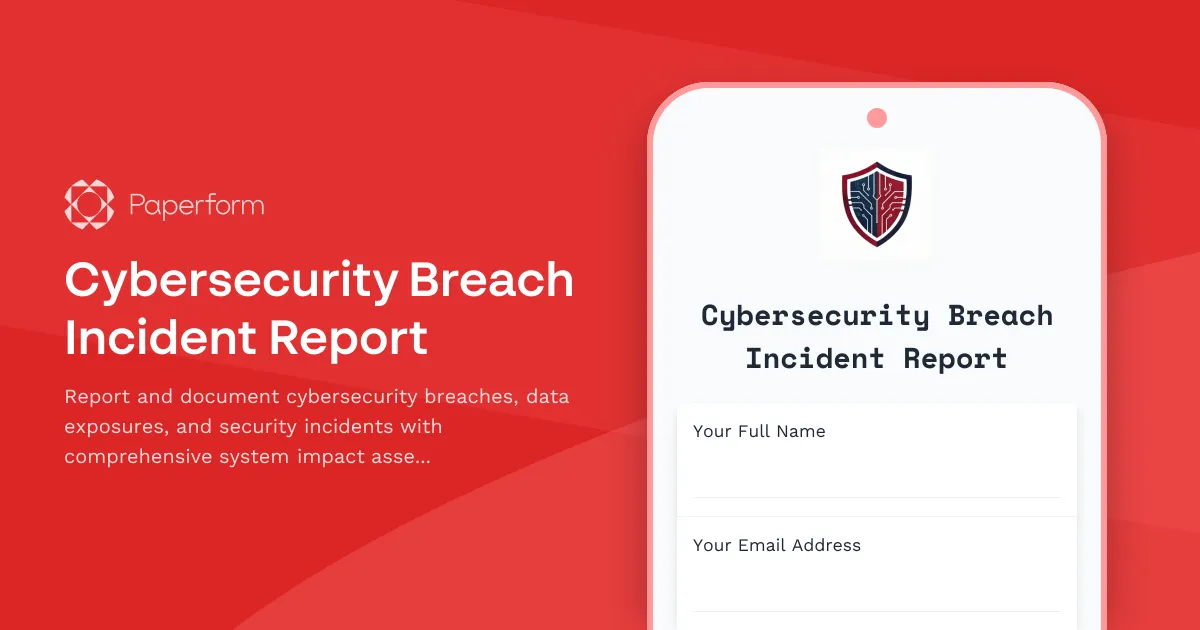
Cybersecurity Breach Incident Report
Report and document cybersecurity breaches, data exposures, and security incidents with comprehensive system impact assessment and executive notification workflow.
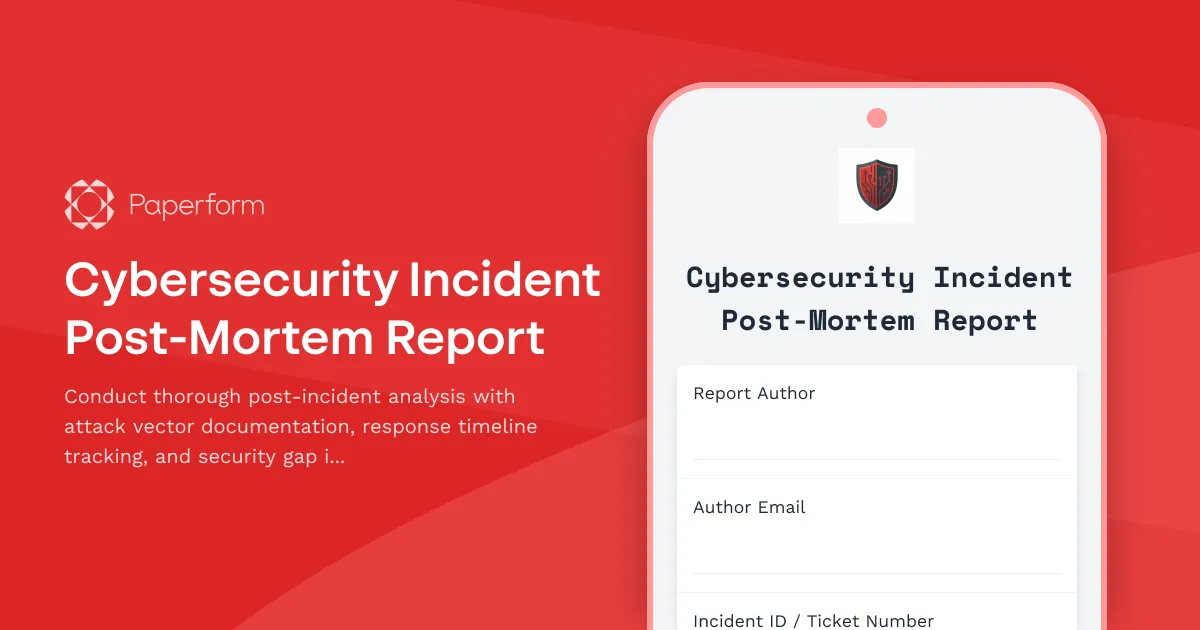
Cybersecurity Incident Post-Mortem Report
Conduct thorough post-incident analysis with attack vector documentation, response timeline tracking, and security gap identification to strengthen your organization's cybersecurity posture.
Data Breach Incident Report Form
Document and manage data breach incidents with comprehensive system impact analysis, user assessment, response tracking, and regulatory notification timelines.
IT Security Architecture Exception Approval Form
Request and approve security architecture exceptions with technical justifications, alternative approaches, risk assessments, and time-bound permissions for IT change management.
IT Security Incident Response Communication Change Request Form
Request changes to security incident response communication protocols, including notification groups, escalation paths, and stakeholder contact information.
Phishing Incident Report Form
Report suspected or confirmed phishing attempts with email header analysis, identify affected users, and enroll staff in security awareness training to prevent future incidents.
Security Control Rationalization Review Form
Streamline your security controls by identifying redundancies, analyzing cost-effectiveness, and managing control retirement approvals through a structured review process.
Catastrophic Data Loss Incident Report
Report critical data loss incidents, activate business continuity protocols, and manage customer notification and regulatory disclosure requirements for corporate emergencies.
Cyber Crisis Communication Drill Evaluation Form
Evaluate crisis communication readiness with media simulation exercises, spokesperson performance reviews, and message consistency checks for cybersecurity incidents.
Cybersecurity Exception Approval Request Form
A comprehensive form for requesting cybersecurity policy exceptions with risk assessment, compensating controls, business justification, and remediation plans requiring CISO authorization.
IT Security Architecture Decision Record (ADR) Change Request
Document security architecture decisions, technical choices, and rationale with structured approval workflows for IT change management and governance.
IT Security Control Testing Scope Modification Change Request
Submit requests to modify security control testing scope, adjust coverage areas, assess risk implications, and reallocate testing resources for cybersecurity programs.