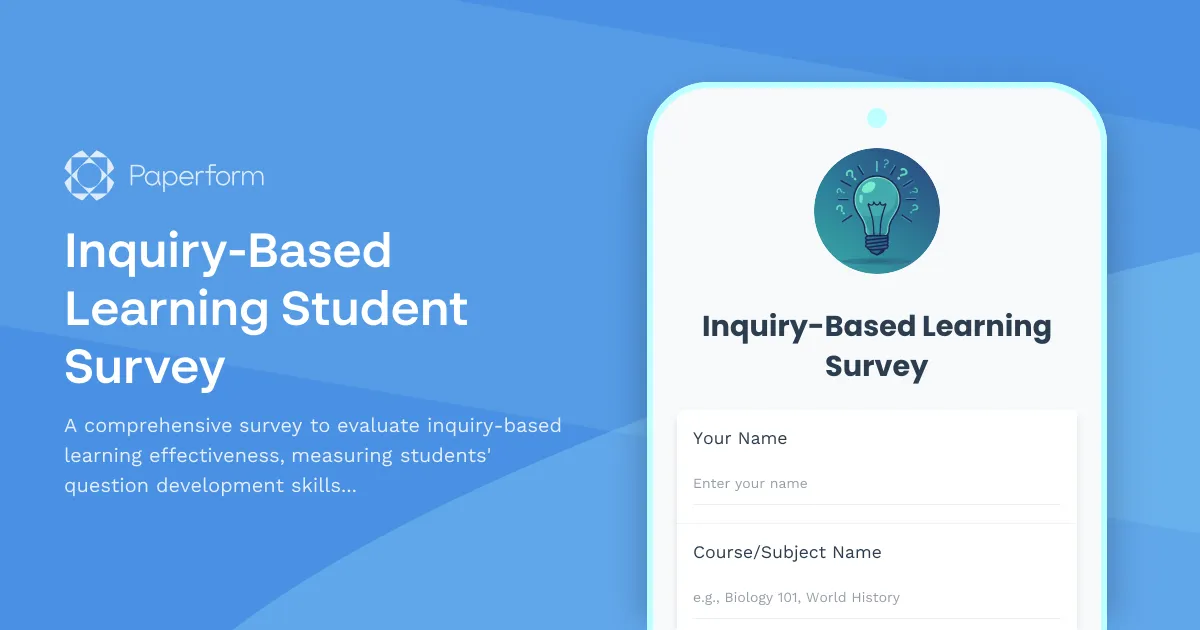
Inquiry-based learning transforms students from passive recipients into active investigators, but measuring its impact requires thoughtful assessment. This Inquiry-Based Learning Student Survey template helps educators, curriculum coordinators, and school administrators gather meaningful feedback on how well inquiry-based approaches are fostering curiosity, critical thinking, and independent investigation skills.
Whether you're a teacher refining your facilitation techniques, a curriculum designer evaluating program effectiveness, or a school administrator assessing pedagogical approaches, this template captures the dimensions that matter most: students' ability to develop meaningful questions, their autonomy in conducting investigations, growth in critical thinking, quality of teacher guidance, and stimulation of genuine curiosity.
The survey is structured to assess both skill development and the learning environment. Questions explore how comfortable students feel asking questions, how independently they can design and conduct investigations, and whether they're developing deeper analytical skills. It also evaluates the teacher's role as a facilitator—whether they provide appropriate scaffolding, encourage exploration, and create a safe space for inquiry.
Built with Paperform, this template makes it simple to collect honest student feedback through an engaging, mobile-friendly survey. Use conditional logic to dive deeper based on responses, and leverage AI Insights to automatically identify themes across dozens or hundreds of student responses—spotting patterns in what's working and where students need more support.
Connect your survey results directly to Google Sheets, Airtable, or your learning management system. Set up automated workflows with Stepper to route feedback to department heads, trigger follow-up discussions, or compile reports for curriculum review meetings. Whether you're implementing inquiry-based learning for the first time or refining an established approach, this survey gives you the student voice data you need to continuously improve.
More templates like this
Classroom Technology Integration Survey
A comprehensive survey to evaluate how students experience technology in the classroom, including interactive tools, digital platforms, online resources, and tech support effectiveness.
College Academic Probation Support Program Feedback Survey
A comprehensive feedback survey designed to evaluate academic probation support programs, including advisor effectiveness, study skills resources, mental health support, and student success outcomes.
College Accelerated Degree Program Student Survey
Gather comprehensive feedback from students enrolled in accelerated degree programs about course intensity, support services, time management, academic quality, and overall satisfaction with their experience.
College Accessibility Services Student Survey
Evaluate your college's accessibility services with this comprehensive student feedback form covering accommodations, staff support, assistive technology, testing arrangements, and advocacy effectiveness.
College Career Services Satisfaction Survey
Evaluate your career services experience including resume assistance, interview prep, job fairs, employer connections, and alumni networking to help improve student outcomes.
College Entrepreneurship Course Evaluation
A comprehensive evaluation form for entrepreneurship course participants to assess course effectiveness, business development skills, pitch presentation capabilities, mentor engagement, and venture launch readiness.

College Peer Review Writing Workshop Evaluation
Evaluate peer review writing workshops with this comprehensive feedback form. Assess feedback quality, revision improvements, critical reading skills, collaborative learning value, and writing confidence development.
Design Thinking Classroom Project Feedback Form
Evaluate student development in design thinking skills including empathy, ideation, prototyping, user feedback integration, and problem-solving confidence through comprehensive project assessment.
Educational Augmented Reality Lesson Feedback Form
Gather student feedback on AR-enhanced lessons to measure technology integration effectiveness, visual engagement, interactivity, technical challenges, and learning outcomes.
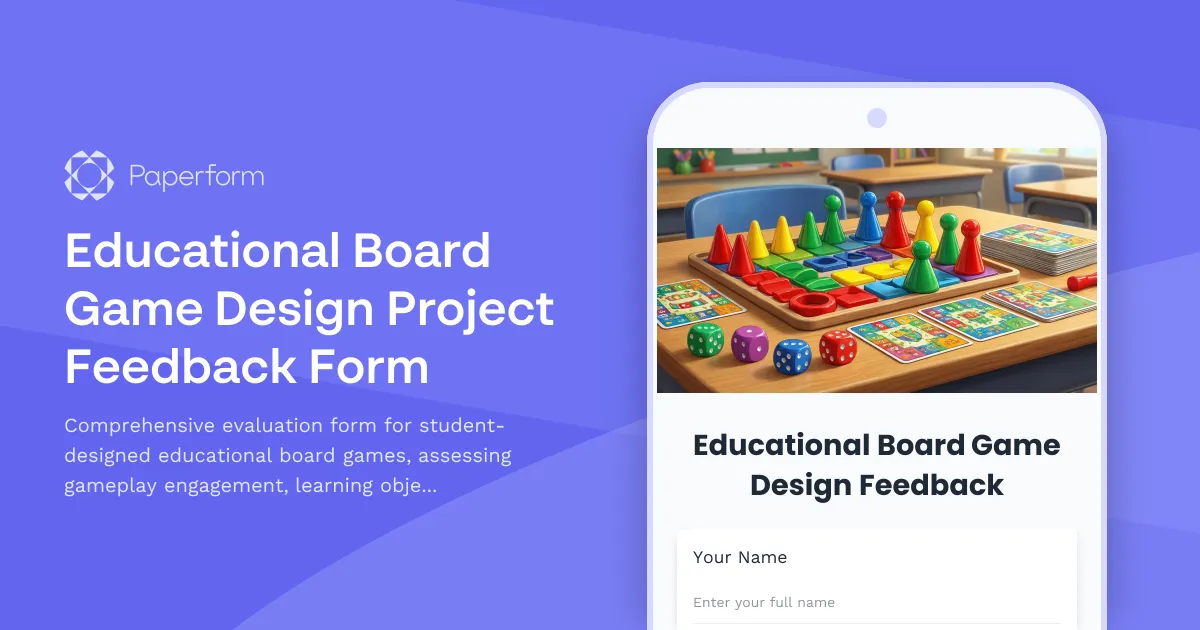
Educational Board Game Design Project Feedback Form
Comprehensive evaluation form for student-designed educational board games, assessing gameplay engagement, learning objectives, rule clarity, creativity, and peer teaching effectiveness.
Educational Game-Based Learning Feedback Form
Gather comprehensive feedback on educational games with questions covering game mechanics, learning outcomes, difficulty progression, engagement levels, and knowledge retention to improve game-based learning experiences.
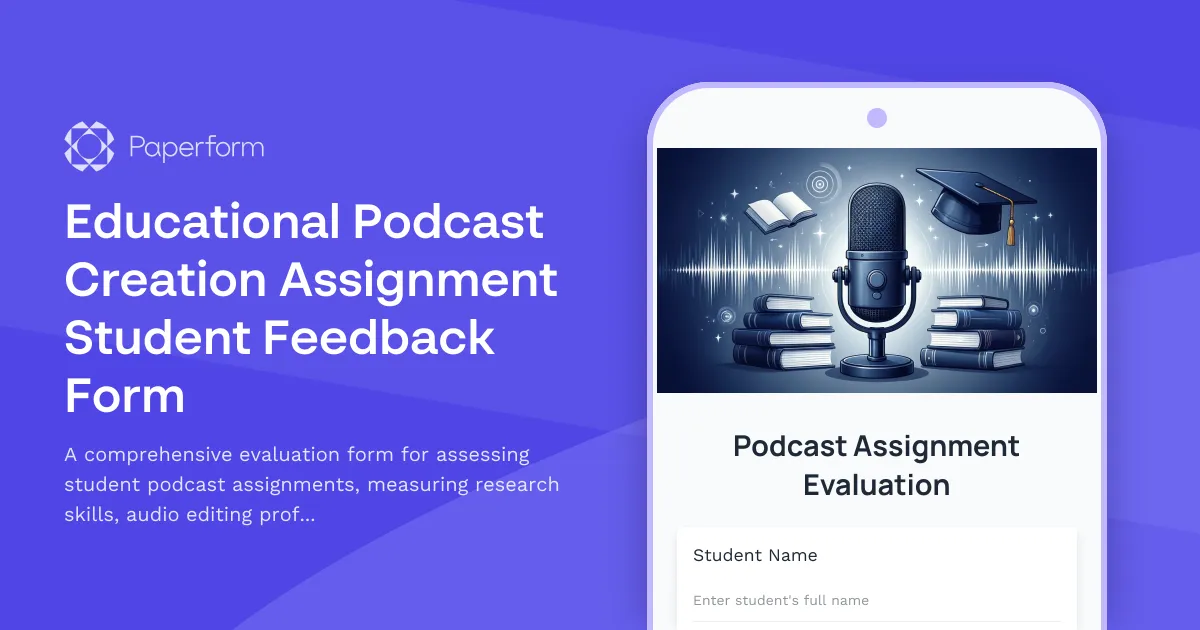
Educational Podcast Creation Assignment Student Feedback Form
A comprehensive evaluation form for assessing student podcast assignments, measuring research skills, audio editing proficiency, storytelling ability, audience awareness, and subject expertise demonstration.