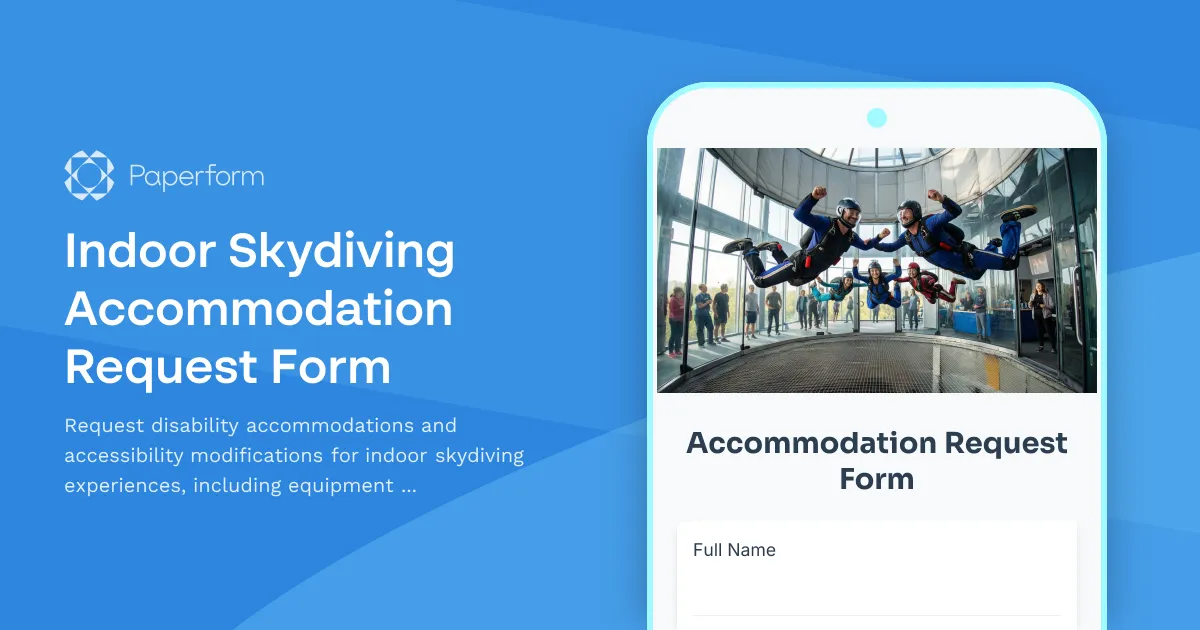
Make Indoor Skydiving Accessible for Everyone
Indoor skydiving is an exhilarating experience that should be available to people of all abilities. Whether you're managing an indoor skydiving facility, adventure tourism business, or recreational venue, providing thoughtful accommodations ensures every guest can safely enjoy the thrill of flight.
This Indoor Skydiving Accommodation Request Form helps you collect detailed information about accessibility needs, enabling your team to prepare appropriate equipment modifications, instruction adaptations, and safety protocols before guests arrive.
Why Accommodation Requests Matter in Adventure Recreation
Adventure and extreme sports venues have a responsibility to make their experiences as inclusive as possible. By proactively gathering accommodation requests, you can:
- Prepare specialized equipment like modified harnesses, communication devices, or mobility aids
- Customize instruction delivery with visual demonstrations, tactile guidance, or written materials
- Adapt safety protocols to ensure all participants receive appropriate briefings and support
- Train staff in advance so they're prepared to provide excellent, inclusive service
- Build trust with guests by showing your commitment to accessibility
For indoor skydiving facilities, accommodations might range from communication adjustments for deaf or hard-of-hearing participants to physical equipment modifications for wheelchair users or those with limb differences.
What This Form Captures
This comprehensive template collects:
- Participant contact information and emergency contacts
- Specific accommodation needs across mobility, sensory, cognitive, and communication categories
- Medical considerations that may affect participation or safety protocols
- Equipment modification requests including harness adjustments, helmet sizes, or assistive devices
- Instruction format preferences such as visual demonstrations, written materials, or one-on-one guidance
- Communication needs including sign language interpretation, alternative formats, or assistive technology
- Previous experience levels to help instructors tailor their approach
- Safety protocol concerns and questions about adapted procedures
How Paperform Elevates Your Accommodation Process
Built specifically for businesses that need flexible, professional forms every day, Paperform makes accommodation requests seamless:
Smart conditional logic shows relevant follow-up questions based on the type of accommodation requested—if someone indicates hearing impairment, the form automatically asks about preferred communication methods and sign language needs.
Beautiful, accessible design ensures the form itself is easy to navigate for people using screen readers, keyboard navigation, or other assistive technologies. Your brand comes through with custom fonts, colors, and imagery while maintaining full accessibility.
Instant notifications alert your operations team the moment an accommodation request is submitted, giving you maximum time to prepare specialized equipment or arrange for additional support staff.
Secure data handling keeps sensitive medical and disability information protected with SOC 2 Type II compliance, ensuring you meet privacy requirements and build guest trust.
Streamline Operations with Stepper Automation
Once an accommodation request comes through, there's often a complex workflow to coordinate. With Stepper (stepper.io), Paperform's AI-native workflow builder, you can automate the entire process:
- Route requests to the right team members based on accommodation type (equipment modifications to gear specialists, instruction needs to training coordinators)
- Create tasks in your project management system for each required preparation step
- Send personalized confirmation emails with details about what accommodations will be provided
- Update your scheduling system to allocate extra time for participants who need adapted instruction
- Generate pre-visit briefing documents customized to each participant's needs
- Log accommodations in your CRM so repeat visitors have consistent experiences
This automation means accommodation requests don't get lost in email chains, and every department knows exactly what to prepare before the participant arrives.
Perfect for Adventure Tourism and Recreation Venues
This form template is ideal for:
- Indoor skydiving facilities offering vertical wind tunnel experiences
- Adventure parks and extreme sports venues like zip lines, climbing gyms, or trampoline parks
- Recreation centers providing accessible adventure activities
- Tourism operators focusing on inclusive adventure experiences
- Event coordinators managing group activities with diverse participants
The indoor skydiving industry, in particular, has made tremendous strides in accessibility. From adaptive instruction techniques to specialized equipment, facilities worldwide are proving that the joy of flight can be experienced by people with a wide range of abilities.
Building an Inclusive Adventure Culture
Using a structured accommodation request form sends a powerful message: your facility is serious about inclusion. It demonstrates that you've thought through the barriers participants might face and you're committed to removing them.
Rather than putting the burden on guests to explain their needs repeatedly or hope staff will understand, you're taking the initiative to ask the right questions upfront. This proactive approach reduces anxiety for participants and ensures your team has time to provide truly excellent, adapted experiences.
Get Started with This Template
This form is ready to customize for your specific facility and offerings. Add your venue's logo, adjust the equipment modification options to match your gear, include facility-specific safety protocols, and embed it directly on your booking page or send it as a follow-up after initial reservation.
With Paperform's doc-style editor, you can easily adapt questions, add images of your facility or equipment, and create a welcoming tone that reflects your brand's commitment to accessibility.
Make indoor skydiving—and adventure recreation—accessible for everyone. Start with this professional accommodation request form and build a reputation as a truly inclusive facility where every person can experience the thrill of flight.
More templates like this
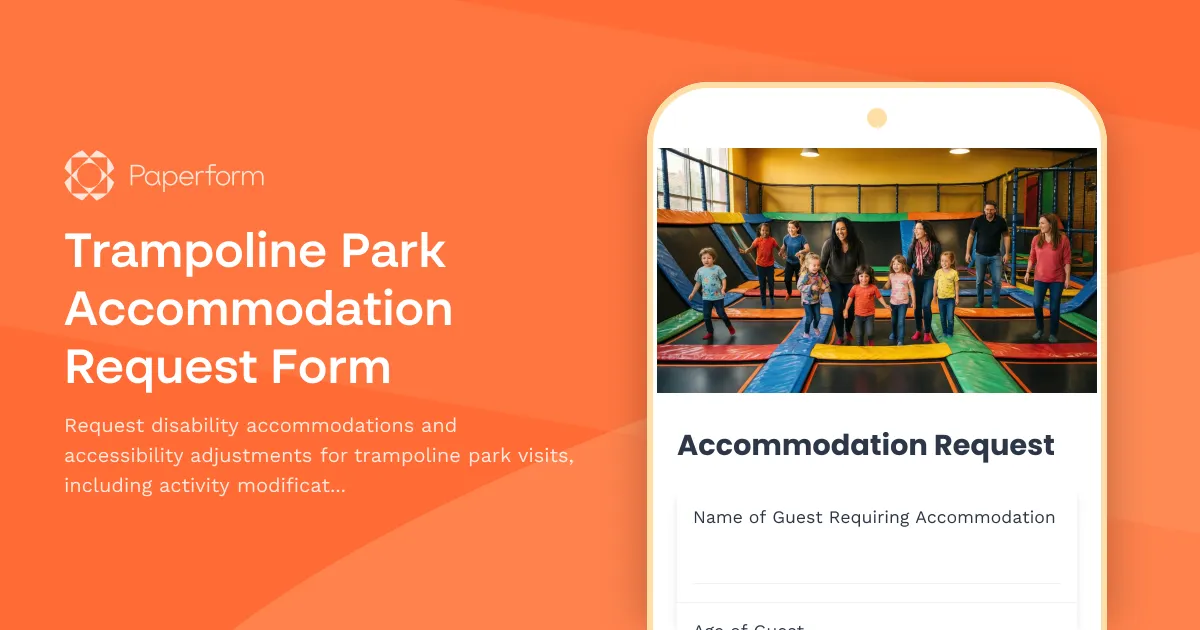
Trampoline Park Accommodation Request Form
Request disability accommodations and accessibility adjustments for trampoline park visits, including activity modifications, sensory environment support, and safety equipment adaptations.
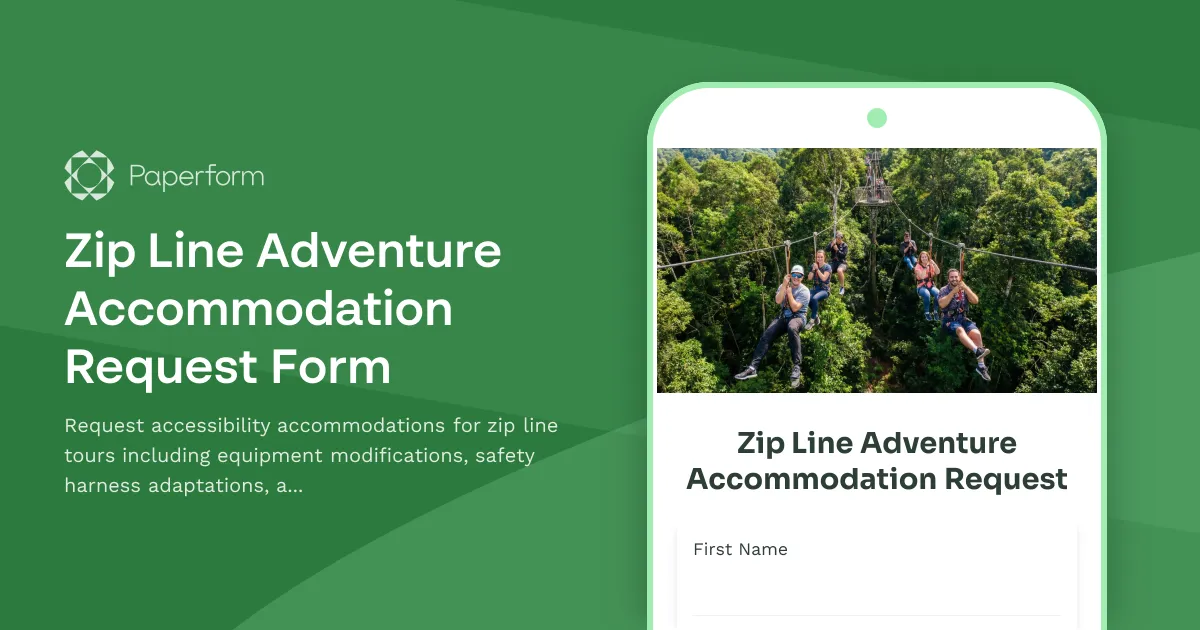
Zip Line Adventure Accommodation Request Form
Request accessibility accommodations for zip line tours including equipment modifications, safety harness adaptations, and experience pace adjustments to ensure all guests can enjoy the adventure safely.
Axe Throwing Facility Accommodation Request Form
Request disability and accessibility accommodations for axe throwing activities, including throwing line modifications, equipment adaptations, and alternative safety instruction formats.
Skiing & Snowboarding Accommodation Request Form
Request adaptive equipment, lesson modifications, and lift accessibility support for an inclusive skiing or snowboarding experience at your resort.
VR Arcade Accessibility Accommodation Request
Request accessibility accommodations for VR experiences including equipment modifications, intensity adjustments, and motion sensitivity options at your virtual reality arcade.
Aquarium Accessibility Feedback Form
Collect visitor feedback on accessibility barriers and improvements for sensory, mobility, and cognitive needs throughout your aquarium's exhibits, pathways, and programs.
Falconry Experience Accommodation Request Form
Request accessibility accommodations for falconry experiences, including equipment modifications, instruction format alternatives, and bird handling adaptations to ensure an inclusive and safe experience for all participants.
Hot Air Balloon Ride Accommodation Request Form
A comprehensive accommodation request form for hot air balloon rides, designed to ensure passengers with disabilities or accessibility needs receive appropriate support, safety equipment modifications, and briefing adaptations.
Kayaking Tour Accommodation Request Form
Professional accommodation request form for kayaking tours, capturing accessibility needs for equipment modifications, launch assistance, and safety briefing adaptations to ensure all participants can enjoy the experience safely.
Kite Flying Lesson Accommodation Request Form
Request accessibility accommodations for kite flying lessons, including equipment modifications, instruction format alternatives, and field accessibility support to ensure an inclusive experience for all participants.
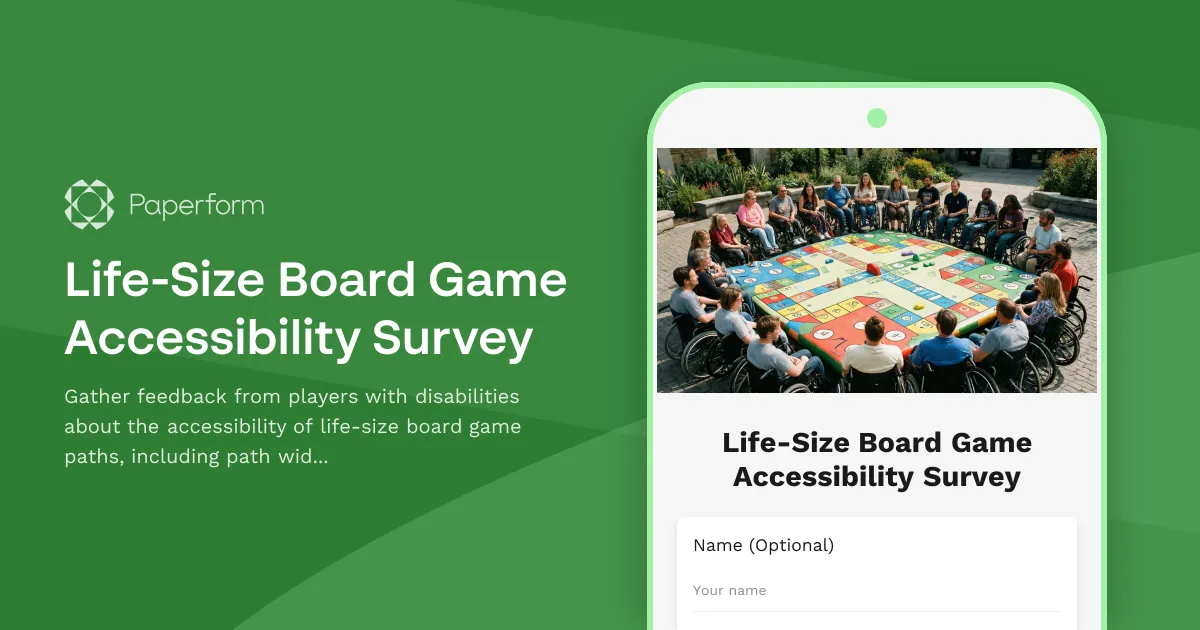
Life-Size Board Game Accessibility Survey
Gather feedback from players with disabilities about the accessibility of life-size board game paths, including path width, movement methods, and game card access.
Wine Tasting Room Accommodation Request Form
A comprehensive form for requesting accessibility accommodations at wine tasting venues, including seating, tasting format modifications, and sensory environment adjustments.