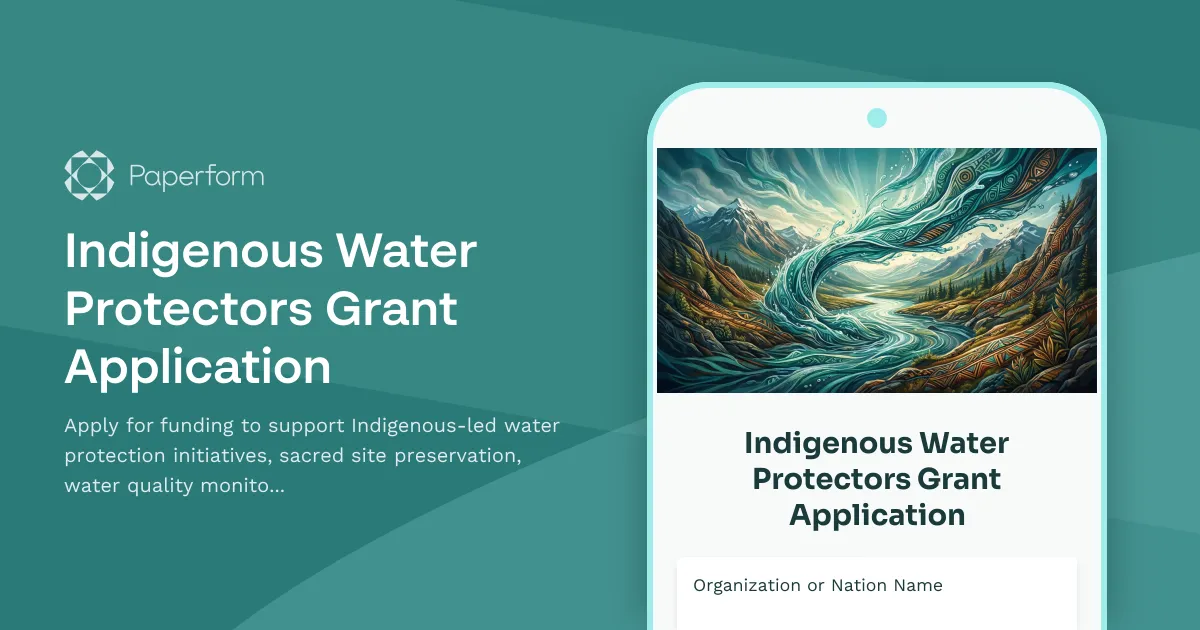
Indigenous Water Protectors Grant Application: Funding the Fight for Clean Water and Sacred Lands
Water is life. For Indigenous communities across the world, this isn't just a slogan—it's a fundamental truth that has guided stewardship of land and waterways for thousands of years. When pipelines threaten sacred sites, when extraction projects contaminate drinking water, and when legal battles drain community resources, Indigenous water protectors need dedicated support to continue their vital work.
Our Indigenous Water Protectors Grant Application template makes it simple to apply for funding that supports pipeline resistance, sacred site protection, water quality monitoring, and legal defense coordination. Whether you're a tribal nation, Indigenous-led nonprofit, grassroots water protection collective, or community organizer, this comprehensive application helps you articulate your mission, demonstrate your impact, and secure the resources needed to protect water for future generations.
Why Indigenous Water Protection Needs Dedicated Funding
Indigenous communities are on the frontlines of environmental justice, facing disproportionate impacts from extractive industries, pipeline projects, and industrial pollution. From Standing Rock to Wet'suwet'en, from the Amazon to the Arctic, Indigenous water protectors are defending sacred sites, monitoring water quality, organizing resistance, and pursuing legal action—often with limited resources and against well-funded corporate opponents.
Grant funding specifically designed for Indigenous water protection initiatives recognizes this unique intersection of environmental justice, cultural preservation, and Indigenous sovereignty. It provides critical support for:
- Pipeline resistance and advocacy that prevents contamination before it happens
- Sacred site protection that honors cultural and spiritual connections to water
- Community-led water quality monitoring that provides scientific evidence of harm
- Legal defense coordination that challenges permits and holds polluters accountable
- Youth education and leadership development that ensures intergenerational protection
This grant application template is designed to capture the full scope of water protection work while respecting Indigenous knowledge systems, sovereignty, and community-led decision-making processes.
Built for Indigenous Organizations and Water Protection Collectives
This form template serves a diverse range of Indigenous water protection initiatives:
- Tribal nations and First Nations seeking funding for environmental monitoring programs
- Indigenous-led nonprofits coordinating legal challenges to pipeline projects
- Grassroots water protection camps needing support for direct action and site protection
- Native youth organizations building the next generation of water protectors
- Intertribal coalitions organizing regional resistance to extraction projects
- Indigenous environmental justice networks documenting water quality impacts
- Traditional knowledge keepers preserving and sharing sacred site information
The application accommodates projects at various scales—from small community monitoring initiatives to large-scale legal defense funds—and recognizes the unique governance structures and decision-making processes of Indigenous communities.
Comprehensive Application Sections That Tell Your Story
The form walks applicants through essential sections that funders need to evaluate impact while honoring Indigenous perspectives:
Organization and Community Information establishes your connection to the land and water you're protecting, your governance structure, and your community's relationship to the threatened waterways or sacred sites.
Project Description allows you to articulate your water protection goals, whether you're monitoring water quality downstream from proposed pipeline routes, organizing resistance to permit approvals, protecting ceremonial sites, or coordinating legal defense strategies.
Pipeline Resistance and Sacred Site Protection Details capture the specific threats your community faces, the corporations or projects you're challenging, and the cultural and environmental significance of the sites you're defending.
Water Quality Monitoring Plans document your scientific approach, equipment needs, testing protocols, and how traditional ecological knowledge informs your monitoring work.
Legal Defense Coordination outlines pending or planned litigation, legal partnerships, and how grant funds will support tribal attorneys, expert witnesses, or coalition legal strategies.
Budget and Resource Allocation provides transparency about how funds will be used, from testing equipment to legal fees to community meeting expenses, ensuring accountability to funders and communities.
Impact Measurement describes both quantitative outcomes (acres protected, water samples analyzed, legal victories) and qualitative impacts (community empowerment, cultural preservation, knowledge transmission).
Why Paperform is the Right Tool for Grant Applications
Building a professional, accessible grant application form shouldn't require hiring a developer or learning complex software. Paperform's document-style editor makes it simple for nonprofits, tribal governments, and grassroots organizations to create beautiful, functional applications that reflect their values and mission.
The form can be customized with your organization's branding, embedded directly on your website, or shared via a simple link. Conditional logic ensures applicants only see questions relevant to their specific project type, making the process less overwhelming for community-led initiatives that may not have dedicated grant writers.
All submissions are collected in one secure location, making it easy for review committees to evaluate applications, compare projects, and make funding decisions. You can export data to spreadsheets for scoring, integrate with project management tools to track funded initiatives, or connect to email marketing platforms to keep applicants updated throughout the review process.
For organizations managing multiple funding programs, Paperform's Agency+ plan allows you to create separate applications for different grant cycles, geographic regions, or funding priorities while managing everything from one dashboard.
Automate Grant Review and Communication with Stepper
Once applications start coming in, you can use Stepper to automate your grant review workflow without losing the human touch that Indigenous-led work requires. Create workflows that automatically acknowledge receipt of applications, route submissions to review committee members, schedule interviews with shortlisted applicants, and send funding announcements.
Stepper can also help track grant reporting requirements, sending automated reminders to funded projects about upcoming reports, water quality data submissions, or final evaluations. This keeps your organization connected to grantees throughout the funding period and builds the documentation needed to demonstrate impact to your own funders.
Digital Signatures for Grant Agreements with Papersign
After applications are approved, you can use Papersign to turn funding agreements into legally binding contracts with secure eSignatures. Instead of printing, scanning, and mailing grant agreements—a particular burden for remote Indigenous communities—applicants can review and sign their funding agreements digitally, speeding up the process from approval to funds transfer.
Papersign keeps a complete audit trail of who signed what and when, providing the documentation both your organization and grantees need for compliance and reporting purposes.
Designed for Environmental Justice and Indigenous Sovereignty
This template recognizes that Indigenous water protection is inherently about sovereignty, self-determination, and the right to free, prior, and informed consent. The application honors traditional ecological knowledge alongside Western science, acknowledges the spiritual and cultural dimensions of water protection, and centers Indigenous voices and leadership.
Whether your funding supports direct action to block pipeline construction, long-term litigation to defend treaty rights, community science to document contamination, or youth programs to pass on water protection knowledge, this form helps you collect the information needed to evaluate impact while respecting the complexity and interconnectedness of Indigenous environmental justice work.
Join the Movement to Fund Indigenous Water Protection
From the Missouri River to the Amazon Basin, Indigenous water protectors are defending the waterways that sustain all life on Earth. By creating accessible, professional grant applications, you make it easier for these frontline defenders to access the resources they need to continue this sacred work.
Trusted by nonprofit organizations, environmental justice networks, and Indigenous-led initiatives worldwide, Paperform provides the tools to collect applications, manage review processes, and coordinate funding programs—all while maintaining the security, accessibility, and professionalism that applicants and funders expect.
Start with this template and customize it for your specific funding priorities, whether you're focusing on a particular watershed, supporting resistance to a specific project, or building long-term capacity for Indigenous environmental leadership. Water is life—and the tools to protect it should be accessible to everyone defending it.
More templates like this
Reparations Grant Application Form
A comprehensive grant application for reparations programs focused on descendant community research, historical harm documentation, remedy design, and wealth-building initiatives.
Climate Adaptation Grant Application
Apply for climate adaptation funding with comprehensive vulnerability assessment, resilience strategies, stakeholder consultation records, and monitoring framework documentation.
Criminal Justice Reform Grant Application
Apply for criminal justice reform funding to support diversion programs, data collection systems, and racial equity initiatives in your community.
Environmental Conservation Grant Application
Apply for environmental conservation funding with detailed project plans, site mapping, species impact assessment, and community engagement strategy.
Legal Aid Grant Application Form
A comprehensive grant application for legal aid organizations seeking funding to provide access to justice services, including case type analysis, attorney qualifications, and pro bono coordination.
Radical Hospitality Grant Application
Apply for grant funding to support sanctuary space creation, migrant mutual aid programs, deportation defense initiatives, and community protection networks through radical hospitality frameworks.
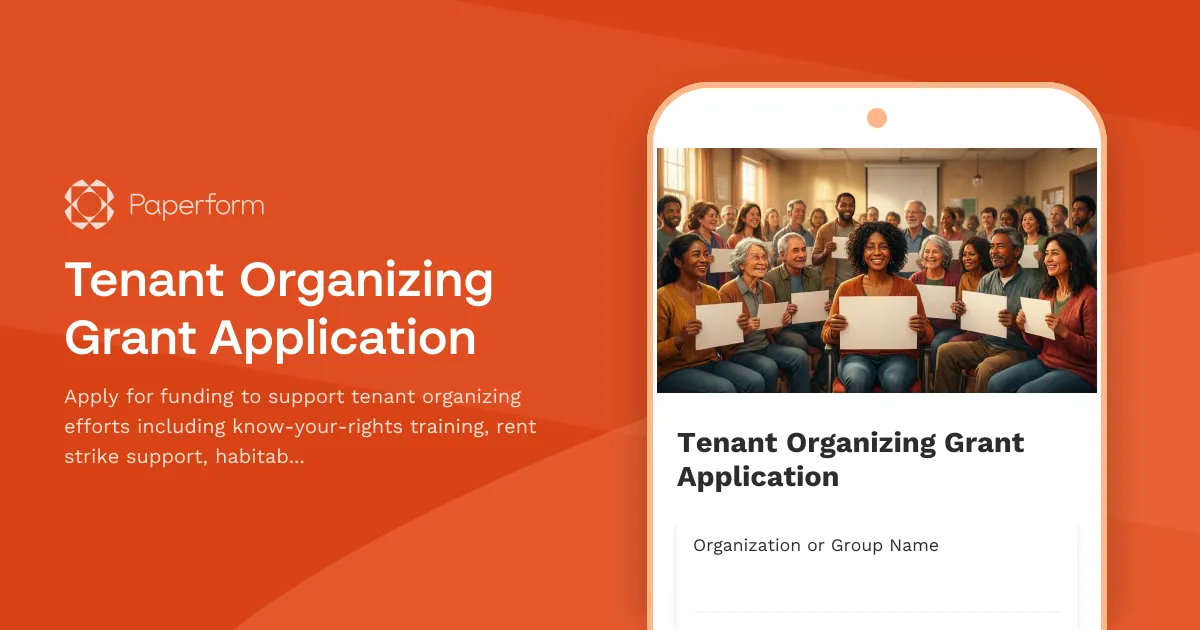
Tenant Organizing Grant Application
Apply for funding to support tenant organizing efforts including know-your-rights training, rent strike support, habitability enforcement, and collective bargaining for better lease terms.
Abolition Education Grant Application
A comprehensive grant application for organizations and educators seeking funding to develop transformative abolition-focused curriculum, youth organizer training programs, political education initiatives, and movement-building capacity.
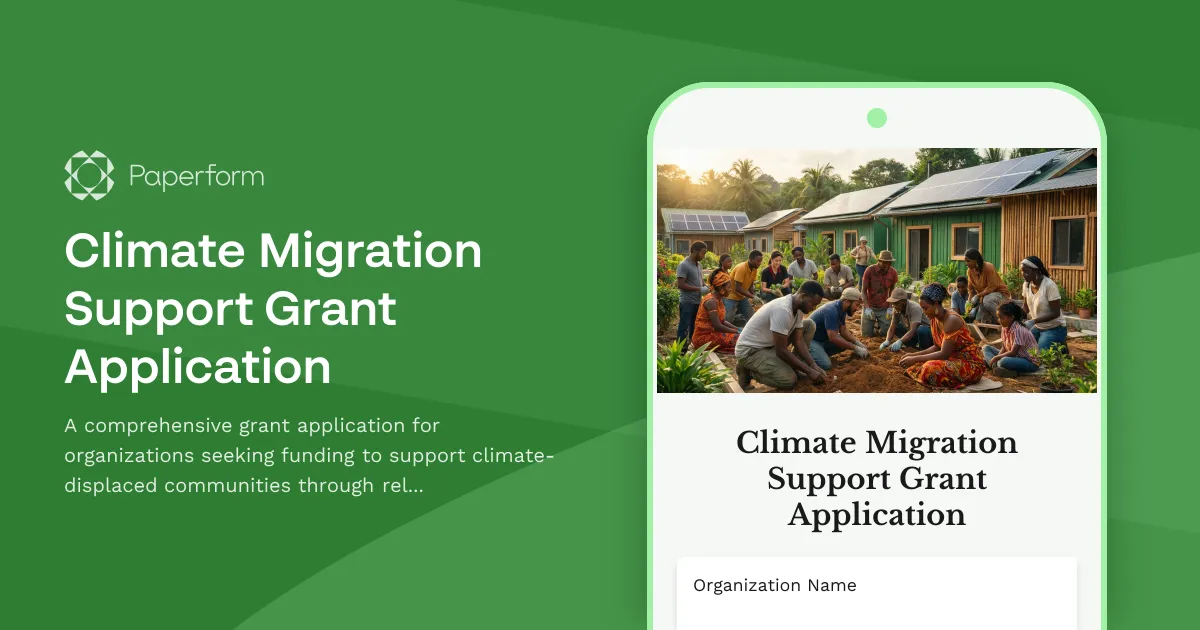
Climate Migration Support Grant Application
A comprehensive grant application for organizations seeking funding to support climate-displaced communities through relocation assistance, cultural preservation, community reception planning, and trauma-informed services.
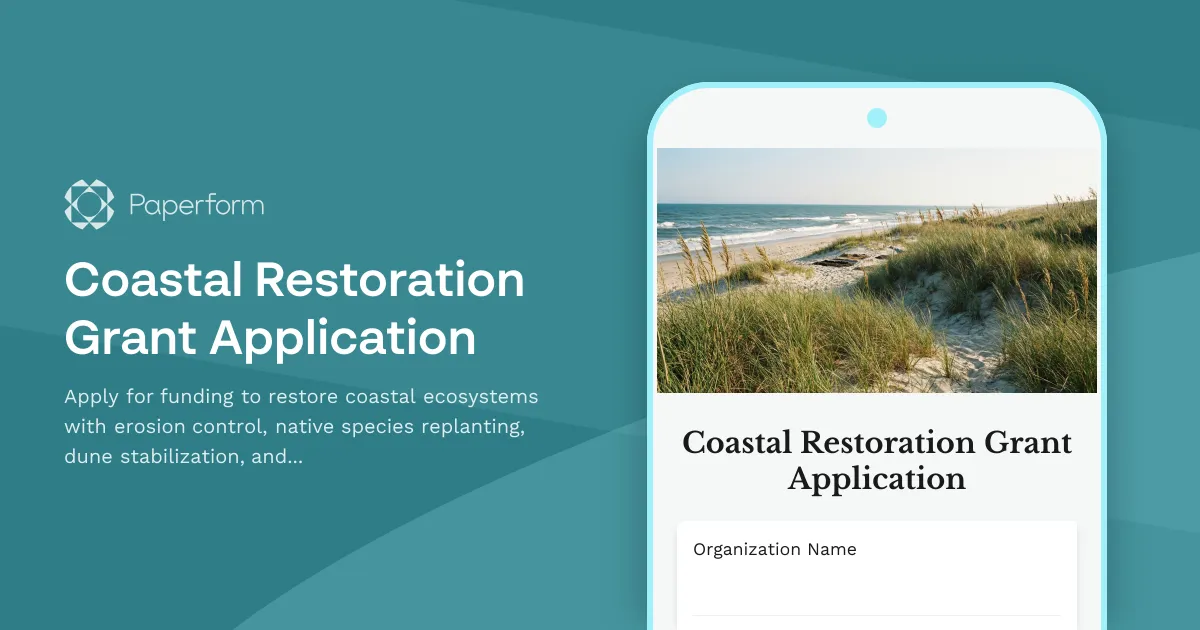
Coastal Restoration Grant Application
Apply for funding to restore coastal ecosystems with erosion control, native species replanting, dune stabilization, and hurricane resilience projects.
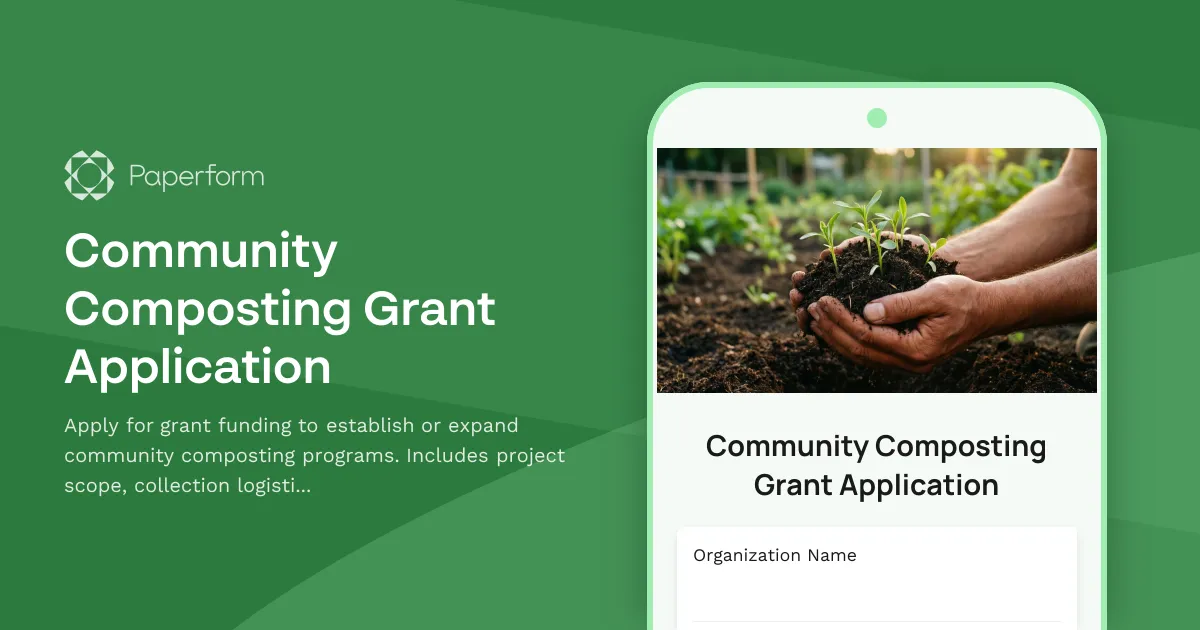
Community Composting Grant Application
Apply for grant funding to establish or expand community composting programs. Includes project scope, collection logistics, composting methodology, distribution plans, and sustainability measures.
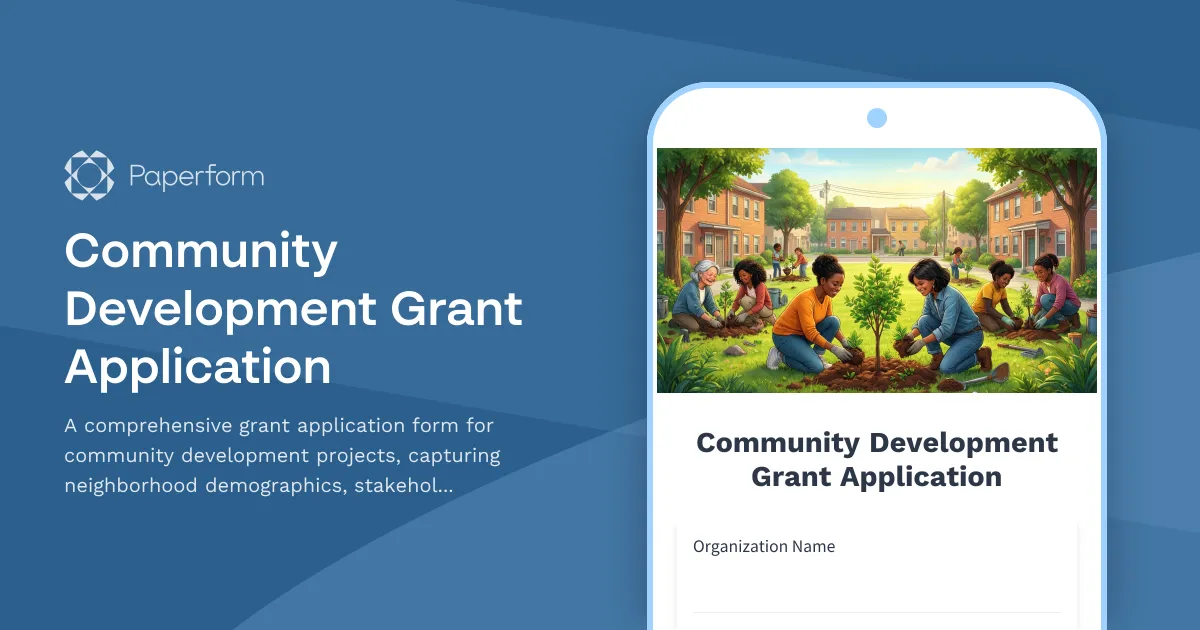
Community Development Grant Application
A comprehensive grant application form for community development projects, capturing neighborhood demographics, stakeholder engagement, impact planning, and partnership documentation.