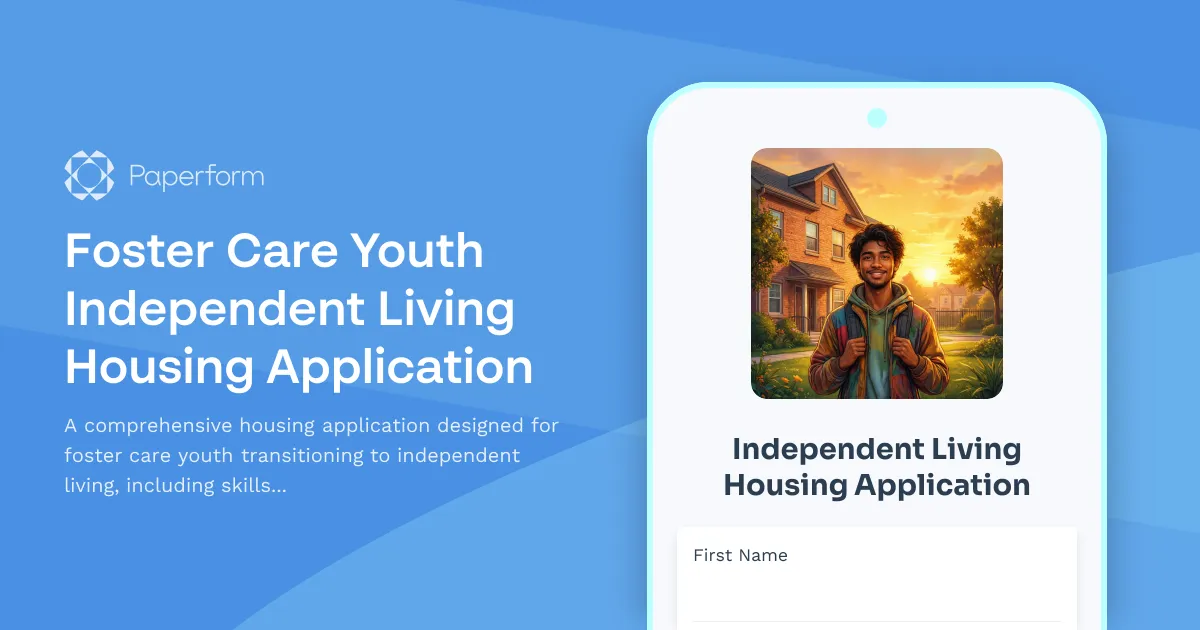
Supporting Foster Care Youth Through Independent Living Transitions
Transitioning from foster care to independent living is one of the most challenging milestones young adults face. This Foster Care Youth Independent Living Housing Application provides a compassionate, comprehensive framework for assessing housing needs, life skills readiness, educational goals, and mentor support—all in one streamlined form.
Why This Template Matters for Youth Services Organizations
For nonprofits, social services agencies, housing authorities, and transitional living programs, this template replaces scattered paperwork with a single, dignified application process. It captures everything needed to match youth with appropriate housing while identifying support needs early, ensuring no young person falls through the cracks during this critical transition.
The form combines traditional housing application elements with specialized assessments for independent living skills, educational voucher eligibility, and mentor matching preferences. This holistic approach recognizes that successful housing placement requires more than just a roof—it requires wraparound support tailored to each youth's unique journey.
Built for the Real Needs of Transitional Age Youth
This template addresses the specific challenges facing foster care youth aging out of the system:
- Housing readiness assessment that respectfully evaluates budgeting, housekeeping, and self-care skills without judgment
- Educational and vocational support sections that connect youth with available vouchers, scholarships, and career training
- Mentor matching to pair young adults with supportive guides who can help navigate independent living
- Emergency contact and support network documentation to identify available resources
- Trauma-informed design with optional questions and supportive language throughout
How Paperform Makes This Process Better
Traditional paper-based foster care housing applications often feel institutional and overwhelming. Paperform transforms this experience into something more welcoming and accessible:
Clean, mobile-friendly design: Many transitional age youth access services primarily through smartphones. This form works beautifully on any device, allowing applicants to complete sections over time without losing progress.
Conditional logic for personalized pathways: The form adapts based on responses—educational support options appear for students, employment sections expand for working youth, and mentor preferences adjust based on stated needs. This means each applicant only sees what's relevant to their situation.
Secure document collection: Youth can upload required documents like identification, social security cards, and educational records directly into the form, eliminating the need for multiple trips to an office or mailing documents that might get lost.
Automated workflows with Stepper: Once submitted, you can use Stepper to automatically notify case managers, create follow-up tasks for skills assessment interviews, trigger mentor matching processes, and update case management systems—ensuring rapid response when housing opportunities become available.
Supporting Multiple Stakeholders in Youth Services
This form serves several important roles in the foster care transition ecosystem:
For social workers and case managers: Gather comprehensive information efficiently while maintaining a warm, supportive tone. The structured format ensures consistency across applications while the independent living skills assessment provides valuable baseline data for support planning.
For housing program coordinators: Quickly evaluate housing readiness and match youth with appropriate placements. The form captures lease understanding, roommate preferences, and accommodation needs that inform placement decisions.
For educational liaisons: Identify youth eligible for educational vouchers (like Education and Training Vouchers) and connect them with academic support resources that can complement their housing stability.
For mentor coordinators: Use detailed matching preferences to pair youth with mentors who share interests, backgrounds, or professional expertise that can guide their independent living journey.
Respectful, Trauma-Informed Application Design
Young adults aging out of foster care have often experienced significant trauma and instability. This template is designed with sensitivity:
- Questions about family background and foster care history are optional and framed supportively
- Language emphasizes strengths and goals rather than deficits
- The skills assessment focuses on learning opportunities, not judgment
- Success message offers encouragement and clear next steps
- Applicants can save progress and return, reducing pressure to complete everything at once
Integration with Youth Services Technology
Paperform connects seamlessly with the tools social services organizations rely on:
- Case management systems: Send application data directly to platforms like Efforts to Outcomes (ETO), Apricot, or ClientTrack
- Housing databases: Update availability in HMIS or coordinated entry systems
- Scholarship platforms: Flag educational voucher eligibility for follow-up
- Communication tools: Automatically send welcome messages via email or text, and notify team members in Slack when urgent applications arrive
Ensuring Privacy and Compliance
Foster care youth applications contain sensitive personal information. Paperform is SOC 2 Type II compliant and GDPR-ready, with data encryption, secure file uploads, and configurable data residency. You can set appropriate access permissions to ensure only authorized staff view applications, and export data securely for record-keeping.
Easy Customization for Your Program's Unique Needs
Every transitional living program has different requirements, eligibility criteria, and support services. This template is fully customizable:
- Add program-specific questions about income limits, geographic restrictions, or special populations served
- Modify the skills assessment to align with your independent living curriculum
- Adjust mentor matching criteria based on your volunteer mentor pool
- Include questions about specific voucher programs or scholarships you administer
- Add your organization's branding, colors, and welcome messaging
Why Social Services Organizations Choose Paperform
Over 500,000 teams worldwide trust Paperform to handle their most important forms and workflows. For youth services organizations, Paperform offers:
- No-code simplicity that empowers social workers and program coordinators to update forms without IT support
- Affordable pricing designed for nonprofits and mission-driven organizations
- Mobile-first experience that meets youth where they are
- Automated follow-up through Stepper integrations that ensure no application is forgotten
- Accessible design that supports diverse literacy levels and abilities
Getting Started with Digital Foster Care Applications
Moving from paper-based or PDF housing applications to Paperform takes just minutes. Import your existing questions, customize the provided template, or build from scratch using the intuitive document-style editor. You can test the form with your team, gather feedback from youth with lived experience, and launch when ready.
For programs serving foster care youth aging out of the system, this template represents more than administrative efficiency—it's about dignity, support, and ensuring every young adult has the foundation they need to thrive independently. When housing applications are clear, respectful, and connected to wraparound services, you create pathways to stability and success.
Start with this template today and create a better transition experience for the young adults your organization serves.



More templates like this
Permanent Supportive Housing Application
A housing-first application for individuals experiencing chronic homelessness to access permanent supportive housing with wrap-around services and no preconditions.
Halfway House Application for Reentry Programs
A comprehensive application form for halfway house placement in reentry programs, collecting applicant information, parole officer details, employment status, and program requirements for successful community reintegration.
Housing Application for Trafficking Survivors
A compassionate, trauma-informed housing application designed specifically for survivors of human trafficking, with built-in safety planning and legal advocacy coordination.
Housing Stability Program Application for Reentry Services
A comprehensive application form for formerly incarcerated individuals seeking housing assistance, employment support, and reentry services designed to prevent recidivism and promote successful community reintegration.
Residential Program Application for Juvenile Offenders
A comprehensive application form for juvenile offenders seeking placement in residential rehabilitation programs, including court commitment orders, educational assessments, and reintegration planning.
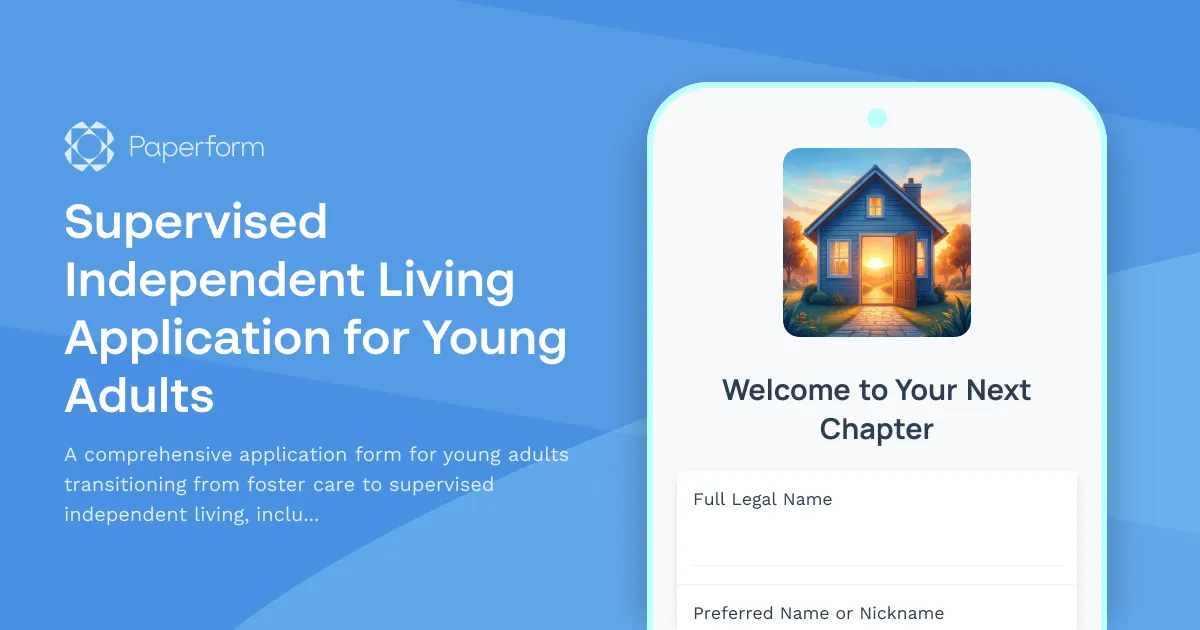
Supervised Independent Living Application for Young Adults
A comprehensive application form for young adults transitioning from foster care to supervised independent living, including housing assessment, life skills evaluation, and mentor matching.
Transitional Housing Application
A comprehensive application for individuals seeking transitional housing through homeless services programs, including case manager referral information and social services coordination.
Women's Shelter Intake Application
A compassionate intake form for women's shelters to collect essential information, assess safety needs, document children's details, and provide support for survivors of domestic violence.
Court-Ordered Treatment Housing Application
A comprehensive housing application for individuals in court-ordered treatment programs, including legal mandate documentation, compliance monitoring consent, and probation officer verification.
Housing First Application Form
A compassionate housing application for chronically homeless individuals using a Housing First approach with harm reduction principles and no sobriety requirements.
Job Corps Application Form
A comprehensive application form for Job Corps programs that assesses career training interests, educational background, independent living skills, and program eligibility for young adults seeking vocational training and support services.
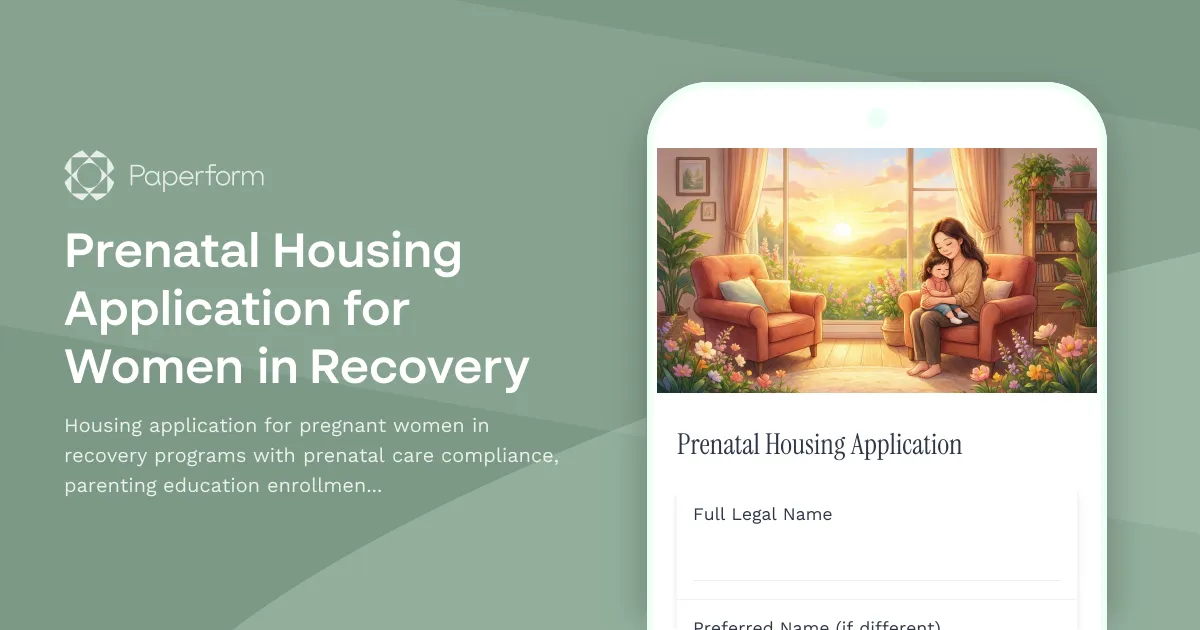
Prenatal Housing Application for Women in Recovery
Housing application for pregnant women in recovery programs with prenatal care compliance, parenting education enrollment, and infant care planning.