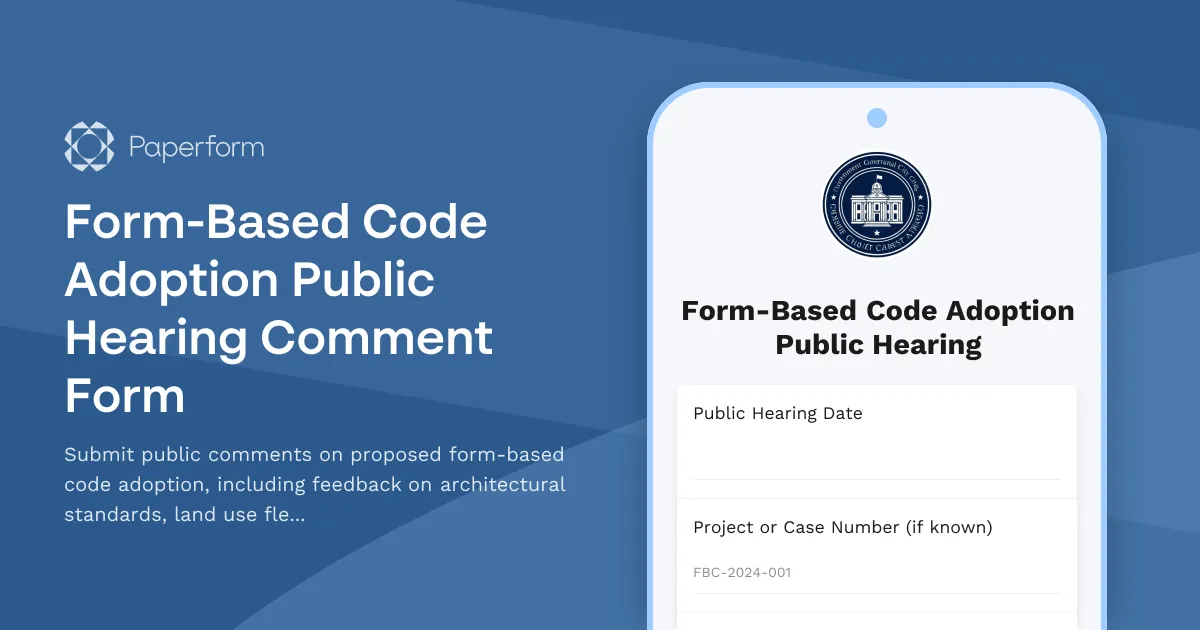
Make Your Voice Heard on Form-Based Code Adoption
When your municipality proposes adopting a form-based code to replace or supplement traditional zoning ordinances, it's crucial that community members, property owners, developers, and stakeholders have an opportunity to provide meaningful input. This Form-Based Code Adoption Public Hearing Comment Form template makes it easy for local governments to collect structured, actionable feedback on proposed architectural standards, land use regulations, and development guidelines.
Why Form-Based Codes Matter to Your Community
Form-based codes represent a fundamental shift in how communities regulate development. Unlike conventional zoning that focuses primarily on land use separation and density controls, form-based codes emphasize the physical form of buildings and public spaces. This approach promotes walkable neighborhoods, consistent streetscapes, architectural character, and mixed-use development patterns that many communities desire.
As cities, towns, and counties consider adopting form-based codes, public hearings become critical opportunities for residents, business owners, developers, and design professionals to weigh in on regulations that will shape their community's built environment for generations.
Streamline Public Comment Collection with Paperform
This template provides planning departments, zoning commissions, and municipal clerks with a professional, accessible way to gather public hearing comments digitally. Whether you're holding hybrid in-person and virtual hearings or accepting written comments ahead of a public meeting, Paperform makes the process transparent and organized.
The form captures essential stakeholder information, specific feedback on proposed code provisions, concerns about architectural standards, opinions on land use flexibility, and suggestions for improving development predictability. It's designed to help planning staff quickly categorize and summarize public input for decision-makers while ensuring every community member has an equal opportunity to participate in the civic process.
Who Benefits from This Template
Municipal Planning Departments can modernize their public engagement processes, moving beyond paper comment cards and email submissions to a centralized, searchable database of stakeholder feedback. The structured format ensures you capture the information needed to address concerns and document public participation.
Zoning Commissions and Planning Boards receive organized, categorized feedback that's easier to review and discuss during deliberations. Comments are timestamped and preserved in a consistent format, making it simpler to identify common themes and address specific concerns.
City Clerks and Administrative Staff benefit from automated submission tracking, eliminating manual data entry and reducing the administrative burden of managing public comments across multiple channels.
Community Members and Stakeholders—including residents, property owners, developers, architects, and advocacy groups—gain a convenient, accessible way to participate in local government decision-making, even if they cannot attend hearings in person.
Key Features for Government Form-Based Code Hearings
This template addresses the specific needs of form-based code public hearings:
- Stakeholder identification that captures whether commenters are residents, property owners, business owners, developers, or other interested parties
- Focused feedback sections on architectural and design standards, building form regulations, land use and zoning flexibility, and development review processes
- Support/opposition tracking for the overall proposal with space for detailed reasoning
- Specific provision commentary allowing stakeholders to reference particular code sections, transect zones, or regulatory standards
- Document upload capability for submitting supporting materials, photographs, or technical analyses
- Optional contact information for follow-up while respecting privacy preferences
- Hearing date and project identification to organize comments by specific proposals
Enhance Transparency and Accessibility
Government forms should be accessible to all community members, regardless of technical ability. Paperform's clean, document-style interface works beautifully on any device, ensuring residents can submit comments from their phones, tablets, or computers. The visual design can be customized to match your municipality's branding, reinforcing trust and official status.
Unlike traditional comment card systems that can be lost or difficult to aggregate, digital submissions are automatically timestamped, organized, and preserved. This creates a clear public record and demonstrates your commitment to transparent, participatory governance.
Automate Your Government Workflow with Stepper
Once public comments are submitted, Stepper can help your planning department automate the follow-up workflow. Route comments to the appropriate staff members, send acknowledgment emails to participants, categorize feedback by topic or geographic area, update project tracking spreadsheets, and compile summary reports for public meetings—all without manual intervention.
For municipalities managing multiple public hearings simultaneously, Stepper workflows ensure nothing falls through the cracks and every voice is documented properly.
Build Public Trust Through Better Engagement
Form-based codes succeed when they reflect genuine community input and address local concerns about development character, design quality, and neighborhood preservation. By making it easier for stakeholders to participate in the regulatory process, you build public trust, improve policy outcomes, and demonstrate responsive governance.
This template works for planning departments of any size—from small towns considering their first form-based code to large cities implementing comprehensive zoning reforms. Paperform scales with your needs, handling dozens or thousands of comments with the same ease and reliability.
Get Started Today
Whether you're seeking feedback on architectural standards, building envelope regulations, transect zone definitions, or development review procedures, this Form-Based Code Adoption Public Hearing Comment Form gives your community a professional, efficient tool for civic participation. Start with this template, customize it for your specific code proposal, and open the door to more meaningful public engagement in the planning process that shapes your community's future.


More templates like this
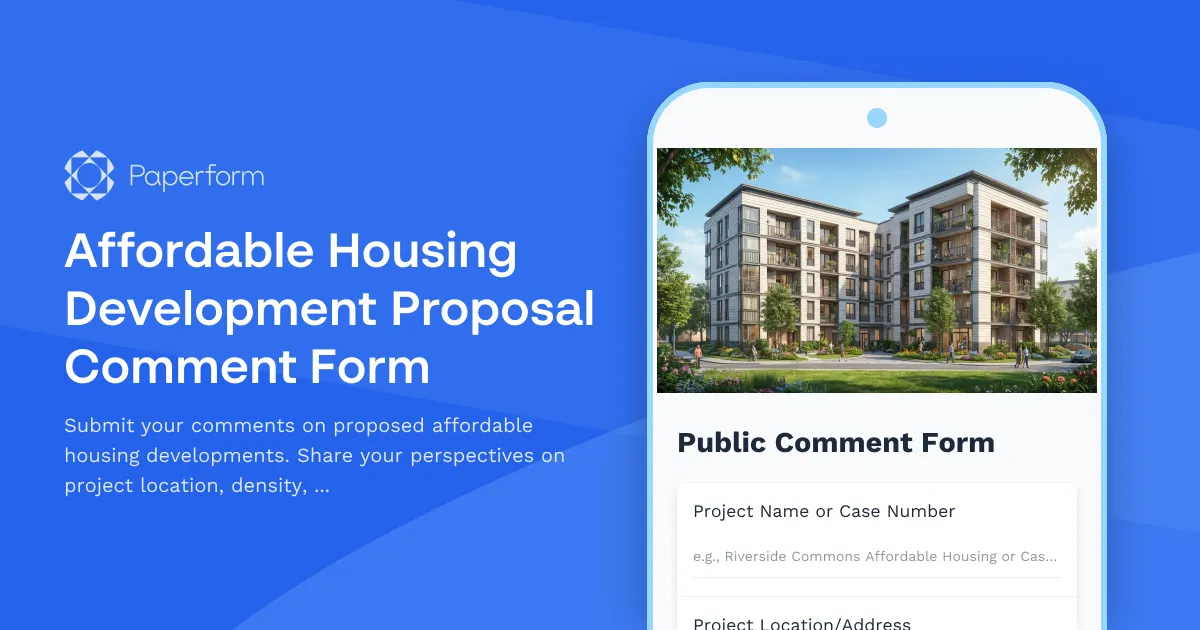
Affordable Housing Development Proposal Comment Form
Submit your comments on proposed affordable housing developments. Share your perspectives on project location, density, parking, traffic impact, and community benefits.
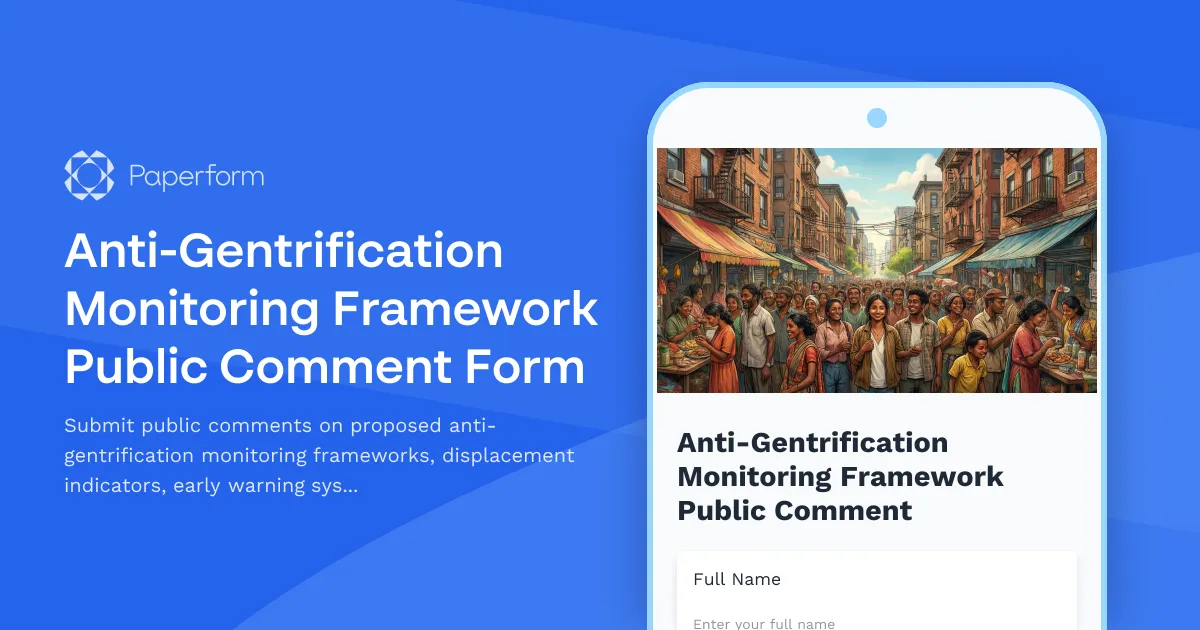
Anti-Gentrification Monitoring Framework Public Comment Form
Submit public comments on proposed anti-gentrification monitoring frameworks, displacement indicators, early warning systems, and intervention strategies for community protection.
Backyard Chicken Ordinance Public Hearing Comment Form
Submit your comments on the proposed backyard chicken ordinance, including regulations on flock size, coop setbacks, and rooster restrictions for public hearing consideration.
City Council Public Hearing Comment Form
Submit your comments on proposed zoning variances to your city council. Verify your residency, state your interest in the matter, and share your position on the proposed changes.
City Planning Public Hearing Comment Form
Submit your comments, concerns, and suggestions on proposed development projects during city planning public hearings. Share feedback on environmental impact, traffic, and community character preservation.
Community Land Dedication Ordinance Public Hearing Form
Submit your feedback on the proposed land dedication ordinance, including parkland requirements, fee-in-lieu options, and neighborhood facility priorities for community development.
Dark Sky Ordinance Public Hearing Comment Form
Submit your comments and concerns regarding the proposed dark sky ordinance, including light pollution impacts, business signage requirements, and outdoor lighting standards for our community.
Drone Operation Ordinance Public Comment Form
Submit your public comments on proposed drone operation regulations, including privacy protections, airspace restrictions, and commercial use guidelines.
Energy Benchmarking and Disclosure Ordinance Comment Form
Submit public comments on proposed energy benchmarking requirements, building performance standards, compliance timelines, and retrofit incentives for commercial and residential properties.
Environmental Impact Assessment Public Comment Form
Submit your comments on proposed environmental impact assessments, zoning changes, and development projects. Help shape decisions that affect your community's environment and quality of life.

Formula Business Restriction Ordinance Public Input Form
Submit your comments on proposed formula business restrictions, independent business protections, design standards, and neighborhood character preservation. Help shape your community's commercial landscape.
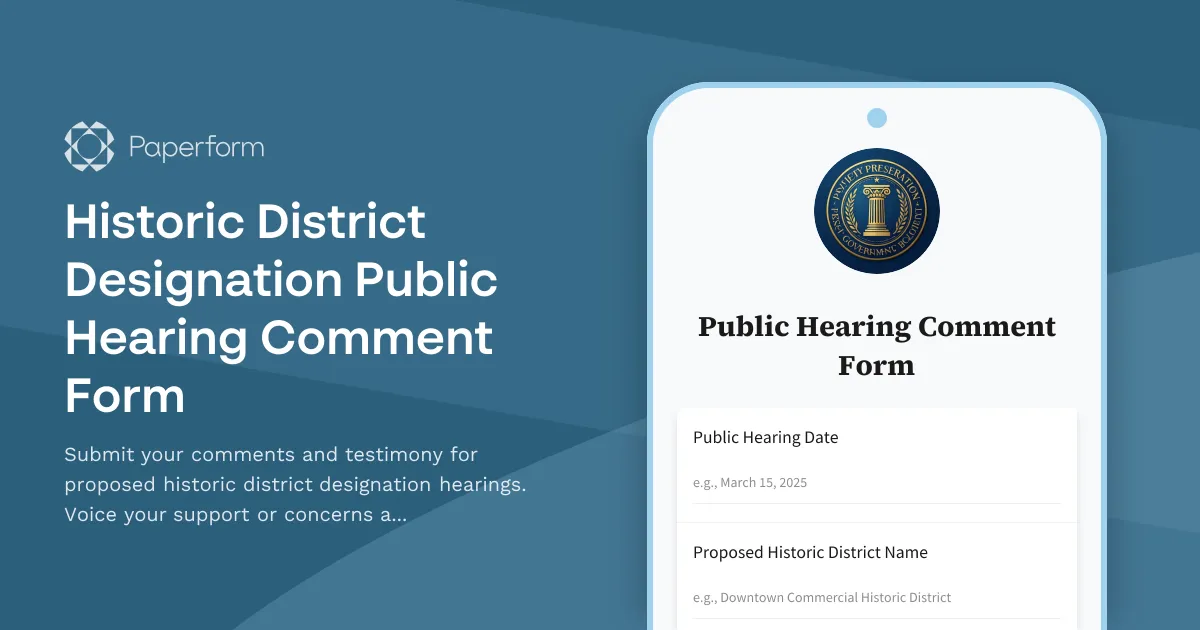
Historic District Designation Public Hearing Comment Form
Submit your comments and testimony for proposed historic district designation hearings. Voice your support or concerns about property owner rights, architectural review processes, and economic development impacts.