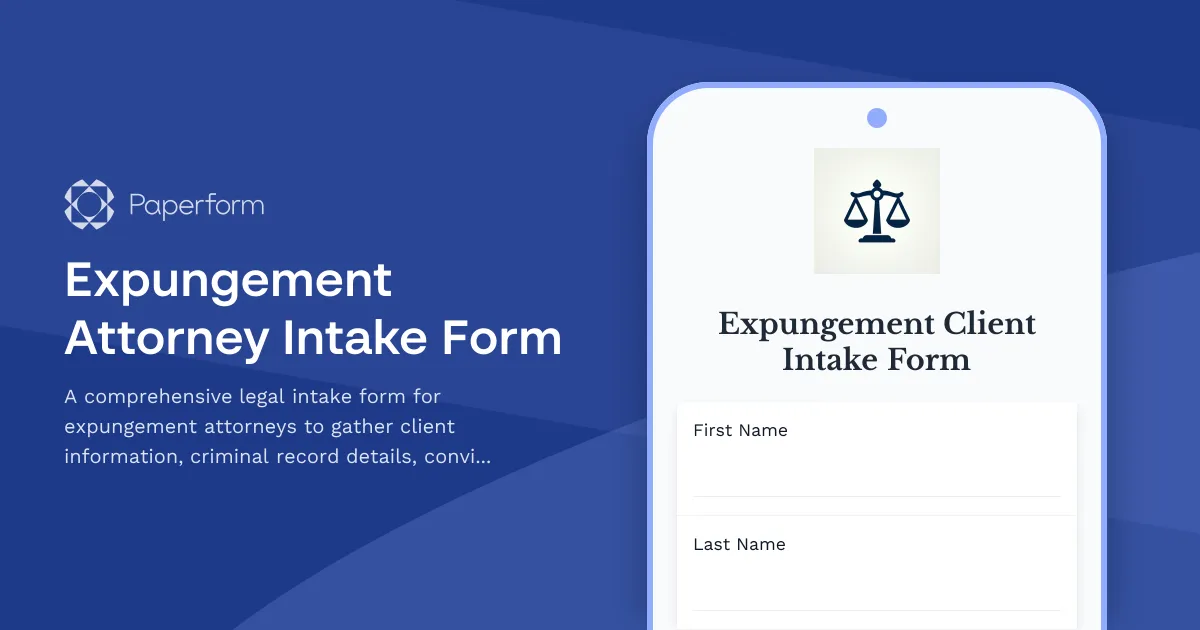
Streamline Your Expungement Practice with a Professional Client Intake Form
Expungement cases require meticulous documentation and careful evaluation of eligibility criteria. This expungement attorney intake form template helps criminal defense attorneys, expungement specialists, and legal aid organizations efficiently collect comprehensive client information in one organized submission.
Built for Expungement Law Practices
Whether you're a solo practitioner specializing in record sealing, a criminal defense firm offering expungement services, or a legal aid clinic helping clients clear their records, this template captures everything you need for initial case assessment: personal information, detailed criminal history, conviction dates, sentence completion documentation, and eligibility screening responses.
The form uses conditional logic to adapt questions based on offense types and jurisdiction, ensuring you gather relevant details without overwhelming clients. By digitizing your intake process with Paperform, you eliminate paper forms, reduce intake appointments, and can begin eligibility analysis immediately upon submission.
Automate Your Expungement Workflow
Once a potential client submits their intake form, you can use Stepper to automatically route cases to the appropriate attorney, create a client record in your practice management system, schedule a consultation, and send a welcome email with next steps. This means your team can focus on legal analysis rather than administrative coordination.
If your intake process requires signed fee agreements or retainer contracts, you can seamlessly transition approved clients to Papersign for secure electronic signatures on engagement letters, keeping all documentation connected to the original intake submission.
Why Law Firms Choose Paperform
Legal professionals need tools they can trust. Paperform is SOC 2 Type II compliant with robust security controls, making it suitable for collecting sensitive client information. With secure file uploads for supporting documentation like court records and discharge papers, conditional logic for complex eligibility screening, and professional custom branding that reinforces your firm's credibility, this template helps you deliver a modern, client-friendly intake experience.
Start accepting expungement inquiries 24/7, reduce your administrative burden, and build a complete case file from day one. Trusted by legal professionals nationwide, this form template gives you the foundation to scale your expungement practice efficiently.



More templates like this
Airbnb Dispute Attorney Intake Form
A comprehensive legal intake form for attorneys handling Airbnb disputes including host-guest conflicts, property damage claims, account suspensions, discrimination cases, and local ordinance violations.
Anti-SLAPP Attorney Intake Form
A comprehensive legal intake form for attorneys evaluating anti-SLAPP motions, capturing underlying lawsuit details, protected activity analysis, success probability, and fee recovery strategies.
Appellate Attorney Client Intake Form
Comprehensive intake form for appellate attorneys to gather essential case information including trial court decisions, appeal deadlines, legal issues, and standard of review requirements.

Autonomous Vehicle Accident Attorney Intake Form
Comprehensive legal intake form for attorneys handling autonomous and semi-autonomous vehicle accident cases, including Tesla Autopilot incidents, sensor failures, and manufacturer liability claims.
Aviation Accident Attorney Intake Form
Comprehensive aviation accident intake form for law firms representing victims of aircraft accidents, collecting flight details, FAA documentation, pilot records, maintenance logs, and injury information.
Bankruptcy Law Client Intake Form
A comprehensive bankruptcy intake form that collects client information, debt inventory, income details, asset listings, creditor information, and means test data to streamline the bankruptcy filing process.
Biometric Privacy Violation Client Intake Form
A comprehensive client intake form for attorneys handling biometric privacy violations under BIPA and similar laws, capturing details about facial recognition, fingerprint scanning, and potential class action participation.
Border Patrol Attorney Intake Form
A comprehensive client intake form for immigration attorneys handling border patrol misconduct cases, including CBP violations, illegal searches, detention issues, asylum delays, and civil rights violations at checkpoints.
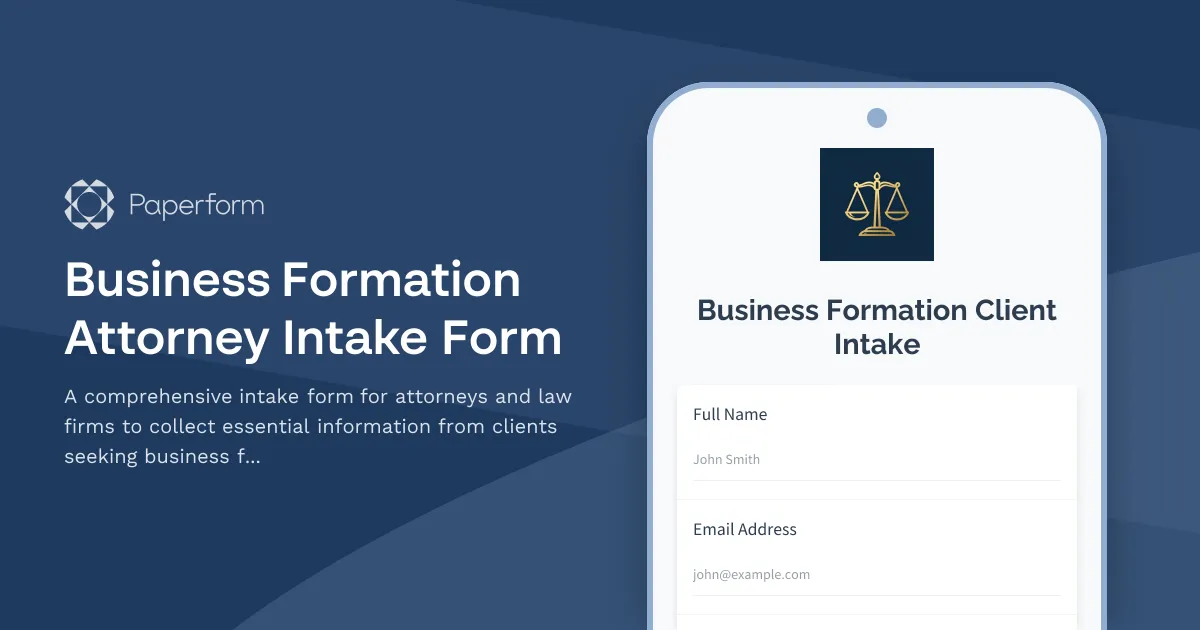
Business Formation Attorney Intake Form
A comprehensive intake form for attorneys and law firms to collect essential information from clients seeking business formation services, including entity type, ownership structure, and capitalization details.
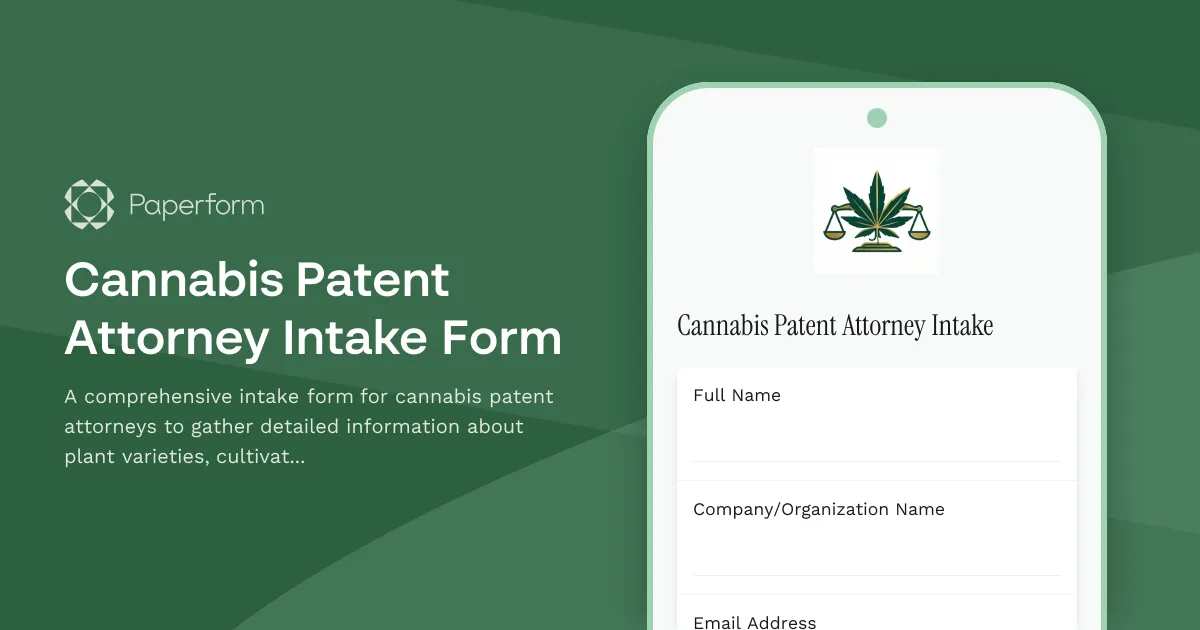
Cannabis Patent Attorney Intake Form
A comprehensive intake form for cannabis patent attorneys to gather detailed information about plant varieties, cultivation methods, extraction processes, and utility patent applications for intellectual property protection.
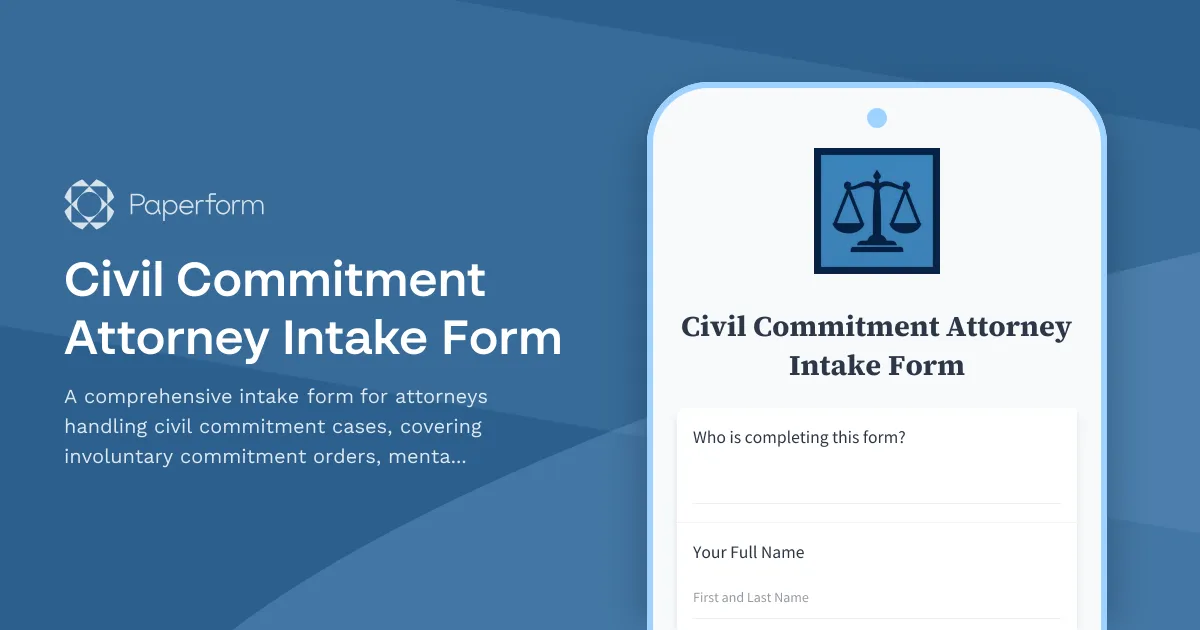
Civil Commitment Attorney Intake Form
A comprehensive intake form for attorneys handling civil commitment cases, covering involuntary commitment orders, mental health evaluations, rights advisement, hearing preparation, and least restrictive alternative arguments.
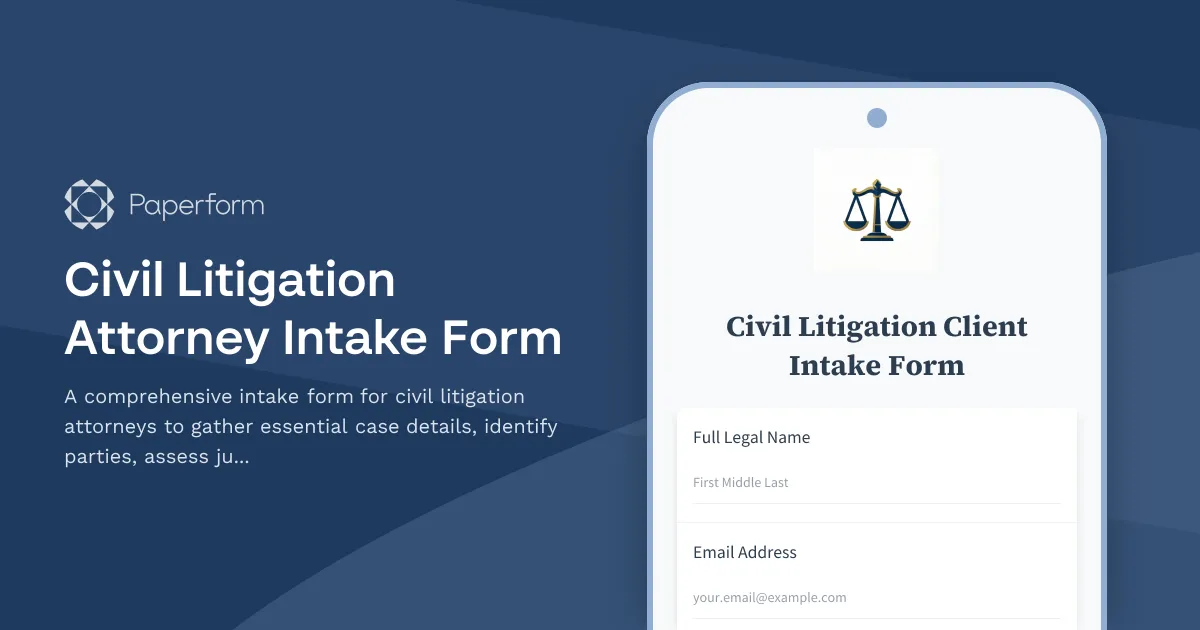
Civil Litigation Attorney Intake Form
A comprehensive intake form for civil litigation attorneys to gather essential case details, identify parties, assess jurisdiction, evaluate statute of limitations, and determine discovery needs.