Secure Your Quantum Research Lab with a Comprehensive Code of Conduct
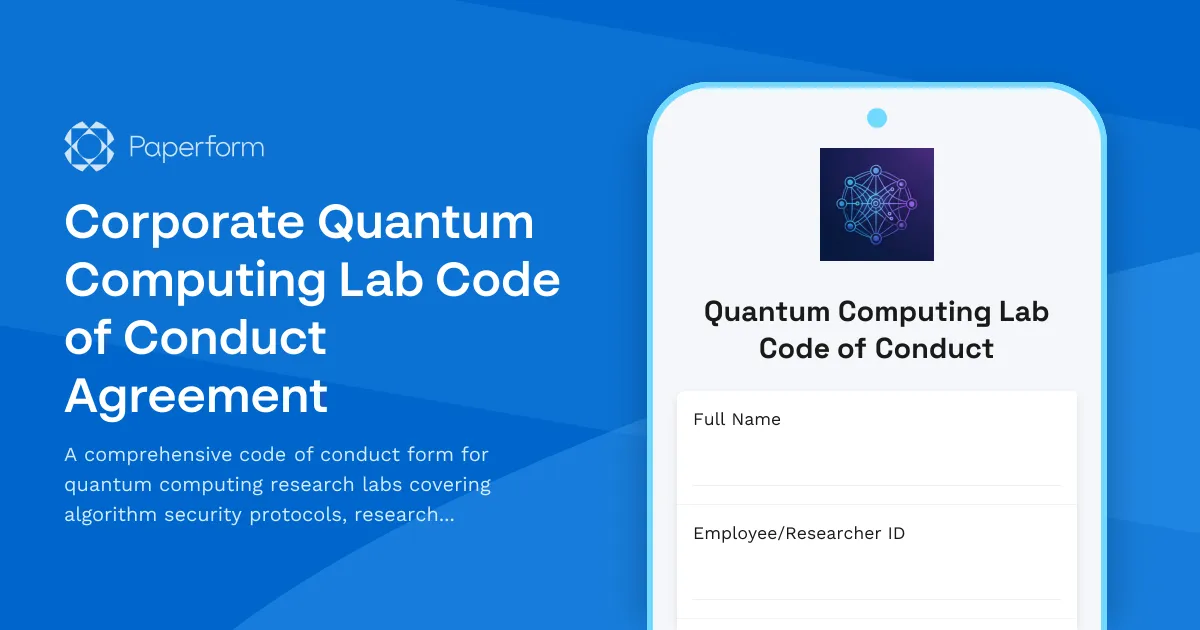
Operating a quantum computing research lab requires balancing cutting-edge innovation with stringent security, ethical standards, and regulatory compliance. This Corporate Quantum Computing Lab Code of Conduct template helps research institutions, technology companies, and corporate labs establish clear guidelines for researchers, scientists, and technical staff working with quantum algorithms, sensitive research data, and export-controlled materials.
Why Quantum Labs Need Specialized Codes of Conduct
Quantum computing sits at the intersection of advanced research, national security concerns, and competitive commercial interests. Traditional workplace policies aren't sufficient to address the unique challenges of quantum algorithm development, including:
- Algorithm security and IP protection for proprietary quantum computing methods
- Export control compliance under ITAR, EAR, and international regulations
- Research collaboration boundaries when working with external partners, universities, or foreign nationals
- Data handling protocols for quantum research results and experimental data
- Ethical guidelines for dual-use technology development
This template provides a structured acknowledgment form that covers all critical areas while remaining clear and accessible to technical professionals.
How Paperform Streamlines Lab Compliance
Built for teams that need more than basic forms, Paperform makes it simple to create, distribute, and track code of conduct acknowledgments across your quantum research organization. The doc-style editor lets you customize sections to match your specific lab protocols, security classifications, and institutional requirements—no coding needed.
Use conditional logic to show additional sections based on roles (senior researchers vs. lab technicians), security clearance levels, or project involvement. Connect submissions to your HR systems, compliance databases, or document management platforms using native integrations or Stepper workflows to automatically route signed acknowledgments, trigger onboarding sequences, or flag required annual re-certifications.
For labs managing multiple research teams or international collaborations, Papersign (papersign.com) extends this template by enabling secure eSignature collection for formal acknowledgment, creating a complete audit trail that meets SOC 2 and enterprise compliance standards.
Who This Template Is For
This template is designed for:
- Technology companies with corporate quantum research divisions
- Research institutions and university quantum computing labs
- Government contractors working on quantum projects with security clearances
- Startups in quantum computing, cryptography, or quantum algorithms
- Compliance officers and HR teams managing specialized technical workforce policies
With 30,000+ templates trusted by over 500K teams worldwide, Paperform delivers the security (SOC 2 Type II, GDPR compliant), flexibility, and professional design that quantum research organizations require—without the complexity of traditional compliance software.
More templates like this
Corporate Innovation Lab Code of Conduct
A comprehensive code of conduct agreement for corporate innovation labs covering intellectual property protection, failure acceptance, collaborative practices, and ethical innovation standards.
Enterprise Software Implementation Team Code of Conduct
A comprehensive code of conduct agreement for software implementation teams covering client data security protocols, professional conduct standards, scope management guidelines, and escalation procedures.
Ethical Hacking Consultant NDA & Engagement Agreement
Comprehensive non-disclosure agreement for ethical hacking consultants covering security assessment confidentiality, penetration test results protection, and remediation consulting payment terms.
Bug Bounty Security Researcher Terms & Responsible Disclosure Agreement
Comprehensive bug bounty program terms for security researchers, including responsible disclosure guidelines, payout criteria, scope definitions, and legal safe harbor provisions to protect ethical hackers.
Corporate Accessibility Consulting Code of Conduct
A comprehensive code of conduct for accessibility consultants focused on ethical engagement with disability communities, universal design principles, and transparent remediation prioritization.
Blockchain Voting Platform Terms of Service
Secure terms of service agreement for blockchain-based voting platforms, ensuring voter anonymity, result verifiability, and election integrity standards compliance.
E-commerce Accessibility Compliance Training Completion Form
A comprehensive training certification form for e-commerce teams to confirm completion of WCAG 2.1 accessibility training, assistive technology testing proficiency, and legal compliance understanding.
GDPR Data Breach Assessment Form
Structured assessment form to evaluate data breaches and determine if notification to supervisory authority is required under GDPR Article 33 within 72 hours.
High-Energy Physics Experiment NDA
A comprehensive non-disclosure agreement for high-energy physics experiments covering detector design confidentiality, collision data protection, and international collaboration terms.
IT Consultant NDA for Cybersecurity Projects
A comprehensive non-disclosure agreement for IT consultants working on cybersecurity projects, covering network architecture confidentiality, penetration testing results, and security clearance verification.
Predictive Analytics Consultant NDA & Agreement
A comprehensive non-disclosure agreement for predictive analytics consultants that protects proprietary data models, algorithm methodologies, and establishes clear project delivery and payment terms.
Remote Desktop Software Terms of Service
Accept terms of service for remote desktop software including security standards, session logging policies, and multi-device licensing agreements.