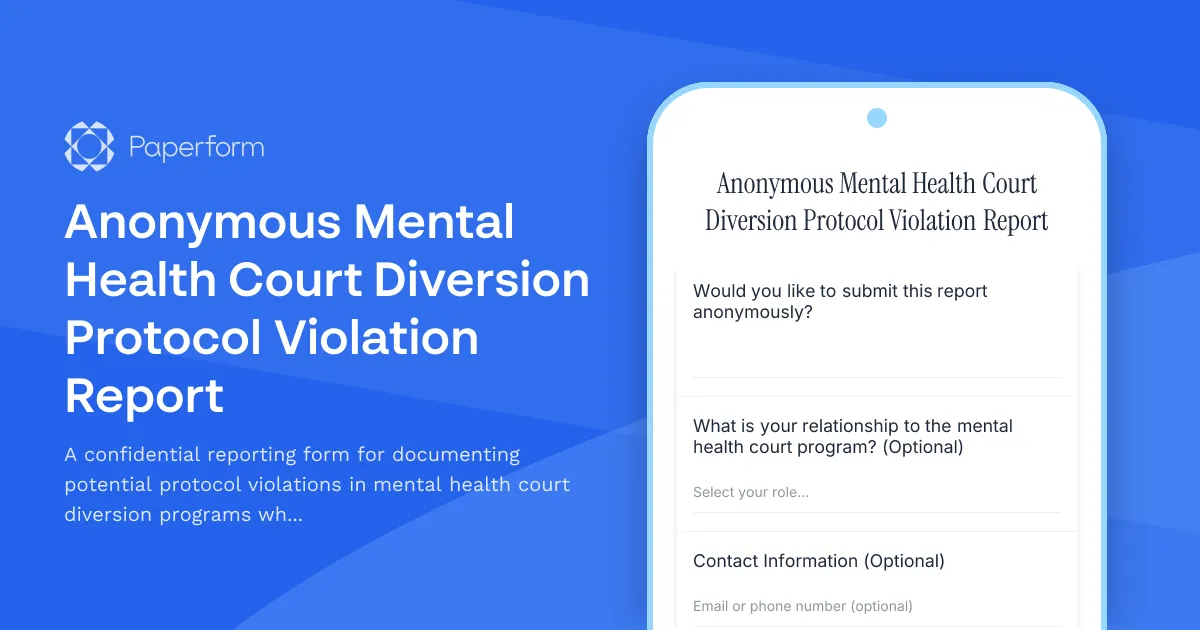
Mental health courts and diversion programs require careful monitoring to ensure participants receive appropriate therapeutic support while maintaining program integrity. This Anonymous Mental Health Court Diversion Protocol Violation Report template provides a secure, confidential channel for reporting concerns about protocol violations, participant rights issues, or therapeutic jurisprudence breakdowns.
Designed for court personnel, treatment providers, case managers, peer advocates, family members, and participants themselves, this form balances the need for program accountability with the protection of sensitive mental health information. The anonymous reporting structure encourages transparency while safeguarding the identity of both reporters and participants when appropriate.
This template is particularly valuable for mental health court coordinators, public defenders, prosecutors working in specialty courts, clinical staff, and program evaluators who need to document and address concerns systematically. The form captures essential details about the nature of violations—whether related to treatment protocols, due process, coercion, confidentiality breaches, or access to services—while maintaining a trauma-informed, recovery-oriented approach.
Paperform makes it easy to customize this template for your specific jurisdiction's requirements, including conditional logic that adapts questions based on the type of violation reported. With secure data handling (SOC 2 Type II compliant), you can trust that sensitive reports are protected. Integration with case management systems through Stepper (stepper.io) enables automatic routing of reports to appropriate review committees, clinical supervisors, or oversight bodies, ensuring timely responses while maintaining confidentiality protocols.
Whether you're implementing a new mental health court program or strengthening oversight in an established diversion initiative, this form template helps maintain the delicate balance between accountability and therapeutic alliance that is essential to effective behavioral health justice interventions.

More templates like this
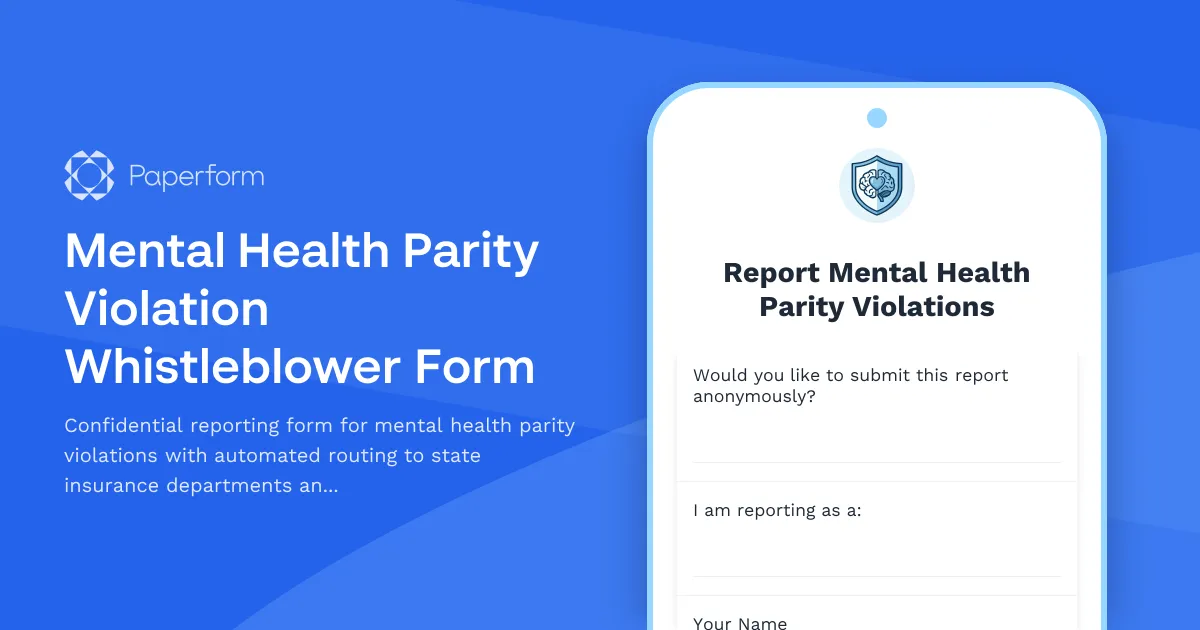
Mental Health Parity Violation Whistleblower Form
Confidential reporting form for mental health parity violations with automated routing to state insurance departments and patient advocacy resources.
Missing Psychiatric Hold Patient Report Form
A comprehensive form for healthcare facilities to report missing patients who left during an involuntary psychiatric hold period before their 72-hour evaluation, including danger assessment and legal authorization tracking.
Corrections Mental Health Diversion Program Referral Form
Refer individuals with mental illness from the criminal justice system to community-based treatment programs as an alternative to incarceration.
Intensive Outpatient Program Insurance Fraud Confidential Report
Confidential reporting form for suspected insurance fraud or improper billing practices in intensive outpatient programs, with level of care assessment and utilization review documentation.
Substance Abuse Counseling Facility Damage Claim Form
A specialized damage claim form for substance abuse counseling facilities to report property and equipment damage while maintaining client confidentiality and coordinating with insurance and licensing boards.
Addiction Treatment Facility Quality of Care Whistleblower Form
Confidential form for reporting quality of care concerns, compliance violations, and patient rights issues at addiction treatment facilities, with SAMHSA standards review.
Anonymous Foster Care Abuse Report Form
Secure anonymous reporting form for foster care system abuse and neglect concerns with automatic state child welfare notification and caseworker assignment capabilities.
Mental Health Court Participation Application
A comprehensive application for individuals seeking to participate in mental health court programs, including diagnosis verification, treatment planning, and voluntary consent.
Mental Health Diversion Completion Certificate
A comprehensive certificate form documenting treatment progress, symptom management, and clinical recommendations for mental health diversion program completion in court proceedings.
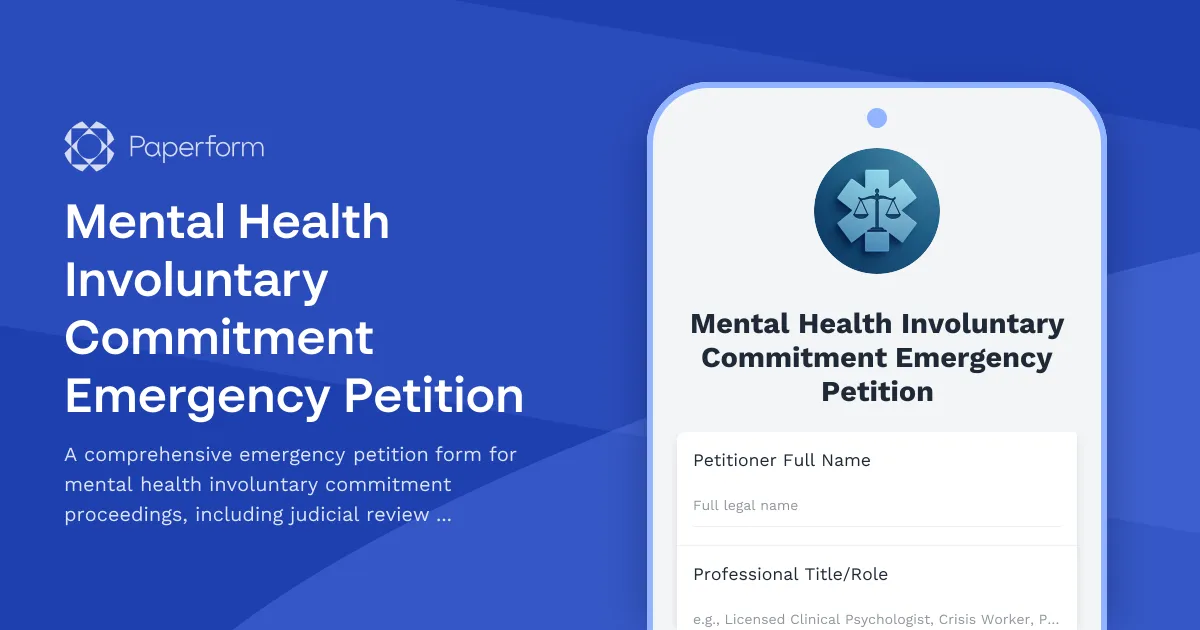
Mental Health Involuntary Commitment Emergency Petition
A comprehensive emergency petition form for mental health involuntary commitment proceedings, including judicial review requirements, law enforcement coordination, and patient rights notification for healthcare facilities and crisis response teams.
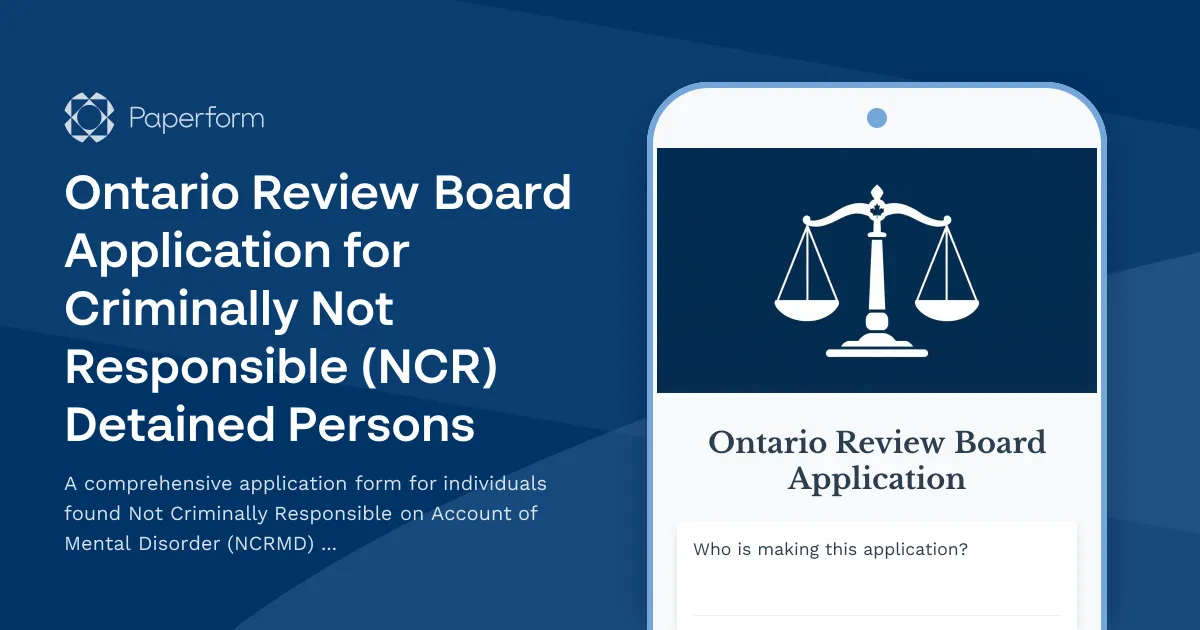
Ontario Review Board Application for Criminally Not Responsible (NCR) Detained Persons
A comprehensive application form for individuals found Not Criminally Responsible on Account of Mental Disorder (NCRMD) in Ontario to request a review hearing before the Ontario Review Board.
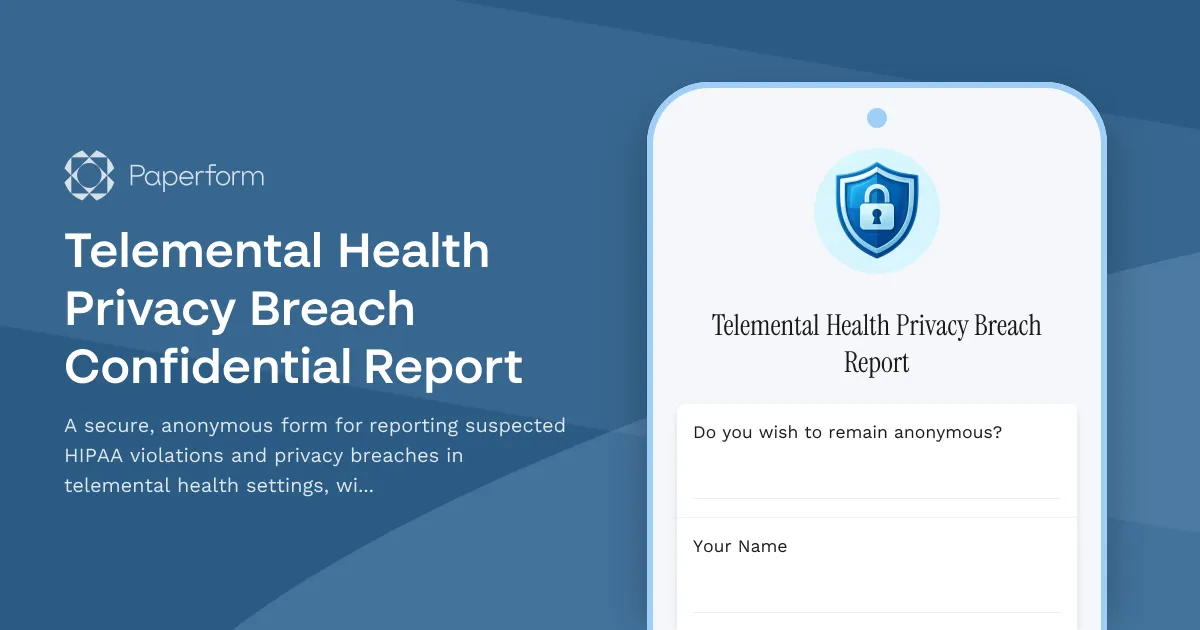
Telemental Health Privacy Breach Confidential Report
A secure, anonymous form for reporting suspected HIPAA violations and privacy breaches in telemental health settings, with coordination between state psychology boards and federal enforcement agencies.