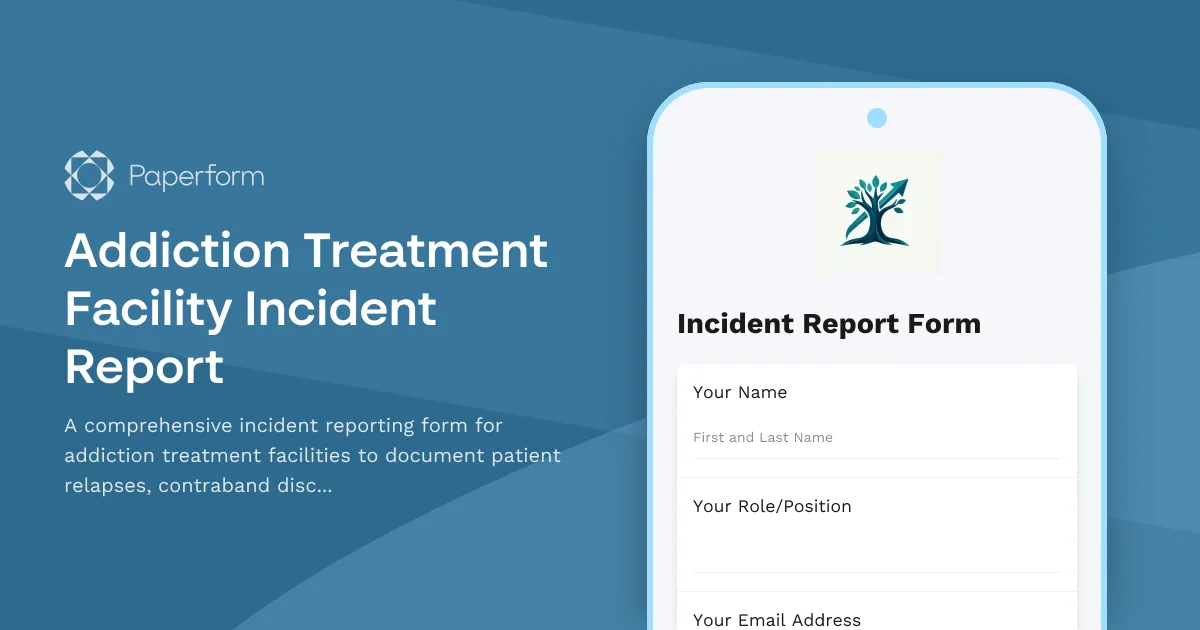
Streamline Incident Reporting at Your Addiction Treatment Facility
Running an addiction treatment center means maintaining a safe, therapeutic environment while ensuring regulatory compliance and quality care. When incidents occur—whether it's a patient relapse, contraband discovery, behavioral concern, or safety issue—having a clear, consistent reporting process is essential for clinical decision-making, legal protection, and continuous improvement.
This Addiction Treatment Facility Incident Report template gives your clinical staff, case managers, and administrators a professional digital form to document incidents quickly and comprehensively. Instead of handwritten notes or scattered spreadsheets, you can capture structured information that flows directly into your records system, triggers the right notifications, and supports immediate clinical response.
Built for Addiction Recovery Programs
This template is designed specifically for residential treatment centers, outpatient programs, sober living facilities, and recovery housing. It covers the most common incident types in addiction treatment settings: patient relapse or suspected substance use, contraband found on premises, behavioral or safety incidents, medication errors, elopement or AMA departures, and general facility concerns.
Each incident type includes tailored follow-up questions, so your team captures the clinical context needed for assessment, intervention, and treatment plan modification. Conditional logic ensures staff only see relevant fields based on the incident category, making the form faster to complete during high-pressure situations.
Capture Clinical Details That Matter
Beyond basic "what happened" reporting, this form prompts for clinical assessment details: was the patient evaluated by medical or clinical staff? What interventions were provided? Does the treatment plan need modification? Are family members or external providers being notified?
You can also document witness statements, upload supporting photos (like images of contraband or facility damage), and flag whether law enforcement, medical emergency services, or regulatory bodies need to be involved. This level of detail supports both immediate care coordination and longer-term quality assurance reviews.
Automate Notifications and Workflow with Stepper
Once an incident is submitted, you shouldn't have to manually email supervisors, ping on-call clinicians, or copy details into your EHR. Connect this form to Stepper to automatically route high-priority incidents to clinical directors, notify the attending counselor or case manager, create tasks in your project management tool, and log the report in your compliance tracking system.
You can build conditional workflows so that certain incident types—like medical emergencies or contraband involving minors—trigger immediate escalation, while lower-severity reports follow standard review processes. Stepper keeps your care team coordinated without adding administrative burden.
Secure, Compliant, and Easy to Use
Patient privacy and data security are non-negotiable in behavioral health. Paperform is SOC 2 Type II compliant and supports secure data handling, role-based permissions, and audit trails, so your incident reports meet regulatory standards for documentation and confidentiality. (Please note: Paperform is not HIPAA compliant, so consult your compliance team if PHI handling requirements apply.)
The form works beautifully on mobile devices, so staff can submit reports from anywhere in your facility—no need to return to a desktop or dig out paperwork. And because it's built with Paperform's doc-style editor, you can easily customize fields, add your facility branding, or adjust workflows as your program evolves.
Trusted by Healthcare and Social Services Providers
Addiction treatment centers, mental health programs, and recovery housing providers rely on Paperform to digitize intake, incident reporting, and clinical workflows. This template gives your team a professional, compliant starting point that reduces paperwork, improves response times, and creates a clearer record for quality improvement and accreditation reviews.
Get started in minutes and bring clarity, consistency, and speed to incident management at your facility.



More templates like this
Addiction Treatment Facility Safety Incident Report
Document safety incidents in addiction treatment facilities while maintaining patient confidentiality, recording staff response, and tracking treatment plan impacts for clinical review.
Behavioral Health Crisis Center Patient Elopement Report
A comprehensive elopement report form for behavioral health facilities to document missing patients, assess risk factors, and coordinate immediate response efforts with mobile crisis teams.
Intensive Outpatient Program Insurance Fraud Confidential Report
Confidential reporting form for suspected insurance fraud or improper billing practices in intensive outpatient programs, with level of care assessment and utilization review documentation.
Juvenile Residential Treatment Missing Youth Report
A comprehensive report form for residential treatment facilities to document missing youth incidents, including behavioral history, treatment details, case worker information, runaway patterns, and law enforcement coordination.
Mental Health Crisis Team Missing Client High-Risk Report
A comprehensive form for mental health crisis teams to report missing high-risk clients with suicide assessment, medication history, known locations, and emergency response protocols.
Mental Health Facility Patient Incident Report
A comprehensive incident report form for mental health facilities to document patient incidents, behavioral assessments, staff interventions, and safety protocols with psychiatric notification workflows.
Missing Patient Report – Eating Disorder Treatment Center
A critical incident form for eating disorder treatment centers to report missing patients with medical instability, including vital health status, cardiac risk factors, treatment team contacts, and emergency protocols.
Mobile Behavioral Health Crisis Unit Restraint Injury Report
A comprehensive incident report for documenting restraint use, patient injuries, and de-escalation protocols during mobile behavioral health crisis interventions.
Psychiatric Hospital Patient Suicide Attempt Report
A confidential incident report form for documenting suicide attempts in psychiatric facilities, including safety protocol review, family notification procedures, and treatment plan modifications.
Addiction Treatment Center Patient Safety Incident Report
A comprehensive safety incident reporting form for addiction treatment facilities to document medication errors, elopement risks, patient safety concerns, and ensure proper state licensing notifications and regulatory compliance.
Homeless Veteran Welfare Check & Outreach Report
A comprehensive form for reporting missing chronically homeless veterans with service-connected disabilities to facilitate coordinated outreach efforts between street medicine teams, VA homeless coordinators, and community support services.
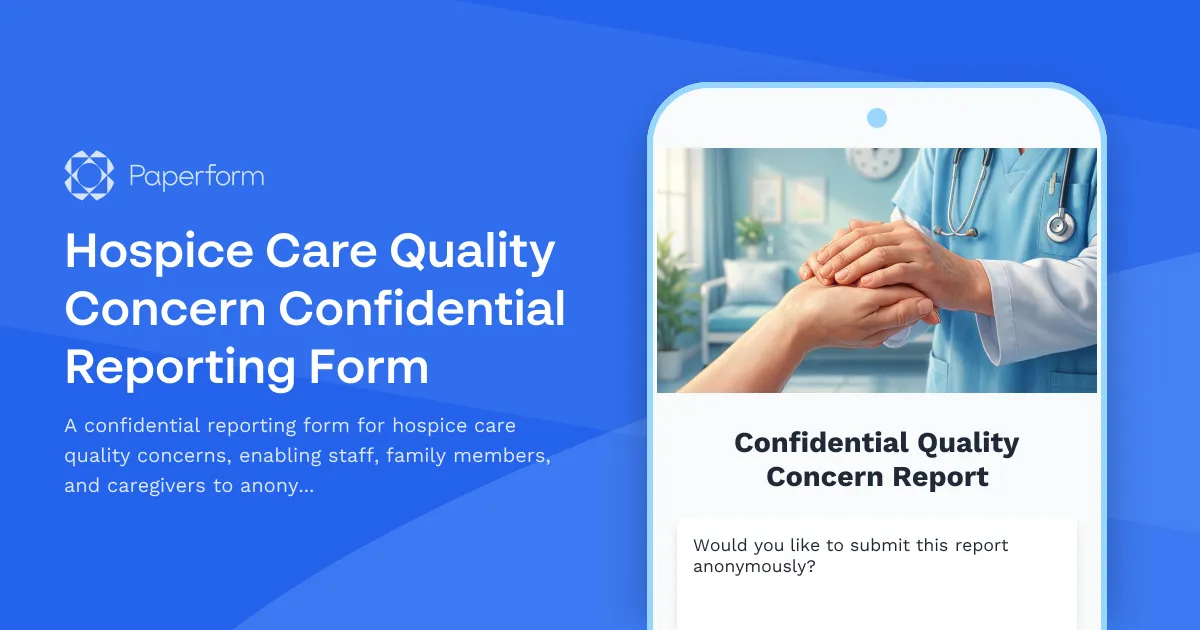
Hospice Care Quality Concern Confidential Reporting Form
A confidential reporting form for hospice care quality concerns, enabling staff, family members, and caregivers to anonymously report issues related to patient care, Medicare compliance, and facility operations.