Build a Youth Mentorship Program That Works for Everyone
Designing or improving a youth mentorship program means listening to the people who make it work—mentors, mentees, parents, schools, and community partners. This Youth Mentorship Program Stakeholder Interview Form gives you a structured way to gather insights about program structure, matching criteria, activity preferences, safety protocols, and how to measure real outcomes.
Whether you're a nonprofit director launching a new program, an education administrator expanding mentorship services, or a community organization refining your approach, this template helps you capture diverse perspectives in one place. Instead of scheduling dozens of one-on-one interviews or chasing feedback through email chains, you can share one professional form that adapts to each stakeholder's role.
Why Paperform for Stakeholder Research?
Paperform's conditional logic means mentors see questions about their availability and expertise, while parents get questions about safety concerns and communication preferences—all in the same form. The doc-style editor lets you add context, images, and clear section headings so stakeholders understand exactly what you're asking and why it matters.
Once responses come in, you can use AI Insights to identify common themes across stakeholder groups, spot potential concerns early, and build a program structure that reflects the real needs of your community. Connect your form to Google Sheets, Airtable, or your project management tool via Stepper to automatically organize feedback by stakeholder type and route key insights to the right team members.
Who This Form Is For
This template works for nonprofit program coordinators, youth services directors, school counselors, community foundation staff, and anyone building mentorship programs that need buy-in and input from multiple groups. It's designed for the discovery phase—when you're shaping program design, identifying potential challenges, and making sure your mentorship model actually fits the people you serve.
With Paperform, you get a professional stakeholder research tool that respects everyone's time, captures nuanced feedback, and helps you build a youth mentorship program grounded in real community needs.



More templates like this
Community Schools Comprehensive Services Coordination Form
A comprehensive intake form for community schools to assess student needs, plan family engagement strategies, coordinate with community partners, and facilitate integrated support teams for wraparound services.
Job Placement Program Stakeholder Interview Form
A comprehensive stakeholder interview form for job placement programs to gather insights from job seekers, employers, trainers, and social service partners about skill assessments, training needs, employer requirements, support services, and placement success metrics.
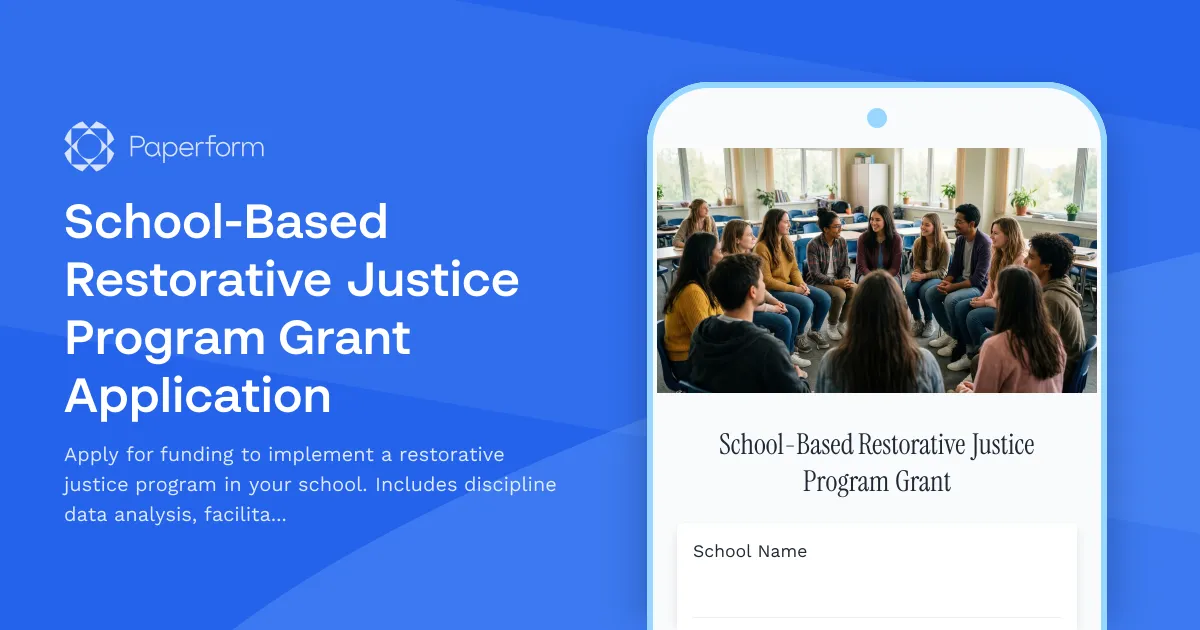
School-Based Restorative Justice Program Grant Application
Apply for funding to implement a restorative justice program in your school. Includes discipline data analysis, facilitator training, circle process planning, and suspension reduction goals.
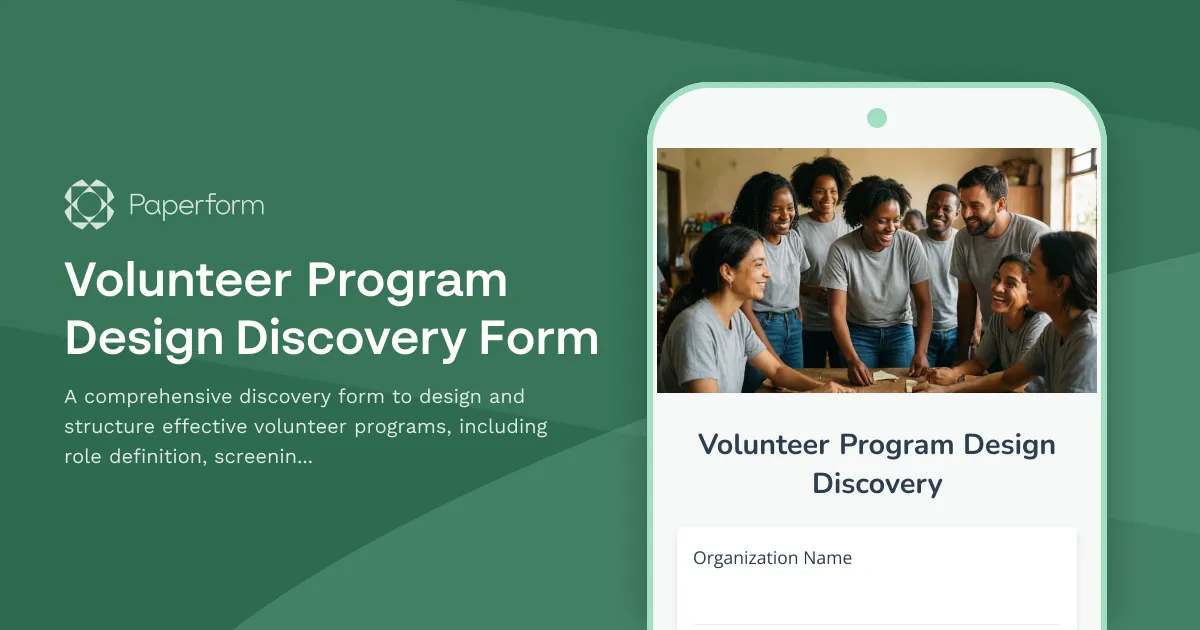
Volunteer Program Design Discovery Form
A comprehensive discovery form to design and structure effective volunteer programs, including role definition, screening requirements, training needs, and retention strategies.
Youth Restorative Justice Program Referral Form
A comprehensive referral form for school-based restorative justice programs that captures incident details, assesses harm, evaluates accountability readiness, and coordinates community circle participation for youth discipline alternatives.
After-School Program Enrollment Form
A comprehensive enrollment form for after-school programs serving low-income families, featuring sliding scale fee calculations, transportation assessment, and meal program verification.
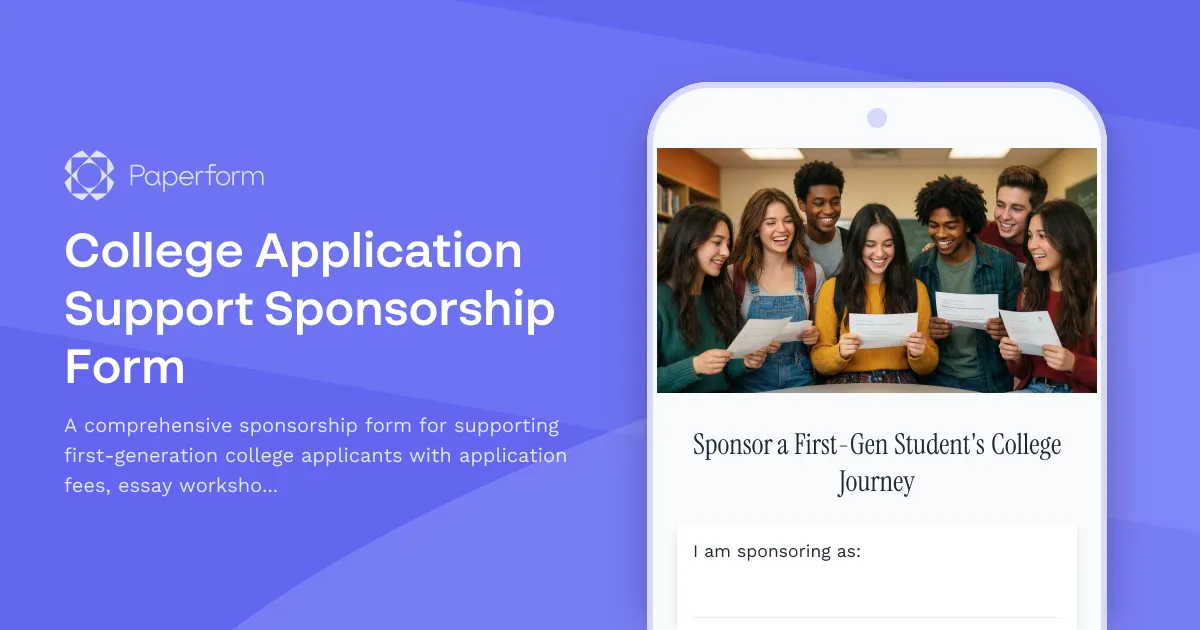
College Application Support Sponsorship Form
A comprehensive sponsorship form for supporting first-generation college applicants with application fees, essay workshops, and celebration funding to help bridge the opportunity gap.
Community Health Worker Certification Scholarship Application
Apply for a scholarship to pursue Community Health Worker (CHW) certification with a focus on serving underserved populations and chronic disease navigation.
Disability Services Program Application
A comprehensive application form for individuals seeking disability services, including accommodation needs assessment, assistive technology requirements, medical documentation upload, and guardian consent where applicable.
Educational Champion Background Screening for Court-Involved Youth
A comprehensive background screening and authorization form for educational advocates working with court-involved youth, including criminal history checks, academic advocacy certification verification, and student success references.
Financial Literacy Course Registration Form
A comprehensive registration form for financial literacy programs that assesses participants' debt situations, budgeting goals, credit scores, and coaching preferences to deliver personalized financial education.
Foster Care Training Registration Form
A comprehensive registration form for foster care training programs that tracks state licensing requirements, age preferences, trauma-informed care modules, respite options, and home study scheduling.