A teaching portfolio is one of the most critical assets for faculty members entering the academic job market, yet many graduate students and early-career academics struggle to develop compelling, evidence-based portfolios that showcase their pedagogical expertise. This University Teaching Portfolio Development Workshop Evaluation Form is designed for higher education institutions, teaching centers, and professional development programs that offer portfolio development workshops to help participants reflect on their learning and provide program coordinators with actionable feedback.
This template captures detailed feedback across every component of teaching portfolio development—from selecting meaningful artifacts and writing reflective statements to clarifying teaching philosophy and preparing portfolio presentations for job talks. The form helps workshop facilitators understand what worked well, where participants need additional support, and how confident attendees feel about their job search materials.
With Paperform's conditional logic and multi-page structure, this evaluation seamlessly adapts to participant experiences, collecting both quantitative ratings and qualitative insights without overwhelming respondents. The form's professional design reflects the academic context while remaining approachable and easy to complete on any device.
For teaching centers looking to streamline their program assessment workflows, connecting this form with Stepper (stepper.io) enables automatic compilation of feedback summaries, notification of facilitators when critical issues are flagged, and integration with your institutional LMS or survey analysis tools. Results can be pushed to Google Sheets, Airtable, or your preferred platform for longitudinal program evaluation and continuous improvement of your portfolio development offerings.



More templates like this
Graduate Teaching Assistant Training Program Evaluation
A comprehensive evaluation form for graduate teaching assistants to assess the effectiveness of their training program, including pedagogy instruction, classroom management, grading support, and mentorship quality.
Classroom Technology Integration Survey
A comprehensive survey to evaluate how students experience technology in the classroom, including interactive tools, digital platforms, online resources, and tech support effectiveness.
College Academic Probation Support Program Feedback Survey
A comprehensive feedback survey designed to evaluate academic probation support programs, including advisor effectiveness, study skills resources, mental health support, and student success outcomes.
College Accelerated Degree Program Student Survey
Gather comprehensive feedback from students enrolled in accelerated degree programs about course intensity, support services, time management, academic quality, and overall satisfaction with their experience.
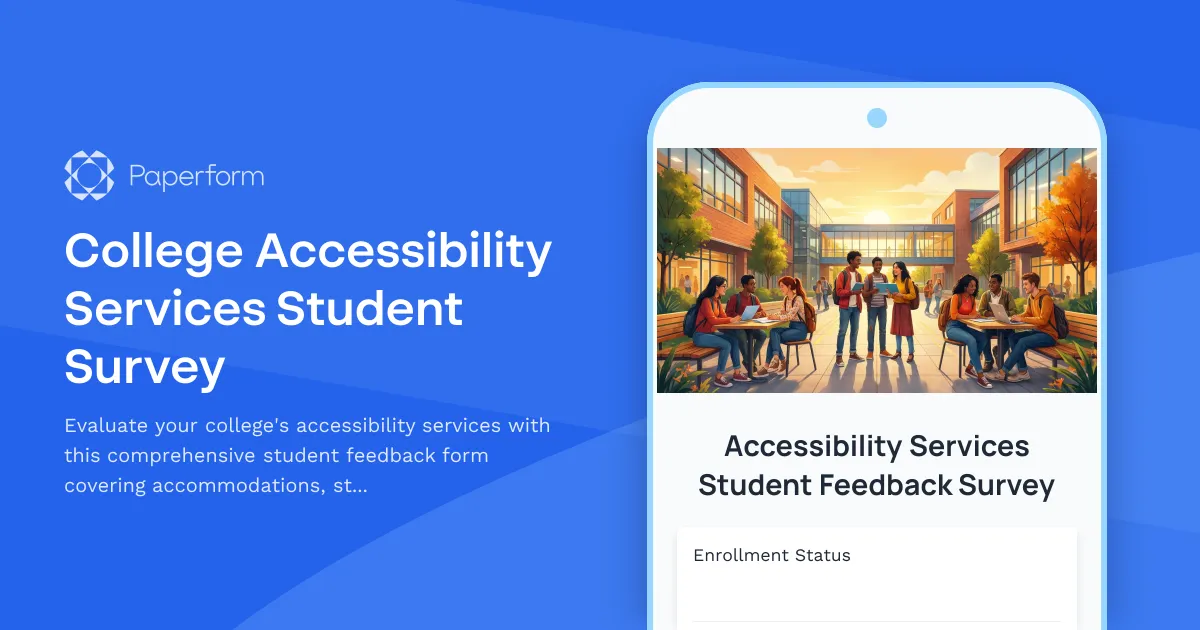
College Accessibility Services Student Survey
Evaluate your college's accessibility services with this comprehensive student feedback form covering accommodations, staff support, assistive technology, testing arrangements, and advocacy effectiveness.
College Career Services Satisfaction Survey
Evaluate your career services experience including resume assistance, interview prep, job fairs, employer connections, and alumni networking to help improve student outcomes.
College Entrepreneurship Course Evaluation
A comprehensive evaluation form for entrepreneurship course participants to assess course effectiveness, business development skills, pitch presentation capabilities, mentor engagement, and venture launch readiness.

College Peer Review Writing Workshop Evaluation
Evaluate peer review writing workshops with this comprehensive feedback form. Assess feedback quality, revision improvements, critical reading skills, collaborative learning value, and writing confidence development.
Design Thinking Classroom Project Feedback Form
Evaluate student development in design thinking skills including empathy, ideation, prototyping, user feedback integration, and problem-solving confidence through comprehensive project assessment.
Educational Augmented Reality Lesson Feedback Form
Gather student feedback on AR-enhanced lessons to measure technology integration effectiveness, visual engagement, interactivity, technical challenges, and learning outcomes.
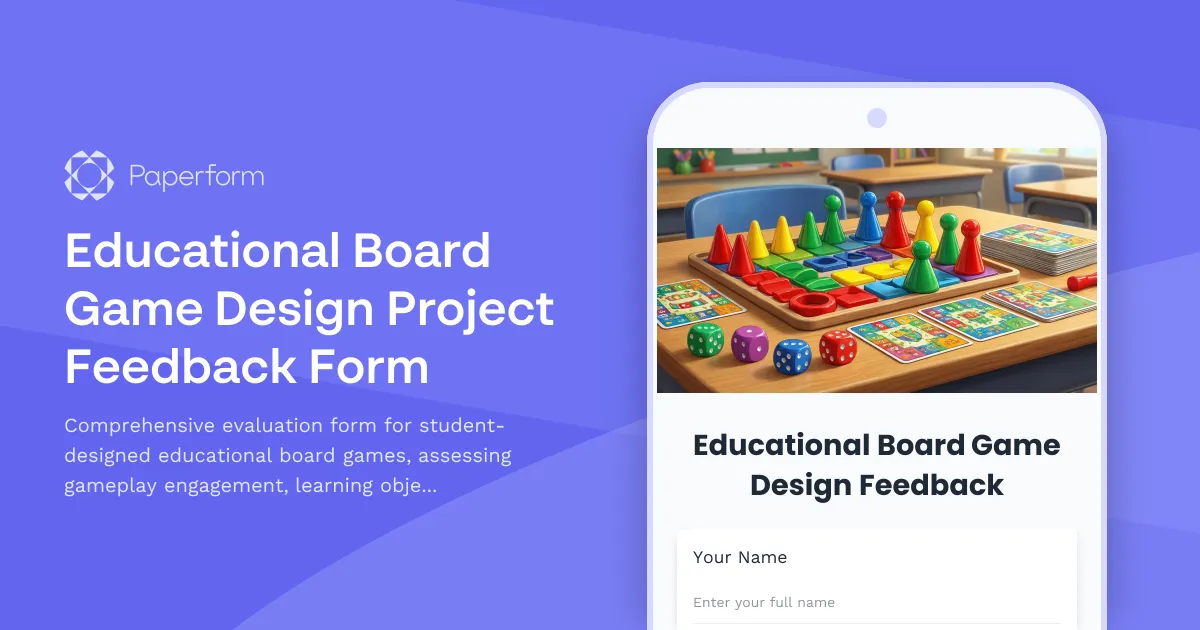
Educational Board Game Design Project Feedback Form
Comprehensive evaluation form for student-designed educational board games, assessing gameplay engagement, learning objectives, rule clarity, creativity, and peer teaching effectiveness.
Educational Game-Based Learning Feedback Form
Gather comprehensive feedback on educational games with questions covering game mechanics, learning outcomes, difficulty progression, engagement levels, and knowledge retention to improve game-based learning experiences.