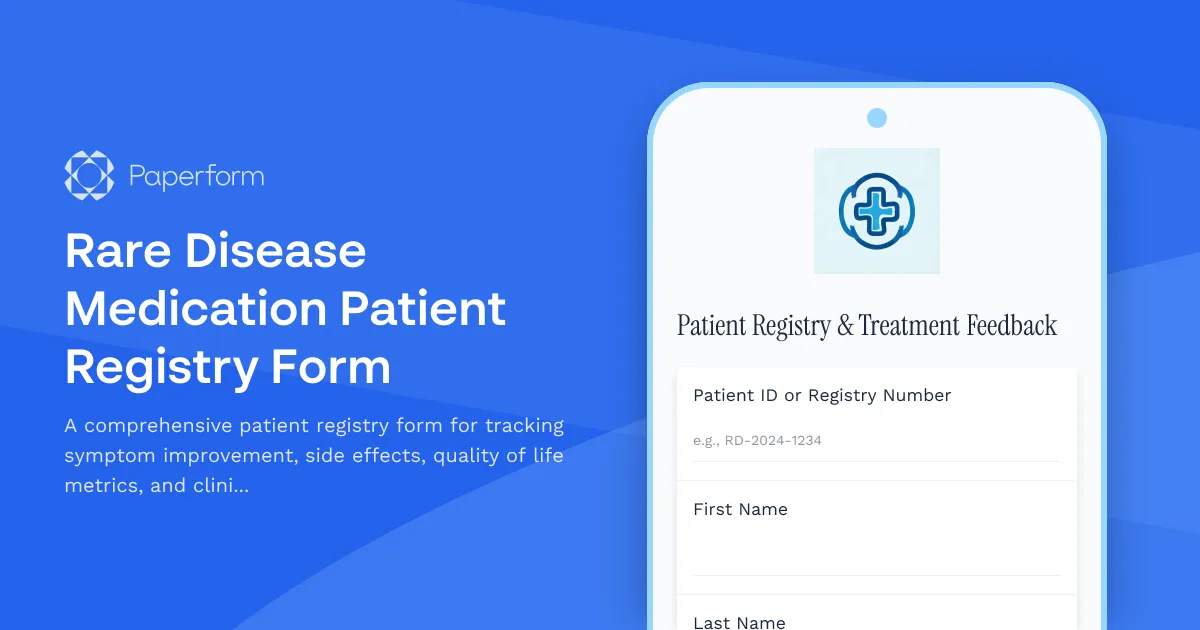
Track Patient Outcomes for Rare Disease Medications
Managing rare disease treatments requires careful monitoring of patient outcomes, side effects, and quality of life changes. This Rare Disease Medication Patient Registry Form is designed for pharmaceutical companies, research organizations, and healthcare providers who need to collect structured, ongoing feedback from patients participating in rare disease treatment programs.
Built for pharmaceutical research and patient registries
Whether you're a pharmaceutical company monitoring post-market outcomes, a research institution building a patient registry, or a healthcare provider tracking treatment effectiveness, this template helps you gather the critical data points needed to assess medication performance in real-world settings.
The form captures symptom improvement tracking, comprehensive side effect monitoring, quality of life metrics, and patient interest in future clinical trials—all in one organized workflow. With Paperform's conditional logic, you can tailor follow-up questions based on patient responses, ensuring you collect relevant data without overwhelming participants.
Seamless integration with your research workflows
Connect this form to your existing research infrastructure using Paperform's native integrations and Stepper workflow automation. Automatically route submissions to your patient database, trigger follow-up surveys based on reported side effects, send data to Airtable or Google Sheets for analysis, or flag high-priority cases that need immediate clinical review.
For organizations managing sensitive patient data, Paperform offers SOC 2 Type II compliance, data residency controls, and enterprise-grade security—giving you confidence that patient information is handled with the highest standards of protection.
AI-powered insights for faster analysis
Use Paperform's AI Insights to quickly identify trends across patient cohorts, spot common side effects, and generate summary reports from large datasets. This helps research teams and pharmaceutical companies make data-driven decisions faster, without manual spreadsheet work.
This template is ideal for pharmaceutical companies, CROs (Contract Research Organizations), patient advocacy groups, academic medical centers, and specialty clinics managing rare disease treatments. Create a professional patient registry that supports better outcomes, informed research decisions, and stronger patient engagement.


More templates like this
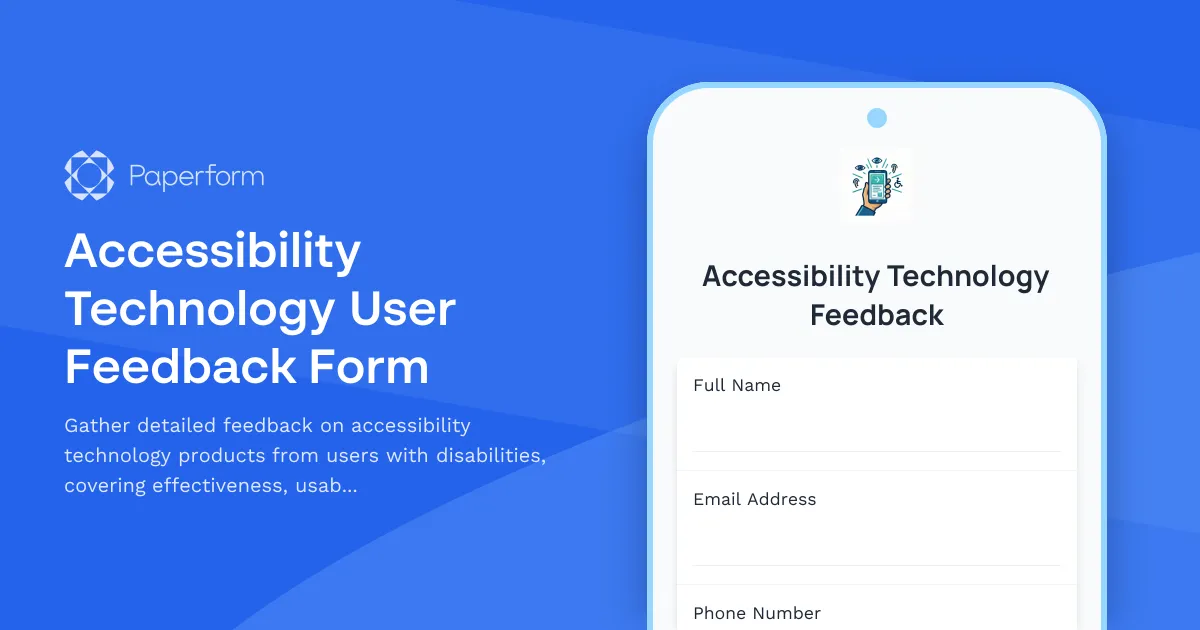
Accessibility Technology User Feedback Form
Gather detailed feedback on accessibility technology products from users with disabilities, covering effectiveness, usability, independence improvement, learning curve, and caregiver training needs.
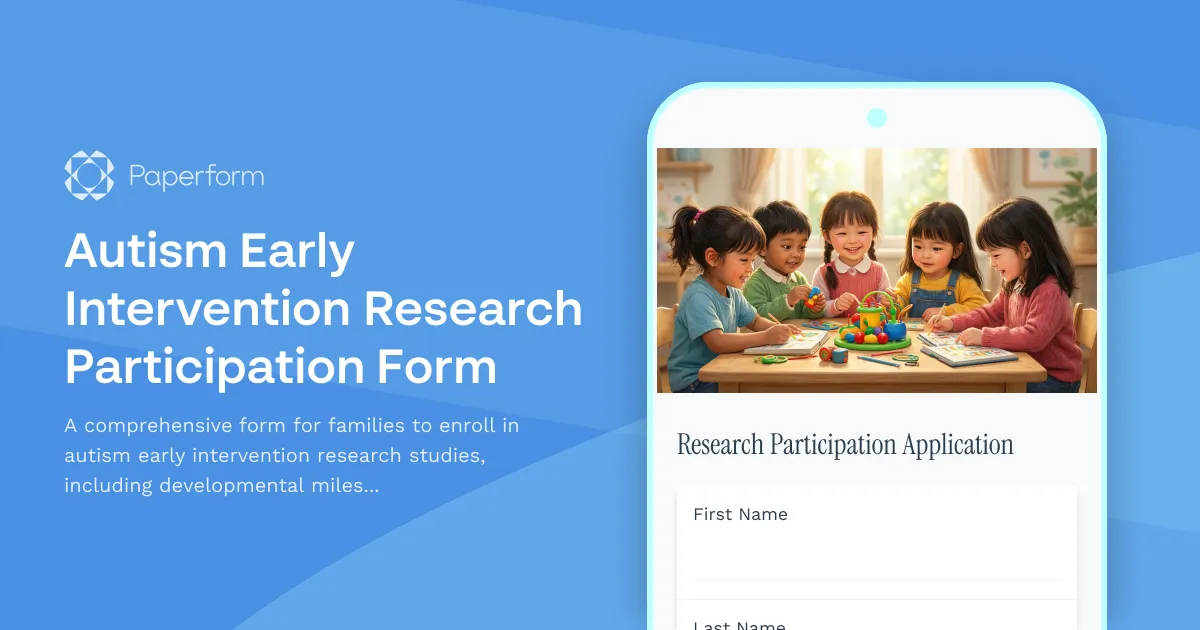
Autism Early Intervention Research Participation Form
A comprehensive form for families to enroll in autism early intervention research studies, including developmental milestone tracking, therapy commitment, parent training consent, and school district coordination.
Chronic Parvovirus B19 Infection Screening & Assessment Form
Comprehensive screening form for chronic parvovirus B19 infection in immunocompromised patients, including anemia assessment, PCR testing criteria, IVIG therapy evaluation, and infectious disease consultation referral.
Chronic Radiation Proctitis Screening & Assessment Form
Comprehensive screening form for chronic radiation proctitis following pelvic radiation therapy, including rectal bleeding assessment, endoscopy criteria evaluation, hyperbaric oxygen eligibility, and gastroenterology referral coordination.

Climate Change & Health Poster Abstract Submission Form
Submit your research poster abstract on climate change and health impacts, including environmental exposure data, heat-related illness trends, vector-borne disease mapping, and adaptation strategies.
Clinical Research Conference Attendee Survey
Professional post-conference feedback form for clinical research events covering protocol design, IRB compliance, patient recruitment, and data management technology sessions.
Clinical Research Site Investigator Meeting Feedback Form
Gather comprehensive feedback from site investigators on protocol training, enrollment strategies, sponsor communication, and regulatory guidance to improve future clinical research meetings and trial outcomes.

Clinical Trial Patient Recruitment Event Feedback Form
Gather feedback from potential participants about recruitment events for clinical trials, evaluating study explanation clarity, informed consent process, compensation transparency, and safety protocols.
Hearing Aid User Satisfaction Survey
Gather detailed feedback from hearing aid users about device performance, sound quality across environments, battery life, connectivity features, and their experience with audiologist programming.
Medication-Assisted Treatment (MAT) Program Coordinator Evaluation Form
Comprehensive evaluation form for MAT program coordinators to track patient medication effectiveness, craving reduction, side effect management, counseling integration, and long-term recovery outcomes.
Medication Synchronization & Adherence Tracking Form
A comprehensive pharmacy form for synchronizing patient medications, tracking adherence patterns, reviewing potential interactions, and correlating outcomes for value-based care reporting and chronic disease management.
Palliative Care Medication Consultation Form
A comprehensive pharmacist consultation form for palliative care patients to assess medication effectiveness, manage drug interactions, provide family education, and optimize comfort at end of life.