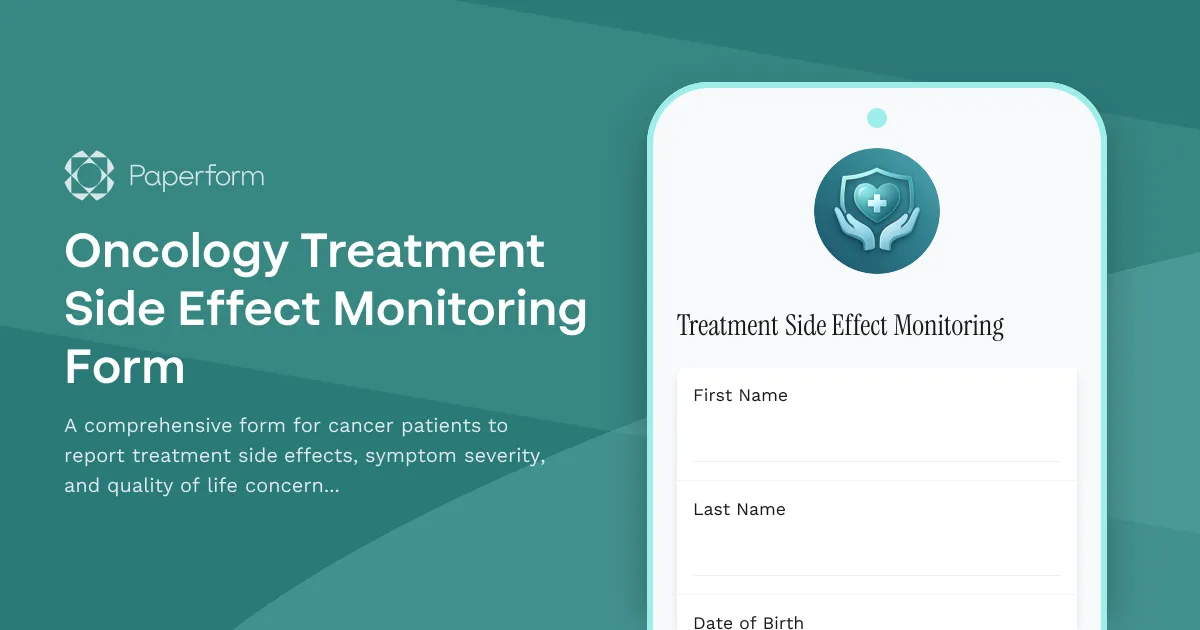
Monitor Cancer Treatment Side Effects with Confidence
For oncology clinics, cancer centers, and healthcare providers, tracking treatment side effects between appointments is critical to patient safety and quality of care. This oncology treatment side effect monitoring form gives patients a structured way to report symptoms, rate severity, and communicate intervention needs—helping clinical teams respond quickly and adjust treatment plans when needed.
Why This Template Works for Oncology Care
Cancer treatment side effects can emerge or escalate quickly between scheduled visits. This form provides a systematic assessment covering common chemotherapy, radiation, and immunotherapy side effects—from nausea and fatigue to neuropathy and skin reactions—with validated severity grading scales that match clinical protocols.
Patients can complete this form from home before a follow-up appointment or whenever symptoms change, giving oncologists, nurses, and care coordinators the information they need to prioritize interventions, adjust medications, or schedule urgent consults.
Designed for Patient-Centered Oncology Workflows
The template includes quality of life assessments, pain scales, and conditional questions that adapt based on reported symptoms—ensuring you capture the right level of detail without overwhelming patients. It's ideal for medical oncology, radiation oncology, hematology-oncology practices, and cancer support programs.
With Paperform, you can customize severity scales, add clinic-specific questions, and apply conditional logic to route urgent reports directly to nursing staff. Connect submissions to your EHR, patient portal, or care coordination platform using Stepper workflows, and set up automated alerts when symptom severity crosses clinical thresholds.
Built for healthcare teams who prioritize proactive symptom management and patient-centered care, this form helps you stay ahead of treatment toxicities and maintain quality of life throughout the cancer journey.



More templates like this
Thyroid Disorder Symptom Checklist
Track thyroid-related symptoms including energy levels, weight changes, temperature sensitivity, and other key indicators before your appointment.
Anticoagulation Safety Checklist & Bleeding Risk Assessment
A comprehensive pre-visit assessment for patients on anticoagulation therapy to evaluate bleeding risk, fall frequency, medication compliance, and dietary vitamin K intake.
Appendicitis Screening Form
A clinical pre-visit appendicitis screening form that assesses key symptoms including McBurney's point tenderness, fever, nausea, and symptom progression to help healthcare providers prioritize urgent cases.
Asthma Action Plan Compliance & Symptom Tracker
Track asthma symptoms, peak flow readings, trigger exposure, and medication usage to help your healthcare provider assess control and adjust your treatment plan.

Autoimmune Disease Symptom Tracker
A comprehensive pre-visit symptom assessment form for tracking autoimmune disease symptoms, identifying flare patterns, and monitoring medication side effects across multiple organ systems.

Bariatric Surgery Candidacy Screening Form
A comprehensive pre-visit assessment form that evaluates bariatric surgery candidacy through BMI calculation, weight loss history, comorbidity screening, and lifestyle readiness evaluation.
Bladder Health Assessment & Urinary Diary
A comprehensive urology intake form to assess bladder health, track urinary frequency patterns, evaluate incontinence severity, and measure quality of life impact before your visit.
Cardiology Pre-Visit Symptom Checker
A comprehensive cardiology intake form that helps patients document chest pain symptoms, cardiovascular risk factors, and current medications before their appointment.
Chronic Disease Self-Management Assessment
A comprehensive assessment form for patients managing chronic conditions, featuring goal-setting exercises, barrier identification, and personalized care plan agreements to support better health outcomes.
Chronic Fatigue Syndrome Diagnostic Screening Form
A comprehensive pre-visit symptom assessment form to screen for chronic fatigue syndrome (CFS/ME) with validated fatigue severity scales, post-exertional malaise evaluation, and sleep quality measures.
Chronic Pain Assessment Form
A comprehensive chronic pain evaluation form that assesses pain levels, daily function impact, and treatment risk factors to help healthcare providers develop personalized pain management plans.
COPD Symptom Assessment Form
A comprehensive pre-visit symptom assessment for COPD patients to evaluate dyspnea levels, exacerbation frequency, oxygen use, and overall respiratory health before their appointment.