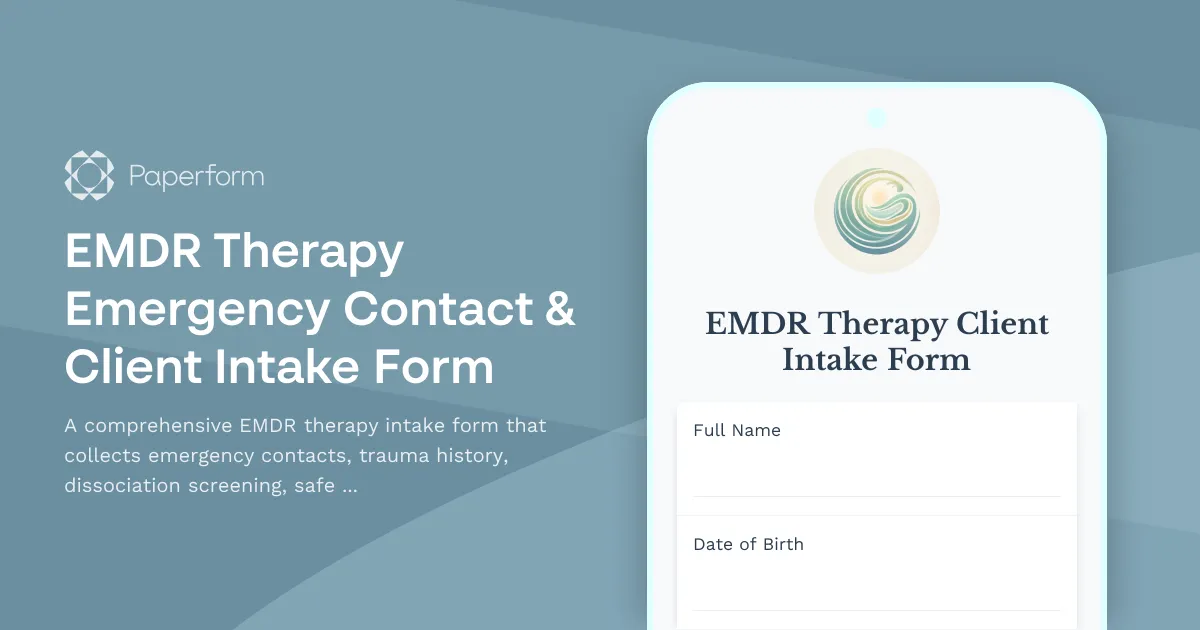
Professional EMDR Therapy Intake & Emergency Contact Form
Eye Movement Desensitization and Reprocessing (EMDR) therapy is a powerful, evidence-based treatment for trauma and PTSD. Before beginning EMDR sessions, therapists need to gather critical information about clients' trauma history, dissociation risk, grounding techniques, and bilateral stimulation preferences to ensure safe and effective treatment.
This EMDR Therapy Emergency Contact & Client Intake Form is designed specifically for mental health professionals, trauma therapists, and EMDR-trained clinicians who need a structured way to collect essential pre-treatment information. The form covers everything from emergency contact details and medical history to trauma-specific screening questions, dissociation assessments, and bilateral stimulation method preferences.
Why EMDR therapists need this form
Traditional paper intake forms can be time-consuming to complete, difficult to store securely, and hard to review before sessions. This digital EMDR intake form streamlines the entire process by allowing clients to complete their intake information before their first session, giving therapists time to review trauma history, identify potential risks, and prepare appropriate treatment protocols.
The form includes specialized sections for dissociation screening (essential for determining if clients are suitable candidates for EMDR), safe place visualization details (used as a stabilization resource during sessions), and bilateral stimulation preferences (eye movements, tactile, or auditory methods). This ensures therapists have everything they need to create a personalized, trauma-informed treatment plan.
How Paperform enhances your therapy practice
With Paperform, you can create secure, HIPAA-aware intake forms that match your practice's branding while keeping sensitive client information protected. The conditional logic feature allows you to show or hide questions based on previous answers—for example, only displaying detailed trauma questions if a client indicates they've experienced specific types of trauma.
You can integrate your EMDR intake form with your practice management software, CRM, or Google Sheets to automatically organize client information. Set up automated email confirmations to acknowledge receipt of the intake form, and use custom success messages to provide clients with helpful pre-session instructions or resources.
For practices that need to coordinate care with other providers or maintain detailed records, you can use Papersign (papersign.com) to add informed consent and treatment agreement signatures directly to your intake process. And with Stepper (stepper.io), you can automate your entire client onboarding workflow—from intake form submission to scheduling the first session, sending pre-session resources, and updating your client database.
This EMDR intake form template is fully customizable to match your specific therapeutic approach, whether you practice standard EMDR protocol, use adaptations for complex trauma, or integrate EMDR with other modalities. Mental health professionals, trauma therapists, psychologists, and licensed clinical social workers will find this template saves hours of administrative work while ensuring they have comprehensive information for safe, effective EMDR treatment.



More templates like this
Biofeedback Session Emergency Contact Form
A comprehensive biofeedback therapy intake form that collects emergency contacts, stress baseline information, autonomic dysfunction assessment, sensor placement consent, and home practice expectations for new clients.
Drama Therapy Group Emergency Contact Form
A comprehensive intake form for drama therapy groups that collects emergency contacts, performance anxiety levels, role-play comfort, psychodrama experience, and confidentiality agreements to ensure safe and effective therapeutic sessions.

Horticulture Therapy Program Emergency Contact Form
A comprehensive emergency contact form for horticulture therapy programs that captures participant information, plant allergies, outdoor tolerance levels, gardening experience, and therapeutic goals.
Hypnotherapy Session Emergency Contact Form
A comprehensive intake form for hypnotherapy clients that collects emergency contact details, screens for dissociative disorders, assesses trauma history and suggestibility, and obtains recording consent for safe therapeutic practice.
Chronic Nausea & Hyperemesis Mental Health Intake Form
A specialized mental health intake form for patients experiencing chronic nausea and hyperemesis, assessing symptom severity, nutritional status, medical history, and quality of life impact.
Dance Movement Therapy Emergency Contact Form
A comprehensive emergency contact form for dance movement therapy clients that captures mobility range, body image concerns, rhythm sensitivity, movement preferences, and consent for therapeutic movement exploration.
Gastroparesis Mental Health Intake Form
A comprehensive mental health intake form for clients with gastroparesis, addressing nutritional challenges, weight changes, medical interventions, and eating disorder risk assessment.

Mental Health Intake & Symptom Assessment
A comprehensive mental health intake form with PHQ-9 depression screening, GAD-7 anxiety assessment, and automated crisis intervention routing for safer, more informed care.
Panic Disorder Assessment Form
A comprehensive pre-visit assessment form to screen for panic disorder, track panic attack frequency, evaluate physical symptoms, and assess for agoraphobia.
Somatic Therapy Emergency Contact Form
A comprehensive emergency contact form for somatic therapy practitioners to gather essential client information, body awareness levels, touch consent boundaries, and grounding techniques for trauma-informed care.
Acceptance and Commitment Therapy (ACT) Intake Form
Comprehensive ACT therapy intake form with psychological flexibility assessment, values clarification exercises, and committed action planning to help therapists understand client needs and therapeutic goals.
Addiction Recovery Therapy Intake Form
A comprehensive intake form for addiction recovery counselors to gather essential information about new clients, including substance use history, previous sobriety attempts, support network, and recovery goals.