Streamline Your Delusional Disorder Assessment with Paperform
Mental health professionals working with clients experiencing delusional disorders need structured, comprehensive intake processes that capture nuanced clinical information while maintaining a compassionate, professional approach. This Delusional Disorder Therapy Intake Form template is designed specifically for therapists, counselors, and mental health clinicians who need to gather detailed information about belief content, onset patterns, functional impact, and client insight levels.
Built on Paperform's intuitive platform, this template helps you collect essential diagnostic information, risk factors, and treatment history in one organized, HIPAA-aware workflow. The form uses conditional logic to reveal relevant follow-up questions based on symptom presentation, ensuring you gather comprehensive data without overwhelming clients with unnecessary questions.
Why Paperform for Mental Health Intake?
Unlike rigid survey tools, Paperform lets you create intake forms that feel professional and empathetic. Customize the language, branding, and flow to match your practice's therapeutic approach. The doc-style editor makes it simple to add consent sections, intake instructions, and assessment scales inline with your questions.
Once submissions come in, connect your form to your practice management software, secure client databases, or use Stepper to automatically route new client information to your scheduling system, create electronic health record entries, and trigger personalized onboarding workflows—all without manual data entry.
For practices requiring signed consent forms or treatment agreements, integrate Papersign to send eSignature documents immediately after intake completion, keeping all client documentation organized and legally compliant in one connected workflow.
This template is ideal for private practice therapists, community mental health centers, psychiatric clinics, and university counseling services who need efficient, thorough intake processes that support high-quality clinical assessment and care planning.



More templates like this
Female Veteran Therapy Intake Form
Specialized mental health intake form for female veterans addressing military sexual trauma, identity challenges, VA navigation, and recognition issues in a safe, supportive environment.
Gender Dysphoria Therapy Intake Form
A comprehensive intake form for therapists working with clients experiencing gender dysphoria, covering gender identity history, transition goals, and support systems.

Military Chaplain Moral Injury & Spiritual Crisis Intake Form
A compassionate intake form for military chaplains experiencing moral injury, spiritual crisis, compassion fatigue, and faith struggles from bearing witness to trauma in service.
Pathological Demand Avoidance (PDA) Therapy Intake Form
A comprehensive intake form for therapists working with clients experiencing Pathological Demand Avoidance (PDA), capturing avoidance patterns, anxiety triggers, meltdown frequency, and daily functioning impact.
Acceptance and Commitment Therapy (ACT) Intake Form
Comprehensive ACT therapy intake form with psychological flexibility assessment, values clarification exercises, and committed action planning to help therapists understand client needs and therapeutic goals.
Addiction Recovery Therapy Intake Form
A comprehensive intake form for addiction recovery counselors to gather essential information about new clients, including substance use history, previous sobriety attempts, support network, and recovery goals.
Adoption and Foster Care Therapy Intake Form
A comprehensive therapy intake form designed for mental health professionals working with adopted children and foster care placements, capturing placement history, attachment patterns, trauma background, and family integration details.
Amputation Adjustment Therapy Intake Form
A compassionate intake form for therapists working with individuals adjusting to limb loss, covering amputation details, phantom pain, prosthetic use, and emotional wellbeing.

Binge Eating Disorder Therapy Intake Form
A comprehensive intake form for therapists and counselors working with clients experiencing binge eating disorder, collecting information about eating patterns, emotional triggers, diet history, and body image concerns.
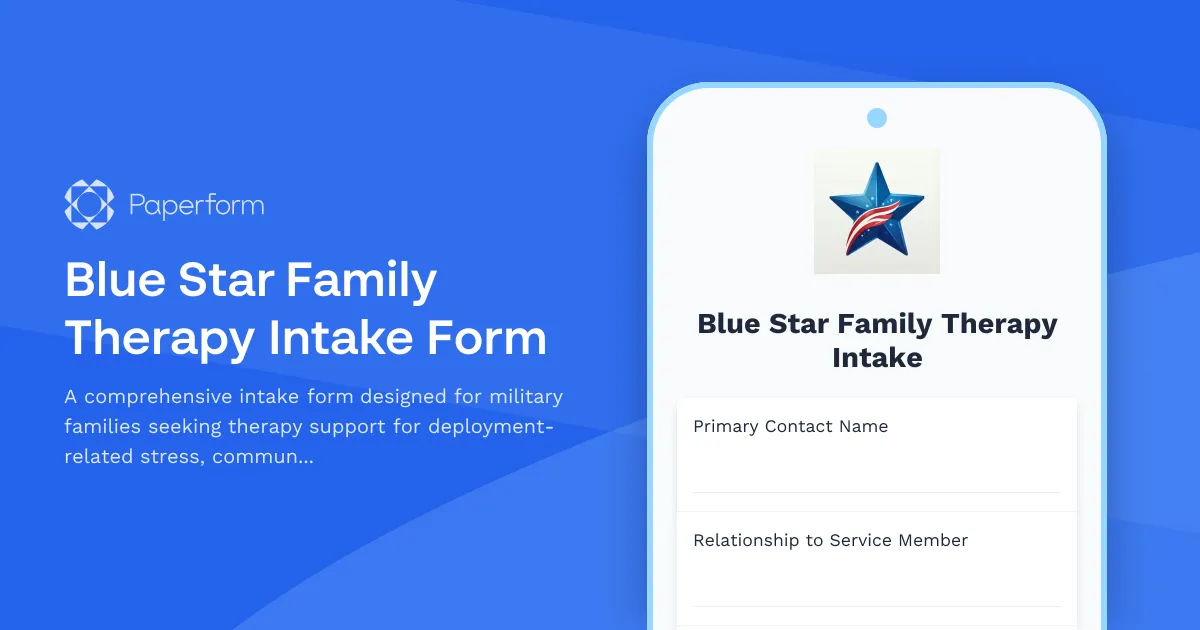
Blue Star Family Therapy Intake Form
A comprehensive intake form designed for military families seeking therapy support for deployment-related stress, communication challenges, reunion transitions, and child impact assessments.
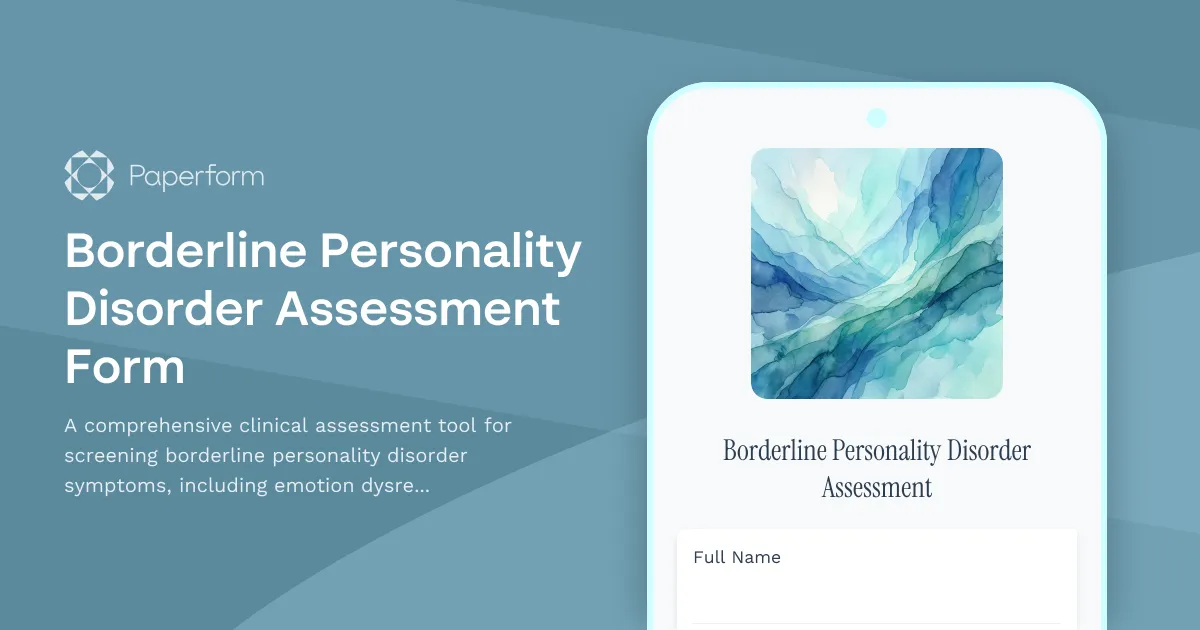
Borderline Personality Disorder Assessment Form
A comprehensive clinical assessment tool for screening borderline personality disorder symptoms, including emotion dysregulation, relationship patterns, and behavioral indicators.
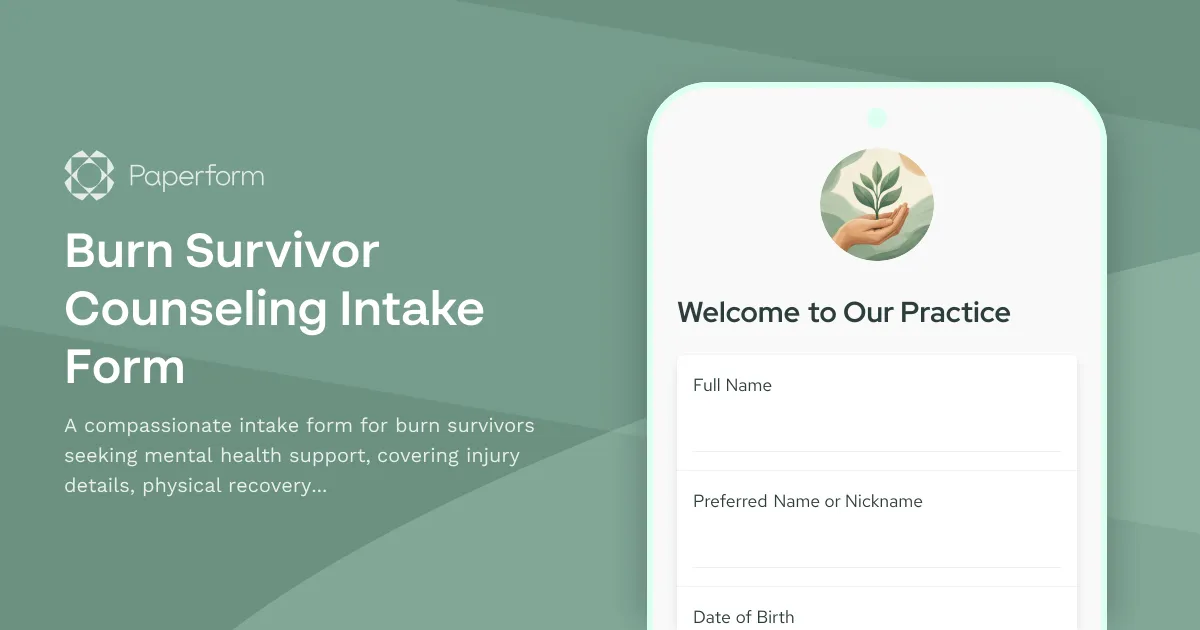
Burn Survivor Counseling Intake Form
A compassionate intake form for burn survivors seeking mental health support, covering injury details, physical recovery, emotional challenges, and treatment goals.