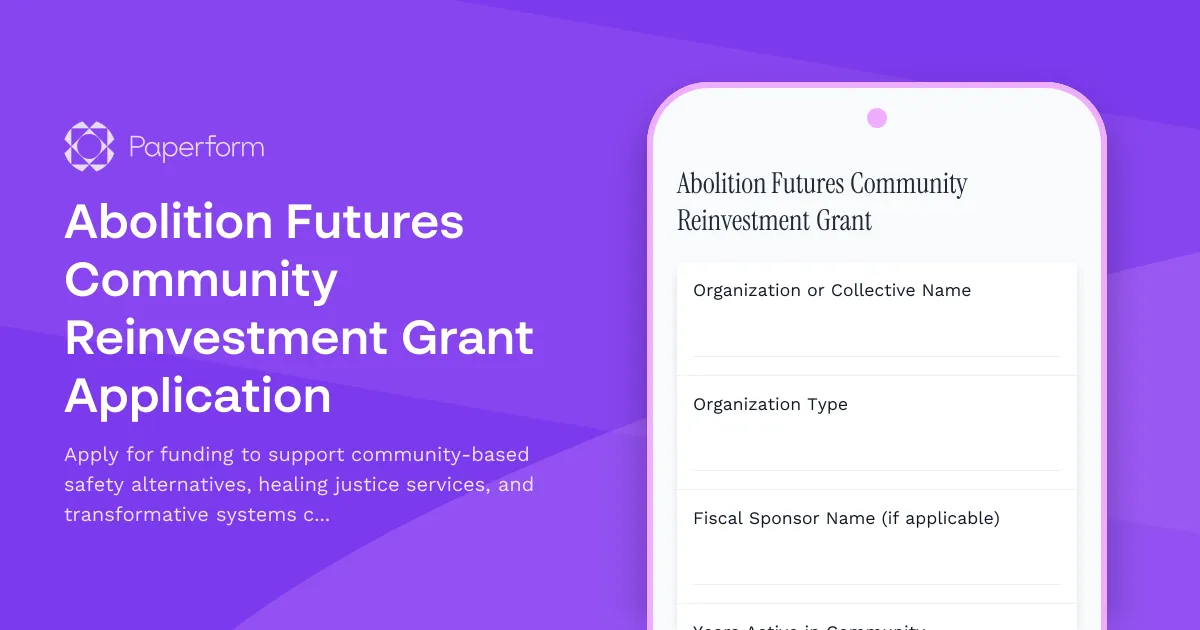
Transform Your Community with Abolition Futures Funding
The Abolition Futures Community Reinvestment Grant represents a bold commitment to reimagining public safety, wellness, and economic opportunity through community-led solutions. This grant program redirects resources previously allocated to carceral systems toward transformative initiatives that address root causes of harm while building thriving, self-determined communities.
Who Should Apply
This grant application is designed for grassroots organizations, community collectives, mutual aid networks, and justice-focused nonprofits working at the intersection of abolition and community transformation. Whether you're establishing community safety patrols, creating healing circles, launching economic cooperatives, or building alternative crisis response systems, this streamlined application helps you articulate your vision and demonstrate your readiness for funding.
What Makes This Form Different
Traditional grant applications often reinforce hierarchical, gatekeeping structures that exclude the very communities most impacted by criminalization and disinvestment. This form centers accessibility, community wisdom, and transformative potential over institutional credentials. We recognize that the expertise for building safer, healthier communities already exists within those communities.
Key Funding Priorities
Community-Based Safety Alternatives: Support for violence interruption programs, community accountability processes, de-escalation training, mutual aid emergency response teams, and neighborhood-led safety initiatives that don't rely on policing.
Healing Justice Services: Funding for trauma-informed care, peer support networks, restorative justice circles, culturally-rooted healing practices, mental health crisis alternatives, and survivor-centered support systems.
Economic Opportunity Creation: Resources for cooperative businesses, job training programs, debt relief initiatives, financial literacy education, and wealth-building strategies that create pathways out of criminalization.
Transformative Systems Change: Investment in policy advocacy, community organizing, participatory research, youth leadership development, and coalition-building efforts that challenge carceral logic and build abolitionist infrastructure.
How Paperform Supports Justice-Oriented Grantmaking
Managing grant applications shouldn't require expensive software or technical expertise. With Paperform, organizations administering transformative funding can create accessible, community-centered application processes that respect applicants' time and lived experience.
Accessible Design: The form's clean, mobile-responsive interface ensures applicants can complete their submission from any device, removing barriers for organizations without office infrastructure. You can customize fonts, colors, and layout to reflect your values and make the form visually welcoming.
Conditional Logic for Relevance: Show questions only when they're relevant to an applicant's specific project type, reducing cognitive load and making the process feel more conversational than bureaucratic.
File Uploads Made Simple: Collect supporting documents, community letters, budget breakdowns, and fiscal sponsor agreements all in one place, eliminating the need for separate email threads or portal uploads.
Built-In Accessibility Features: Screen reader compatibility, keyboard navigation, and clear form structure ensure the application is accessible to disabled community members and organizations.
Secure Data Handling: SOC 2 Type II compliance means applicant information—often including sensitive details about criminalized community members—is protected with enterprise-grade security, giving applicants confidence their stories are safe.
Streamlining the Review Process
For grant administrators and review committees, Paperform transforms how you manage incoming applications:
Centralized Submissions: All applications flow into one dashboard where you can filter, sort, and search by funding priority, geographic area, or requested amount, making it easier to identify strong candidates and build a diverse cohort.
Collaborative Review: Export submissions to Google Sheets or Airtable where your review team can score applications, add comments, and track decision-making transparently—or use Paperform's native integrations to push data directly into your existing grant management workflow.
Automated Acknowledgments: Set up custom confirmation emails that immediately let applicants know their submission was received, what happens next, and how to contact you with questions, reducing anxiety and demonstrating respect for their effort.
Scoring and Prioritization: Use Paperform's calculation fields to automatically compute alignment scores based on funding priorities, helping your team move more quickly through first-round screening while maintaining consistency.
Extending Your Impact with Stepper
For organizations ready to build more sophisticated grantmaking infrastructure, Stepper connects your Paperform application to powerful workflow automation:
- Multi-Stage Review Processes: Automatically route applications through eligibility screening, programmatic review, budget analysis, and final decision stages, with notifications keeping all stakeholders informed.
- Community Review Integration: Send applications to community advisory boards via Slack or email, collect their feedback, and compile input before final decisions—centering community voice in resource allocation.
- Applicant Communication Sequences: Trigger personalized email sequences based on application status, sending resources to applicants who weren't funded, requesting additional information when needed, or celebrating awardees with next steps.
- Reporting and Learning: Aggregate application data to understand trends in community needs, identify gaps in your funding priorities, and share transparent reports about who received funding and why.
Transforming Grantmaking Culture
This template reflects an abolitionist approach to resource distribution—one that minimizes gatekeeping, honors community expertise, and recognizes that those closest to the problem are closest to the solution. By using Paperform to create more accessible, transparent grant processes, funders can model the horizontal, trust-based relationships they hope to see in the world.
Whether you're a mutual aid fund redistributing community donations, a foundation divesting from carceral systems, or a fiscal sponsor supporting grassroots organizing, this form helps you gather the information you need while respecting applicants as the experts in their own liberation.
Getting Started
This template includes questions about organizational capacity, project design, community connection, budget planning, and transformative vision. You can customize any section to align with your specific funding priorities, add or remove questions based on your review criteria, and adjust language to reflect your organizational voice.
Trusted by over 500,000 teams worldwide and SOC 2 Type II compliant, Paperform provides the professional infrastructure justice-focused organizations need to manage funding programs with integrity and care—no coding required.

More templates like this
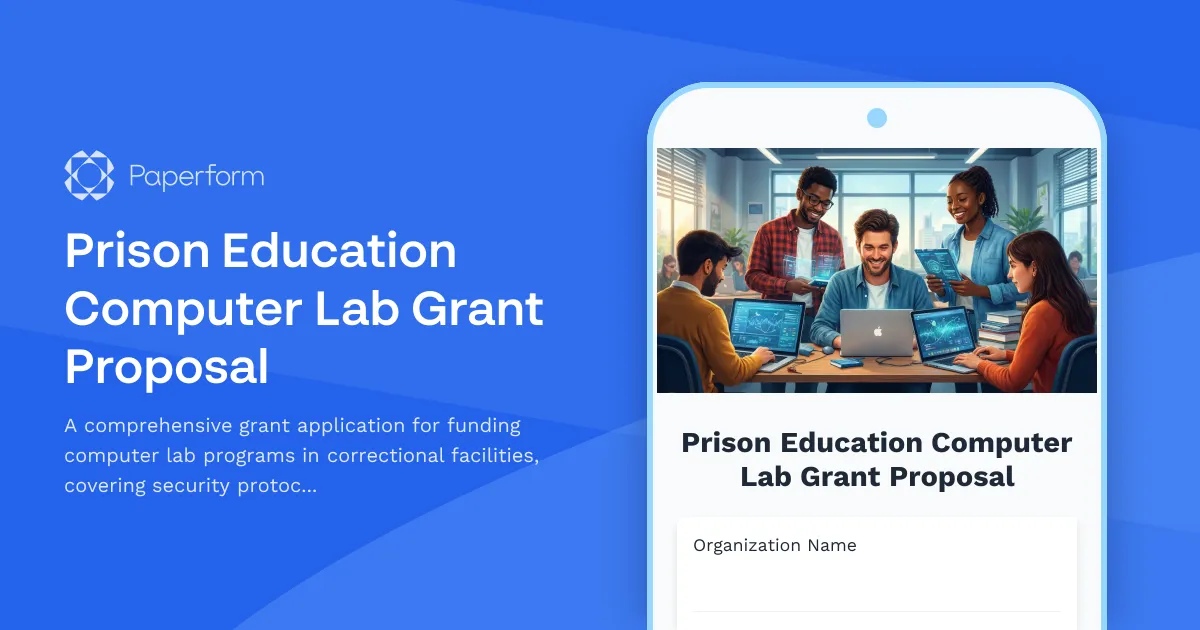
Prison Education Computer Lab Grant Proposal
A comprehensive grant application for funding computer lab programs in correctional facilities, covering security protocols, curriculum planning, instructor qualifications, and post-release employment pathways.
Youth Mentorship Program Grant Proposal
Submit a comprehensive grant application for youth mentorship programs, including mentor screening, match criteria, program activities, and engagement strategies.
Community Safety Street Ambassadors Program Funding Request
Comprehensive funding application for community-led safety ambassador programs featuring unarmed response models, crisis de-escalation training, and community accountability structures designed to improve public safety outcomes.
Homelessness Prevention & Rapid Rehousing Grant Application
A comprehensive grant application form for organizations seeking funding to deliver homelessness prevention and rapid rehousing services, with integrated case management, landlord partnerships, and measurable housing stability outcomes.
Indigenous Youth Cultural Mentorship Grant Application
Apply for funding to support Indigenous youth cultural mentorship programs featuring traditional knowledge keepers, culture camps, language instruction, and land-based learning activities.
Job Training Program Grant Application
A comprehensive grant application form for job training programs seeking funding, including curriculum details, industry partnerships, placement rates, and employer commitments.
Participatory Defense Community Organizing Grant Application
Apply for funding to support participatory defense programs that empower families and communities through court support training, evidence investigation, and sentencing advocacy.
Social Enterprise Startup Grant Proposal Form
A comprehensive grant application form for social enterprises seeking startup funding, including business model canvas, impact metrics, financial projections, and team backgrounds.
Supportive Employment for Individuals with Disabilities Grant Application
A comprehensive grant application form for organizations seeking funding to provide supportive employment services for individuals with disabilities, including job coaching, employer partnerships, and workplace accommodations.
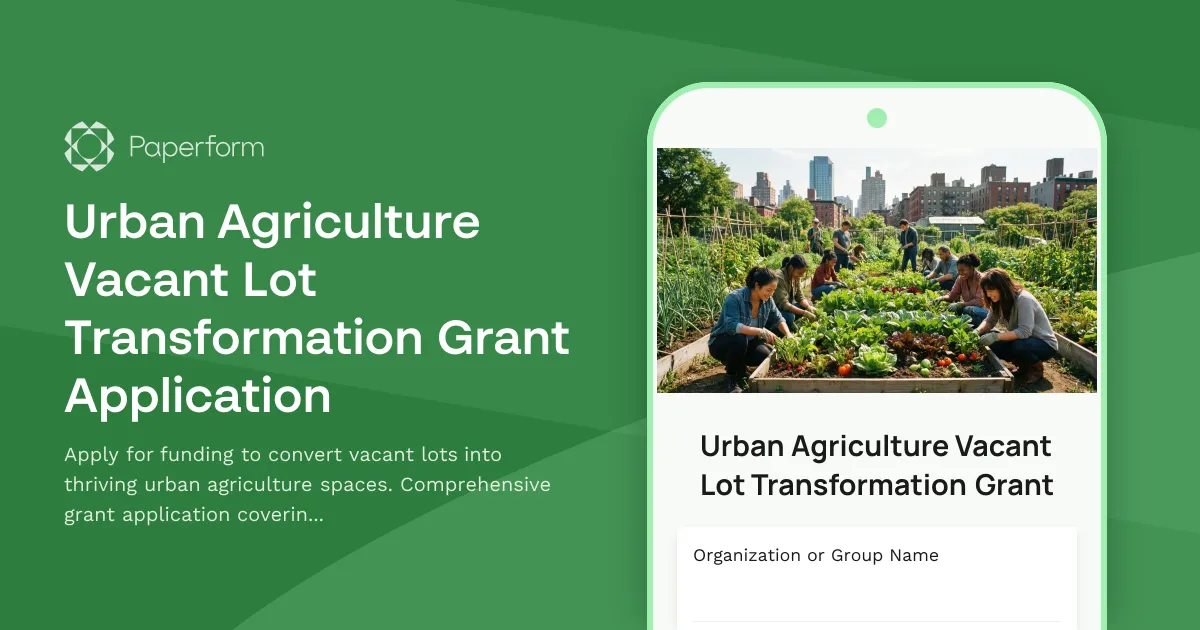
Urban Agriculture Vacant Lot Transformation Grant Application
Apply for funding to convert vacant lots into thriving urban agriculture spaces. Comprehensive grant application covering land acquisition, soil remediation, growing infrastructure, community gardens, and food access improvements.
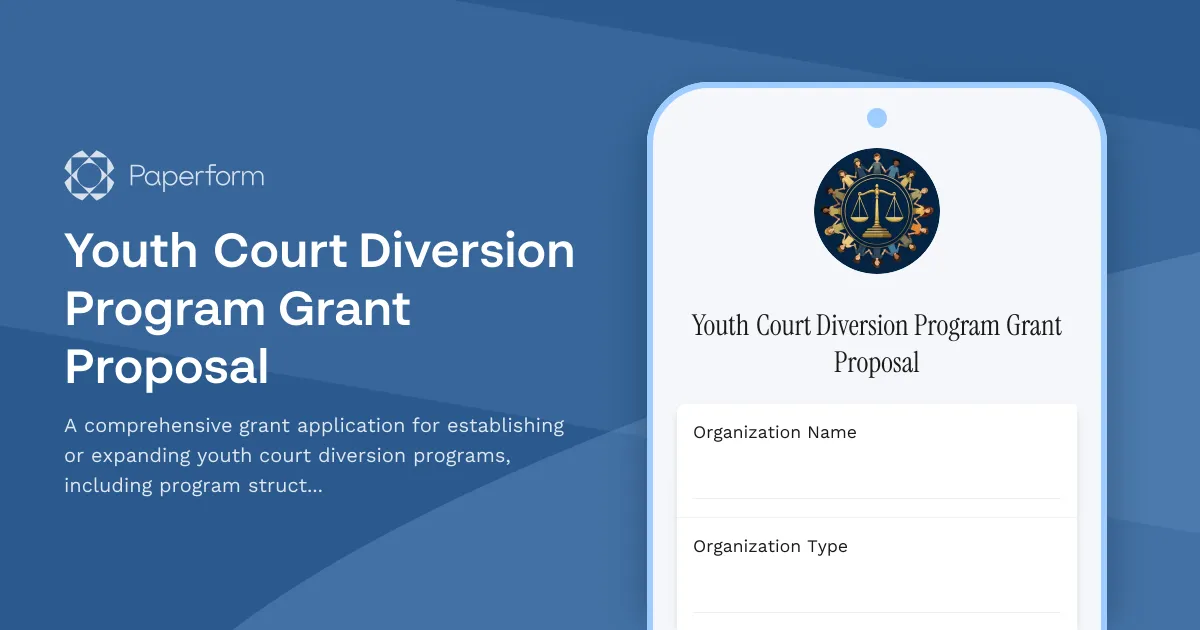
Youth Court Diversion Program Grant Proposal
A comprehensive grant application for establishing or expanding youth court diversion programs, including program structure, peer jury training protocols, sentencing guidelines, and recidivism tracking mechanisms.
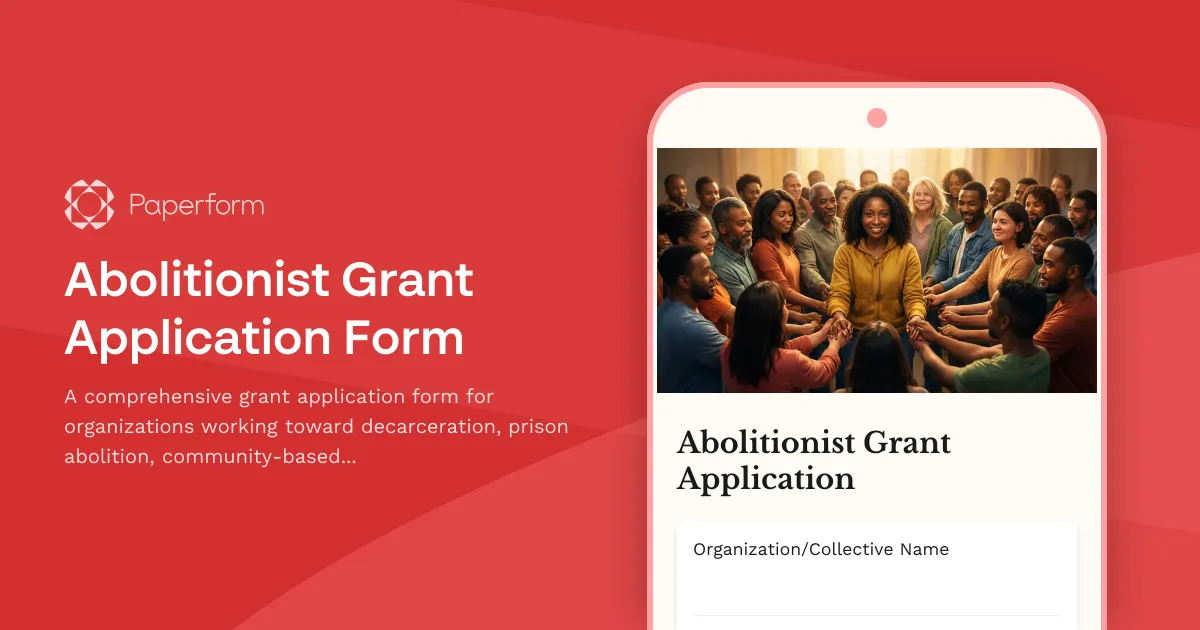
Abolitionist Grant Application Form
A comprehensive grant application form for organizations working toward decarceration, prison abolition, community-based accountability systems, and reinvestment in community resources.