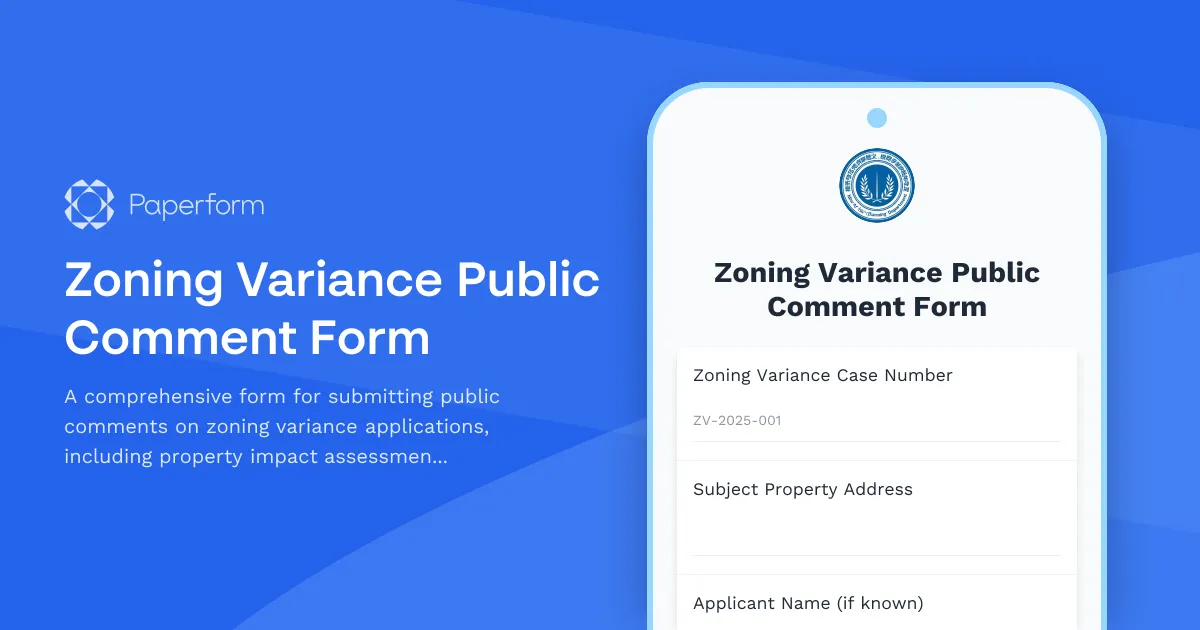
Submit Your Zoning Variance Public Comment
When a property owner applies for a zoning variance in your neighborhood, your voice matters. This zoning variance public comment form makes it simple for residents, business owners, and community members to submit formal feedback to municipal planning departments and zoning boards.
Whether you support or oppose a proposed variance, this form captures all the essential details planning officials need to consider your input: the case number, your relationship to the property, specific concerns about traffic, parking, noise, property values, or neighborhood character, and whether you plan to attend the public hearing.
Why use Paperform for civic engagement?
Municipal governments, planning departments, and zoning boards use Paperform to modernize their public comment process. Instead of requiring residents to mail letters, appear in person, or navigate clunky government portals, this form provides a clear, accessible way for community members to participate in local decision-making.
The form uses conditional logic to tailor questions based on whether you support or oppose the variance, ensuring you can articulate your specific concerns. Responses automatically flow into your planning department's workflow, and you can use Stepper to route comments to the appropriate case files, notify planning commissioners, and compile public input for official records.
For planning departments managing multiple concurrent variance applications, this template creates a consistent, organized process that encourages civic participation while reducing administrative burden. Comments are time-stamped, properly attributed, and instantly available for review—making public hearings more informed and inclusive.
Built for transparent community planning
This form is ideal for city planning departments, county zoning boards, municipal governments, neighborhood associations, and community development offices. It supports the democratic process by making it easier for residents to engage with local government decisions that affect their property values, quality of life, and neighborhood character.
With Paperform's SOC 2 Type II compliance and secure data handling, you can trust that citizen comments are protected and properly maintained as official public records.


More templates like this
Vacant Lot Transformation Program Comment Form
Submit public comments on the proposed Vacant Lot Transformation Program, including temporary use permissions, liability provisions, and community stewardship models for revitalizing unused municipal properties.
Backyard Chicken Ordinance Public Hearing Comment Form
Submit your comments on the proposed backyard chicken ordinance, including regulations on flock size, coop setbacks, and rooster restrictions for public hearing consideration.
Community Land Dedication Ordinance Public Hearing Form
Submit your feedback on the proposed land dedication ordinance, including parkland requirements, fee-in-lieu options, and neighborhood facility priorities for community development.
Floodplain Management Ordinance Public Comment Form
Submit public comments on proposed floodplain management ordinance changes, including feedback on property development restrictions, insurance impacts, and hazard mitigation priorities.
Parklet and Street Plaza Program Public Hearing Form
Submit comments and applications for parklet and street plaza installations, including block approval documentation, design proposals, and seasonal permit requests for public space transformation projects.
Shared Outdoor Space Ordinance Public Hearing Form
Submit your comments on the proposed shared outdoor space ordinance covering privately owned public spaces, design standards, and maintenance requirements.
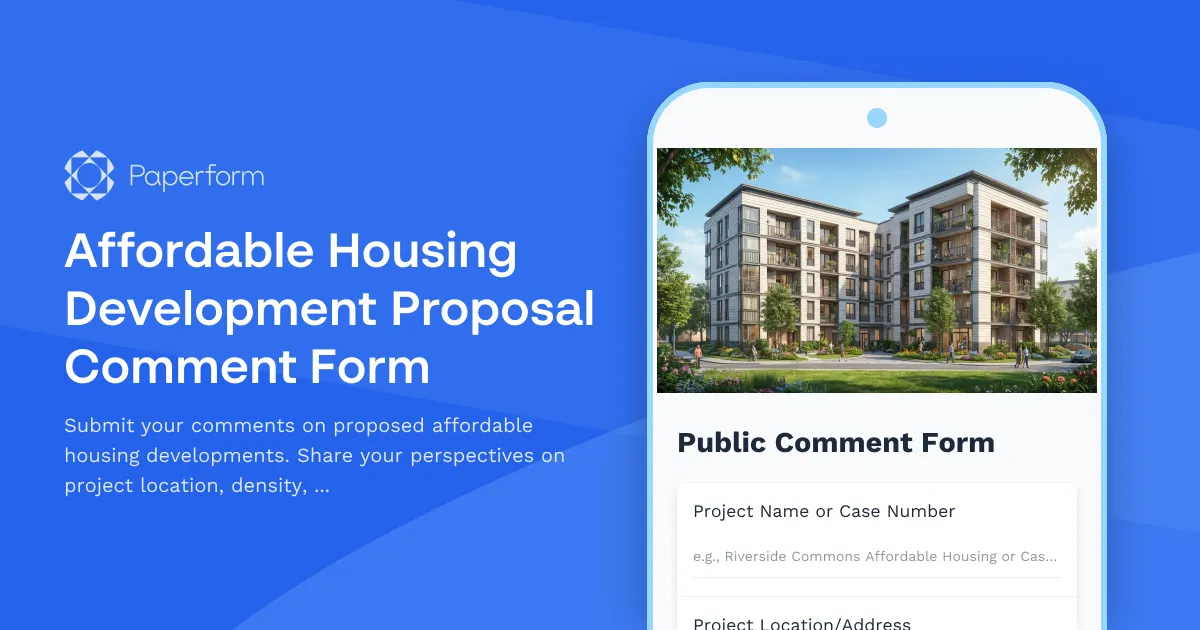
Affordable Housing Development Proposal Comment Form
Submit your comments on proposed affordable housing developments. Share your perspectives on project location, density, parking, traffic impact, and community benefits.
Alcohol Sales Density Restriction Ordinance Public Comment Form
Submit your public comment on the proposed alcohol sales density restriction ordinance, including opinions on proximity limits, license transfer restrictions, and crime impact analysis.
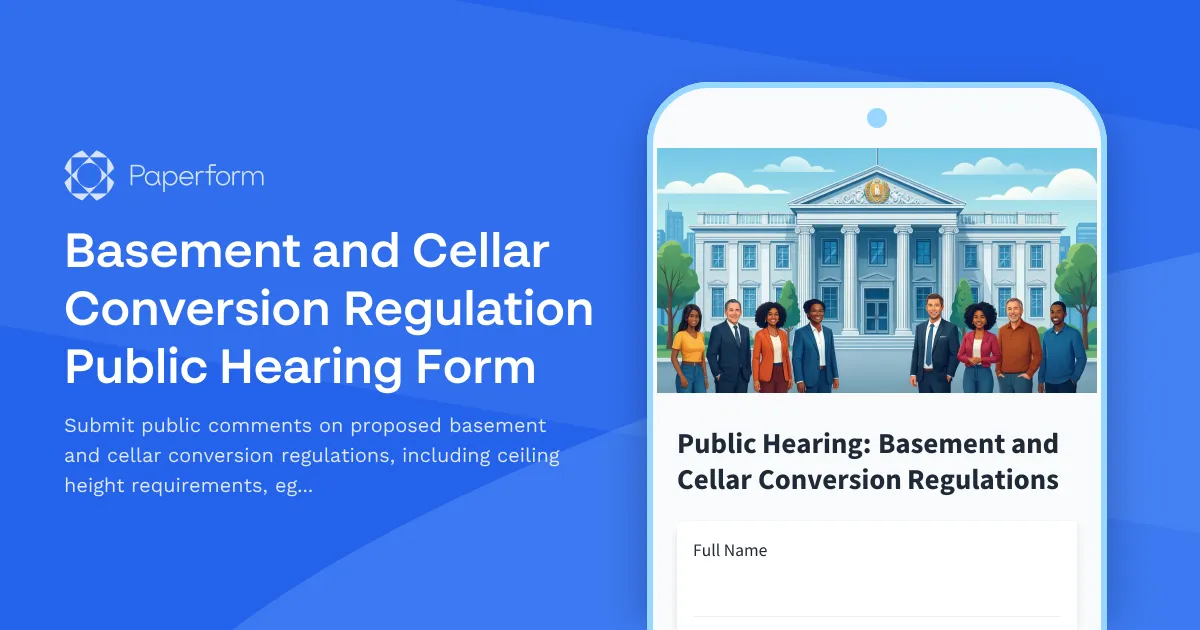
Basement and Cellar Conversion Regulation Public Hearing Form
Submit public comments on proposed basement and cellar conversion regulations, including ceiling height requirements, egress standards, and affordable housing unit creation guidelines.
City Planning Public Hearing Comment Form
Submit your comments, concerns, and suggestions on proposed development projects during city planning public hearings. Share feedback on environmental impact, traffic, and community character preservation.
Climate Action Plan Implementation Comment Form
A comprehensive public comment form for gathering community feedback on proposed climate action plans, including emission reduction targets, sector-specific strategies, and environmental justice considerations.
Coastal Zone Management Public Hearing Comment Form
Submit public comments on coastal zone management proposals, including shoreline access, environmental protection, and development regulations for public hearing consideration.