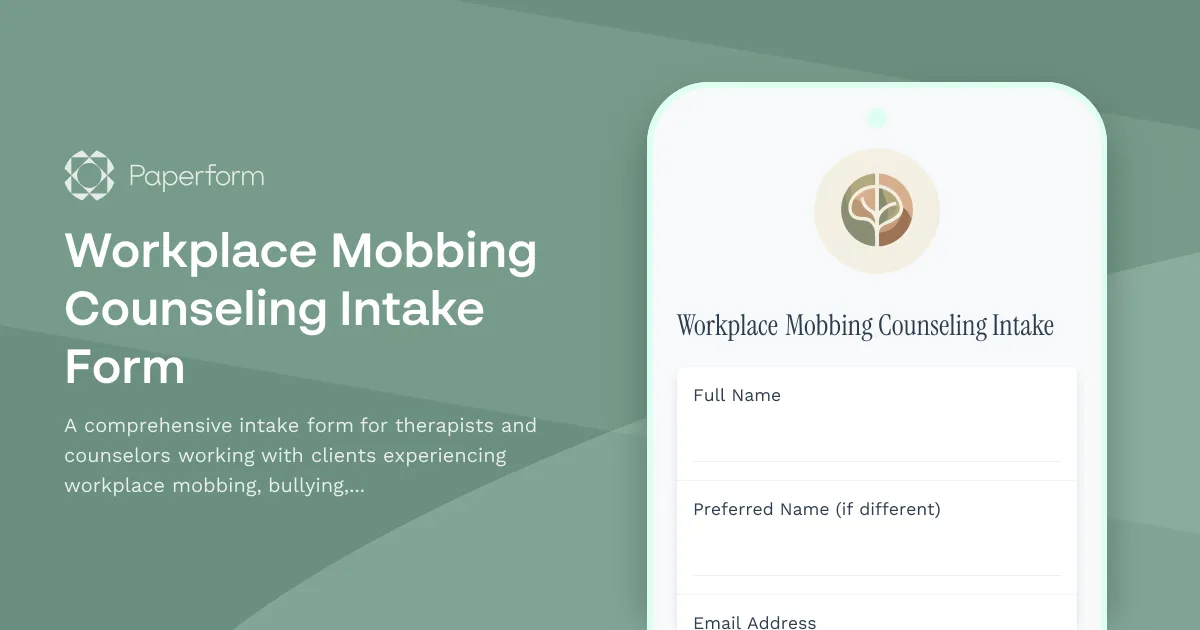
Workplace mobbing—systematic harassment by a group of colleagues—is a serious psychological stressor that requires specialized therapeutic support. This Workplace Mobbing Counseling Intake Form is designed for mental health professionals, therapists, and counselors who work with clients experiencing group-based workplace harassment, bullying, or hostile work environments.
The form captures essential information about the client's employment status, the nature and duration of the mobbing behavior, who is involved, and the psychological impact on the client's mental health and daily functioning. It also prompts clients to share any documentation they may have and their goals for therapy, enabling clinicians to quickly understand the context and severity of the situation.
Why this template works for therapists and counselors:
Paperform's conditional logic allows you to tailor follow-up questions based on the client's responses—such as asking about HR involvement only if they've reported the behavior, or exploring coping mechanisms if they indicate high distress. You can embed the form on your practice website, share it via secure link, or send it as part of your onboarding email sequence.
Because workplace mobbing cases often require detailed documentation and coordination with legal or HR teams, you can use Papersign to gather informed consent or treatment agreements electronically, keeping everything linked to the original intake for a complete client record. And with Stepper, you can automate post-submission workflows—trigger calendar invites for the first session, add the client to your practice management system, or notify your admin team to prepare case notes.
Trusted by therapists, employee assistance programs, and counseling centers, this template helps you provide compassionate, informed care from the very first contact.

More templates like this
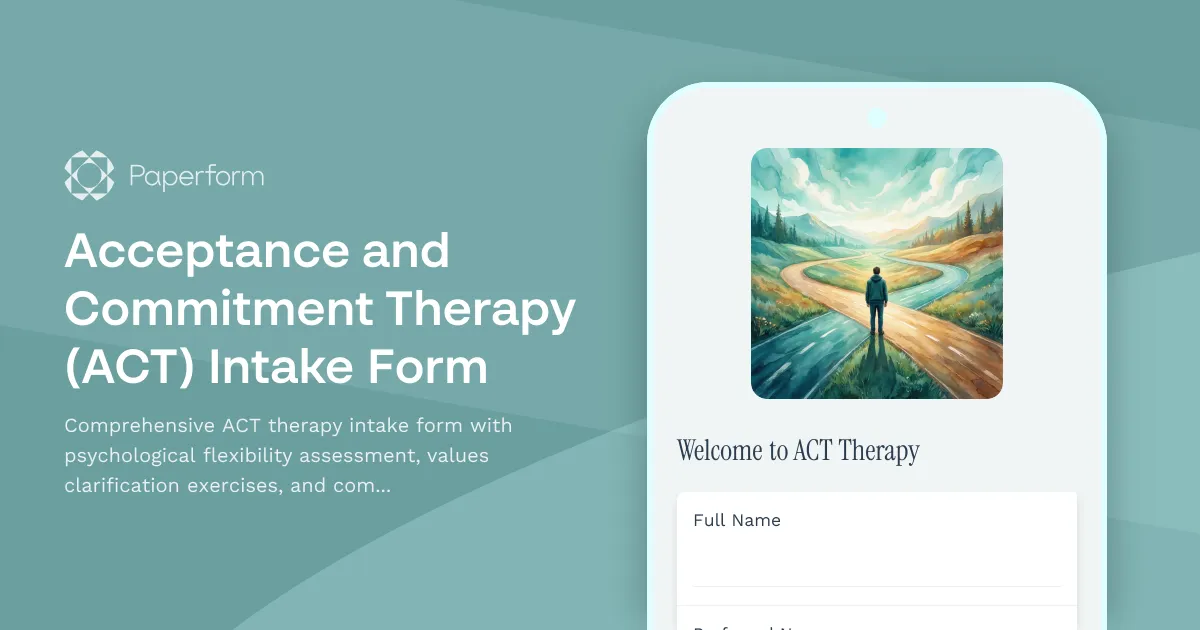
Acceptance and Commitment Therapy (ACT) Intake Form
Comprehensive ACT therapy intake form with psychological flexibility assessment, values clarification exercises, and committed action planning to help therapists understand client needs and therapeutic goals.
Addiction Recovery Therapy Intake Form
A comprehensive intake form for addiction recovery counselors to gather essential information about new clients, including substance use history, previous sobriety attempts, support network, and recovery goals.
Adoption and Foster Care Therapy Intake Form
A comprehensive therapy intake form designed for mental health professionals working with adopted children and foster care placements, capturing placement history, attachment patterns, trauma background, and family integration details.
Amputation Adjustment Therapy Intake Form
A compassionate intake form for therapists working with individuals adjusting to limb loss, covering amputation details, phantom pain, prosthetic use, and emotional wellbeing.
Binge Eating Disorder Therapy Intake Form
A comprehensive intake form for therapists and counselors working with clients experiencing binge eating disorder, collecting information about eating patterns, emotional triggers, diet history, and body image concerns.
Blue Star Family Therapy Intake Form
A comprehensive intake form designed for military families seeking therapy support for deployment-related stress, communication challenges, reunion transitions, and child impact assessments.
Borderline Personality Disorder Assessment Form
A comprehensive clinical assessment tool for screening borderline personality disorder symptoms, including emotion dysregulation, relationship patterns, and behavioral indicators.
Burn Survivor Counseling Intake Form
A compassionate intake form for burn survivors seeking mental health support, covering injury details, physical recovery, emotional challenges, and treatment goals.
Child & Adolescent Mental Health Intake Form
A comprehensive mental health intake form for children and adolescents, collecting developmental history, school performance, family dynamics, and behavioral concerns to support effective treatment planning.
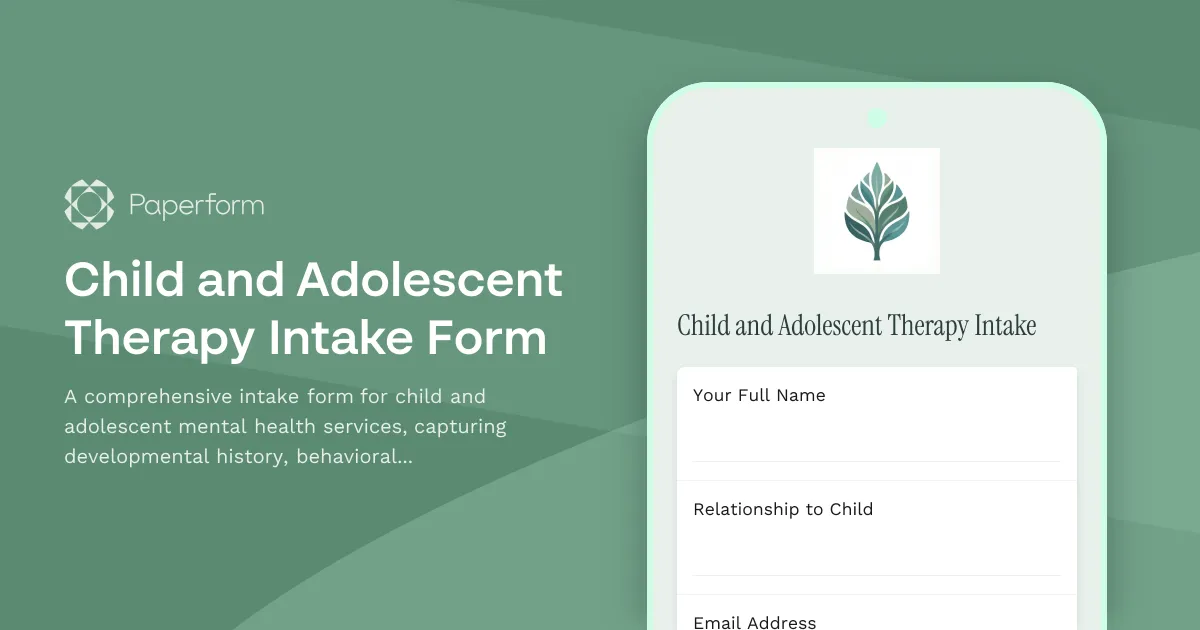
Child and Adolescent Therapy Intake Form
A comprehensive intake form for child and adolescent mental health services, capturing developmental history, behavioral concerns, school performance, and family dynamics to support effective treatment planning.
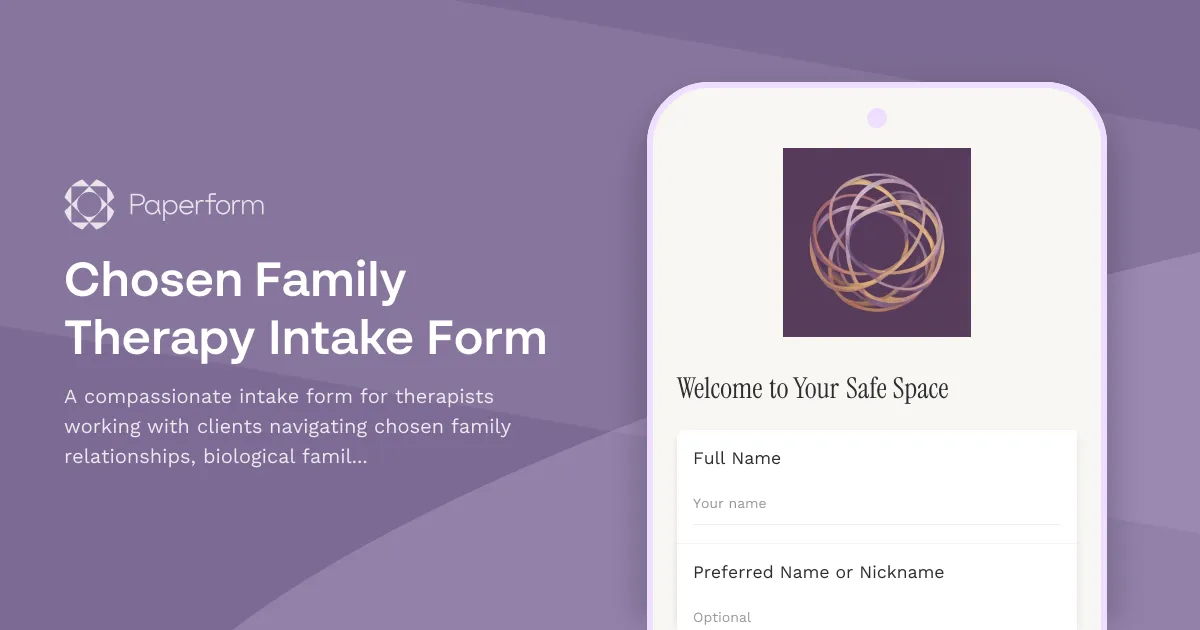
Chosen Family Therapy Intake Form
A compassionate intake form for therapists working with clients navigating chosen family relationships, biological family rejection, and the complex emotions of building new kinship bonds.
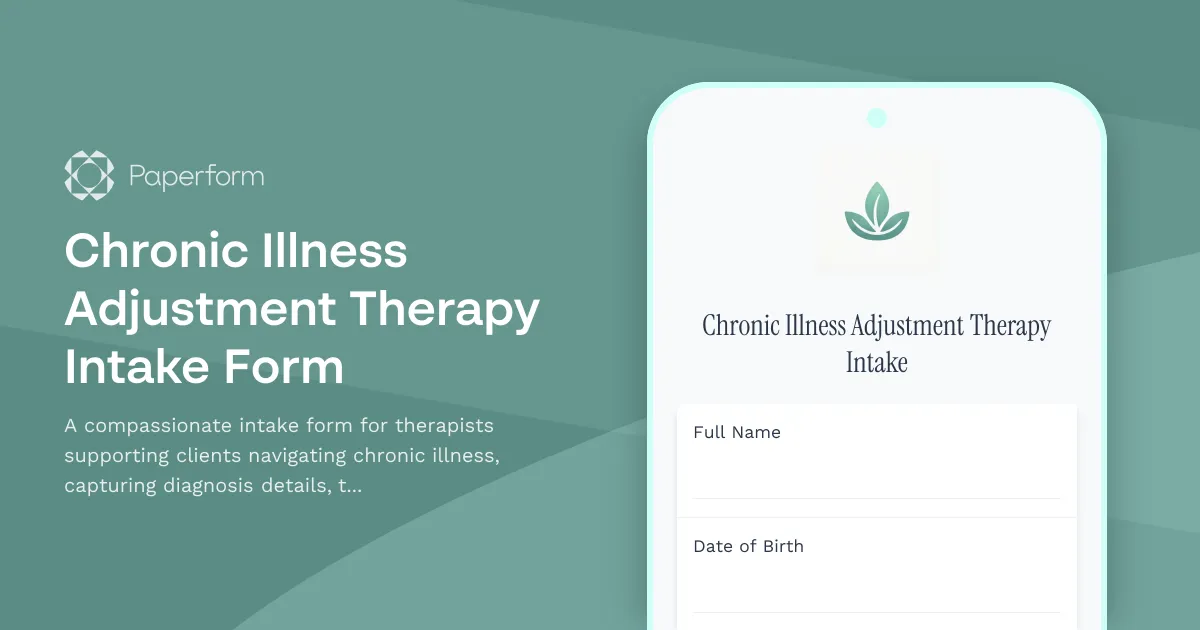
Chronic Illness Adjustment Therapy Intake Form
A compassionate intake form for therapists supporting clients navigating chronic illness, capturing diagnosis details, treatment impact, lifestyle adjustments, and support networks to inform personalized care.