Convert Shipping Containers into Compliant Structures with Paperform
Shipping container conversions have become an innovative solution for affordable housing, modern offices, retail spaces, and creative commercial projects. But before you can transform a container into a livable or workable space, you need the right permits—and that means submitting detailed structural plans, insulation specifications, foundation designs, and proof of building code compliance.
This Shipping Container Conversion Permit Application template helps architects, contractors, property developers, and DIY builders streamline the permitting process with a professional, organized submission that building departments can review efficiently.
Why Use This Template?
Applying for a shipping container conversion permit involves multiple technical requirements: structural engineering certification, insulation R-values, foundation designs, zoning compliance, and safety inspections. Coordinating all these documents through email or paper forms creates confusion, delays, and incomplete applications.
With Paperform, you can create a single, on-brand application form that:
- Collects all required documentation in one place—upload structural certifications, engineering reports, site plans, and photos directly in the form
- Routes applications intelligently—use conditional logic to show different requirements based on whether the project is residential or commercial, permanent or temporary
- Integrates with your workflow—send submissions to your project management tools, notify engineering teams, or sync with municipal tracking systems
- Accepts payments seamlessly—collect permit fees, inspection deposits, or expedited review charges through Stripe, PayPal, or Square
Who This Template Is For
This template is designed for:
- Contractors and builders submitting conversion permits on behalf of clients
- Architects and engineers coordinating multi-container developments
- Property developers exploring alternative construction methods
- Municipal planning departments accepting and tracking container conversion applications
- DIY homeowners converting containers into tiny homes, studios, or garden offices
- Commercial developers creating pop-up shops, restaurants, or coworking spaces from repurposed containers
What's Included in This Template
The template guides applicants through every critical element of a container conversion permit application:
Project Details: Property address, zoning designation, intended use (residential, commercial, mixed-use), and whether the structure is permanent or temporary
Container Specifications: Number of containers, dimensions, condition (new or used), modifications planned, and stacking or joining configurations
Structural Certification: Upload engineering reports confirming load-bearing capacity, welding integrity, modifications to structural members, and compliance with local building codes
Foundation Plan: Describe foundation type (pier, slab, grade beam, or helical pile), soil reports, drainage plans, and frost depth considerations
Insulation & Climate Control: Specify insulation type, R-values for walls/roof/floor, vapor barriers, HVAC systems, and compliance with energy efficiency standards
Utilities & Services: Electrical, plumbing, water, sewer, and gas connections with licensed contractor details
Building Code Compliance: Demonstrate adherence to fire safety codes, egress requirements, accessibility standards (ADA if applicable), and occupancy classifications
Site Plan & Documentation: Upload site surveys, elevation drawings, neighbor notifications, and environmental impact assessments if required
Professional Certifications: Licensed contractor details, structural engineer stamps, architect registration, and insurance certificates
Streamline Your Workflow with Stepper
Once your container conversion permit application is submitted, there's often a multi-step review process involving zoning officers, structural engineers, fire marshals, and inspection teams. Instead of manually tracking each stage, you can use Stepper (stepper.io)—Paperform's AI-native workflow builder—to automate your permitting pipeline.
For example, when a residential conversion is submitted, Stepper can:
- Send the structural certification to your engineering review team
- Notify the zoning department if the property requires a variance
- Route commercial applications through additional fire safety checks
- Update your municipal tracking system and trigger inspection scheduling
- Send applicants automated status updates as their permit moves through each stage
This keeps everyone—applicants, reviewers, inspectors—on the same page without endless email threads or lost paperwork.
Why Shipping Container Conversions Are Growing
Shipping containers offer durability, modularity, and sustainability at a fraction of traditional construction costs. They're being used for:
- Affordable housing and tiny homes in urban infill sites
- Remote offices and studios in backyards and creative districts
- Retail pop-ups and cafés that can relocate or expand easily
- Community centers and schools in areas needing fast, resilient construction
- Disaster relief and temporary housing that can be deployed quickly
But despite their versatility, containers still need to meet the same building codes as traditional structures—especially around structural integrity, insulation, fire safety, and habitability standards.
Built for Compliance and Professionalism
This template is structured to help applicants submit complete, professional permit requests that meet municipal standards and reduce back-and-forth revisions. By clearly outlining all requirements upfront and collecting supporting documents in a single submission, you'll speed up approvals and keep your container conversion project on track.
Whether you're a municipal planning department modernizing your permit intake process, a contractor managing multiple conversion projects, or a property owner pursuing a creative building solution, Paperform gives you the flexibility to build forms that match your brand, capture all the details you need, and integrate seamlessly with the tools you already use.
Paperform is trusted by over 500,000 teams worldwide, SOC 2 Type II and GDPR compliant, and designed for businesses that need professional forms and automations without coding. Start streamlining your shipping container conversion permits today.



More templates like this
Deck or Patio Construction Permit Application
Apply for a permit to construct or modify a residential or commercial deck or patio. Includes structural details, load calculations, railing specifications, and building code compliance verification.
Demolition Permit Application
Apply for a demolition permit with asbestos inspection reports, utility disconnection confirmation, debris disposal plans, and comprehensive site safety measures.
Plumbing Permit Application for Bathroom Addition
Professional plumbing permit application for bathroom additions including fixture schedules, water supply calculations, drainage plans, and backflow prevention requirements.
Accessory Dwelling Unit (ADU) Permit Application
Apply for a permit to construct or convert an accessory dwelling unit (ADU) or backyard cottage on your property with size calculations, parking, utilities, and design review.
Coastal Development Permit Application
Apply for a coastal development permit for beachfront construction. Includes sea level rise assessment, beach access preservation, visual impact analysis, and erosion control planning.
Dock & Pier Construction Permit Application
Apply for a waterfront construction permit for dock, pier, or marine structure with environmental impact assessment and navigational clearance documentation.
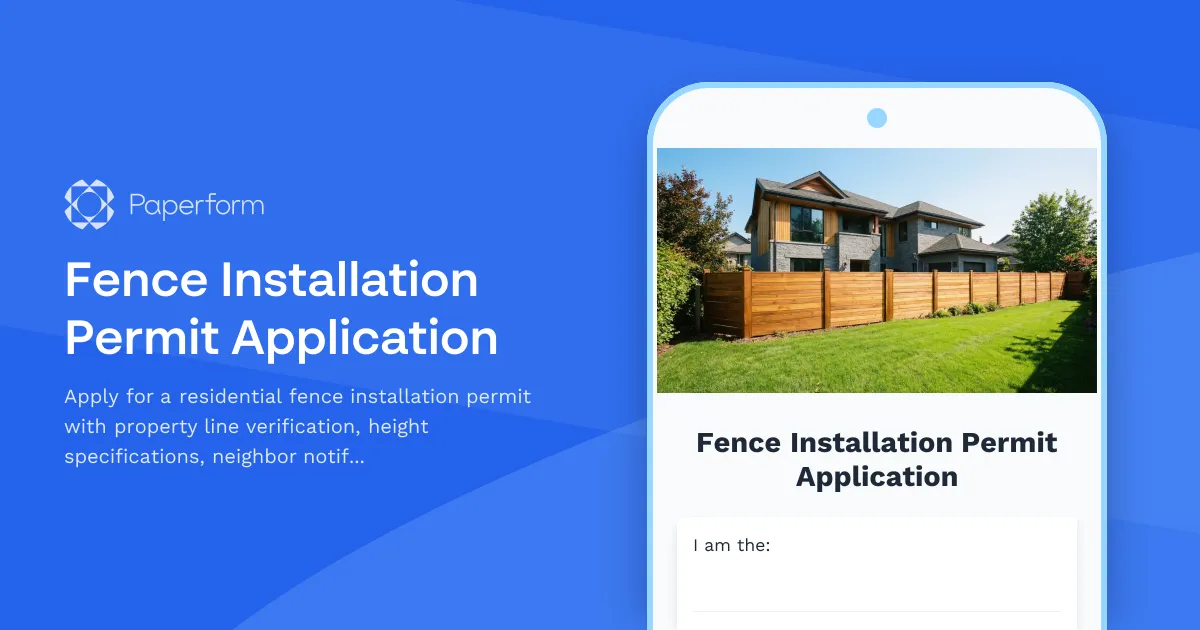
Fence Installation Permit Application
Apply for a residential fence installation permit with property line verification, height specifications, neighbor notifications, and HOA approval documentation.
Home Renovation Permit Application
Apply for residential renovation permits for kitchen and bathroom remodels. Submit project details, contractor information, and required documentation for approval.
Dumpster Placement Permit Application
Apply for a permit to place a dumpster on public property for construction or renovation. Submit placement details, duration, traffic impact assessment, and safety plan.
Grading and Excavation Permit Application
Apply for a grading and excavation permit with erosion control plan, drainage impact assessment, neighboring property protection, and soil stability documentation.
Helipad Construction Permit Application
Apply for a helipad construction permit with FAA compliance verification, noise impact assessment, lighting specifications, emergency access planning, and fuel storage safety requirements.
Historic Building Window Replacement Permit Application
Apply for a permit to replace windows in historic buildings. Submit architectural details, material specifications, energy efficiency ratings, and demonstrate compliance with historic preservation guidelines.