Streamline Your Schema Therapy Practice with a Professional Intake Form
Running a schema therapy practice means balancing deep therapeutic work with efficient administrative processes. This Schema Therapy Visitor Intake Form template helps mental health professionals collect essential client information while beginning the important work of identifying early maladaptive schemas, understanding mode patterns, and assessing core emotional needs—all before the first session begins.
Built specifically for schema therapists, psychologists, and counselors who use Jeffrey Young's schema therapy model, this intake form goes beyond basic demographic data. It creates a structured framework for clients to reflect on their emotional patterns, childhood experiences, and current coping modes, giving you valuable insights that inform your treatment planning from day one.
Why Schema Therapists Choose Paperform
Paperform makes it easy to create professional, on-brand intake forms that reflect the warmth and safety essential to the therapeutic relationship. With conditional logic, you can tailor questions based on client responses, creating a personalized intake experience that respects each person's unique journey. Whether clients are completing the form on their phone in your waiting room or from home before their first appointment, Paperform's intuitive design ensures a smooth, stress-free experience.
Once submitted, client information can automatically flow into your practice management system, or trigger a Stepper workflow that sends welcome emails, schedules follow-ups, and creates tasks for treatment planning—letting you focus on the therapeutic work rather than administrative details.
HIPAA Considerations
Please note that while Paperform offers robust security features, it is not a HIPAA-compliant solution. For practices requiring HIPAA compliance for protected health information (PHI), please ensure you have appropriate business associate agreements and technical safeguards in place, or consider using this form for non-PHI information only.
Build Trust from the First Interaction
First impressions matter in therapeutic settings. A well-designed intake form signals professionalism, demonstrates your understanding of schema therapy principles, and helps clients feel understood before they even walk through your door. Start with this template and customize it to match your practice's unique approach to healing and growth.



More templates like this
Schema Therapy Scheduling & Assessment Form
A professional intake and scheduling form for schema therapy practitioners to identify early maladaptive schemas, assess mode work interest, evaluate limited reparenting openness, and verify insurance coverage before the first session.
Schema Therapy Intake Form
A comprehensive intake form for schema therapy clients to identify early maladaptive schemas, assess schema modes, explore limited reparenting interest, and evaluate readiness for imagery rescripting techniques.
Schema Therapy Treatment Consent Form
A comprehensive consent form for schema therapy treatment, including early maladaptive schema identification, mode work, and limited reparenting authorization.
DBT Group Therapy Visitor Registration Form
A comprehensive visitor registration form for dialectical behavior therapy groups, including DBT skills overview, confidentiality agreements, participation consent, and crisis resources for prospective members and observers.
EMDR Therapy Office Visitor Companion Form
A visitor registration form for companions accompanying clients to EMDR therapy sessions, explaining bilateral stimulation, trauma processing, session privacy protocols, and stabilization phase importance.
Grief Counseling Center Visitor Intake Form
A compassionate intake form for grief counseling center visitors to register loss type, therapy preferences, and session scheduling while acknowledging trauma-sensitive practices.
Lifespan Integration Therapy Visitor Companion Form
A specialized visitor registration form for companions attending Lifespan Integration therapy sessions, capturing essential check-in details and consent for observing therapeutic processes.
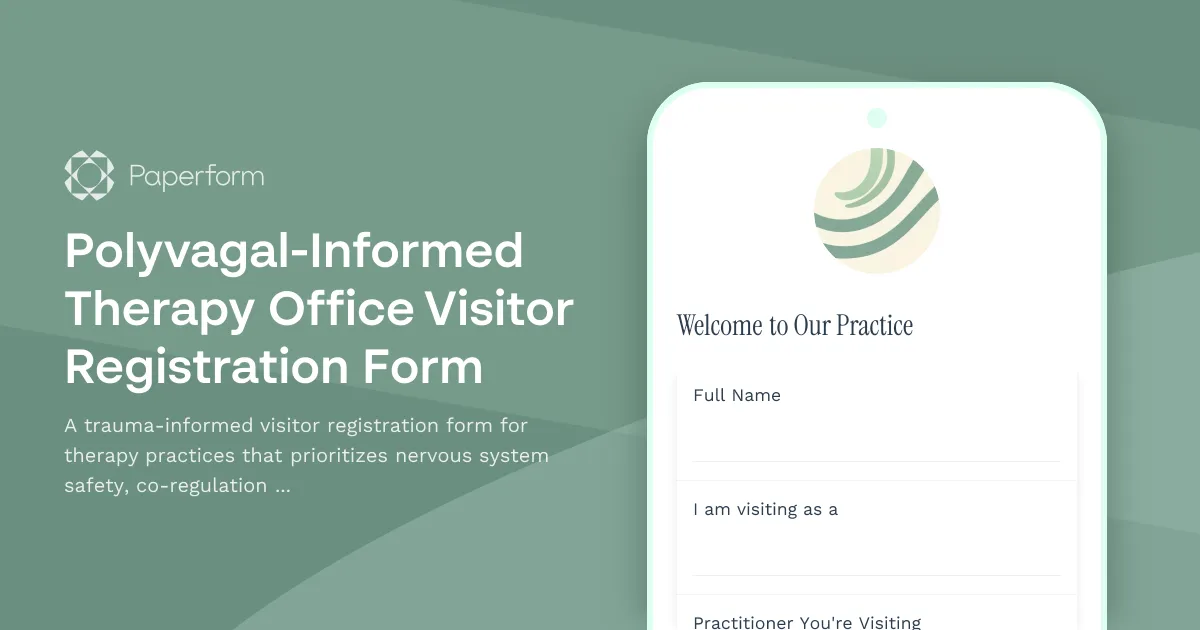
Polyvagal-Informed Therapy Office Visitor Registration Form
A trauma-informed visitor registration form for therapy practices that prioritizes nervous system safety, co-regulation principles, and the polyvagal theory framework.
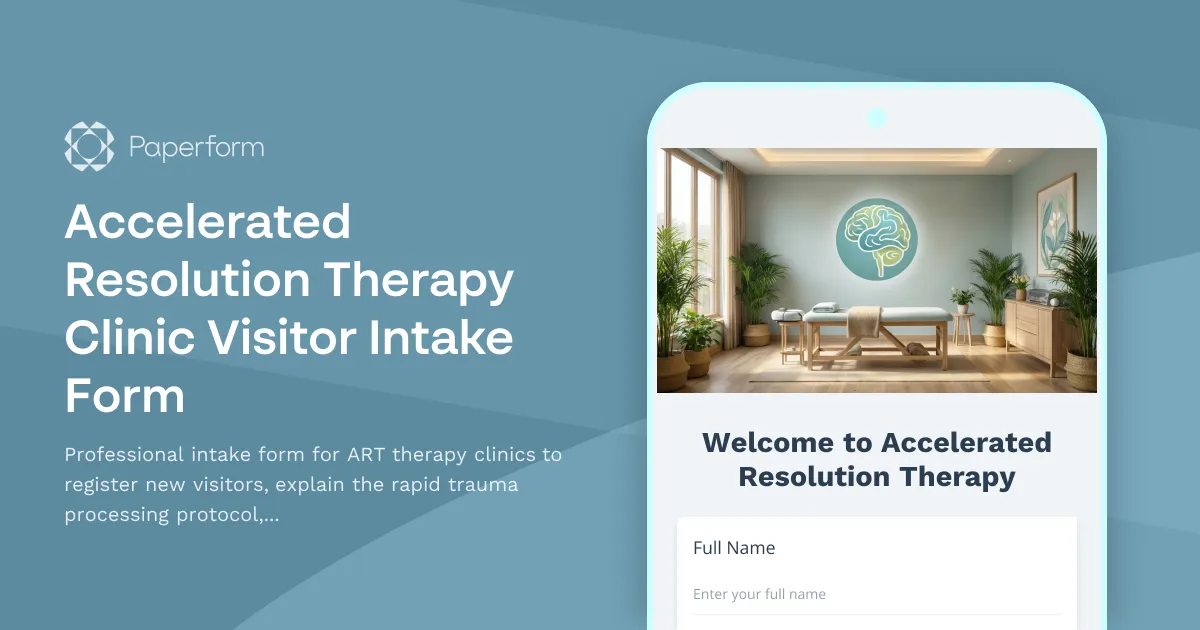
Accelerated Resolution Therapy Clinic Visitor Intake Form
Professional intake form for ART therapy clinics to register new visitors, explain the rapid trauma processing protocol, eye movement techniques, voluntary image replacement, and set session expectations.
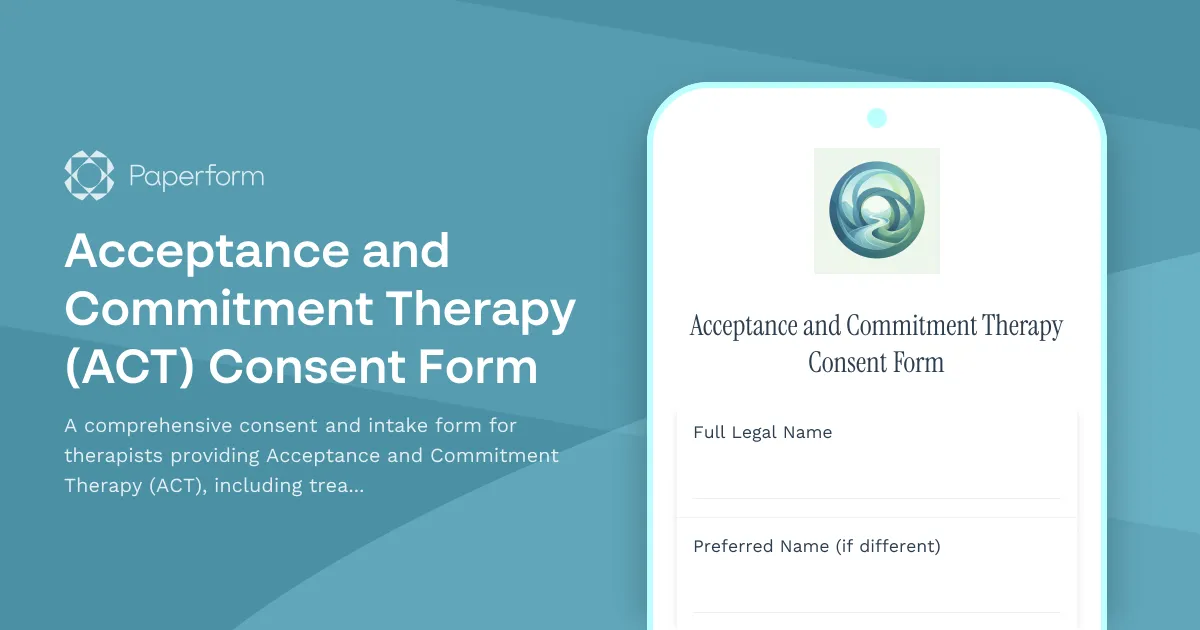
Acceptance and Commitment Therapy (ACT) Consent Form
A comprehensive consent and intake form for therapists providing Acceptance and Commitment Therapy (ACT), including treatment authorization, values clarification, mindfulness practices, and committed action planning.
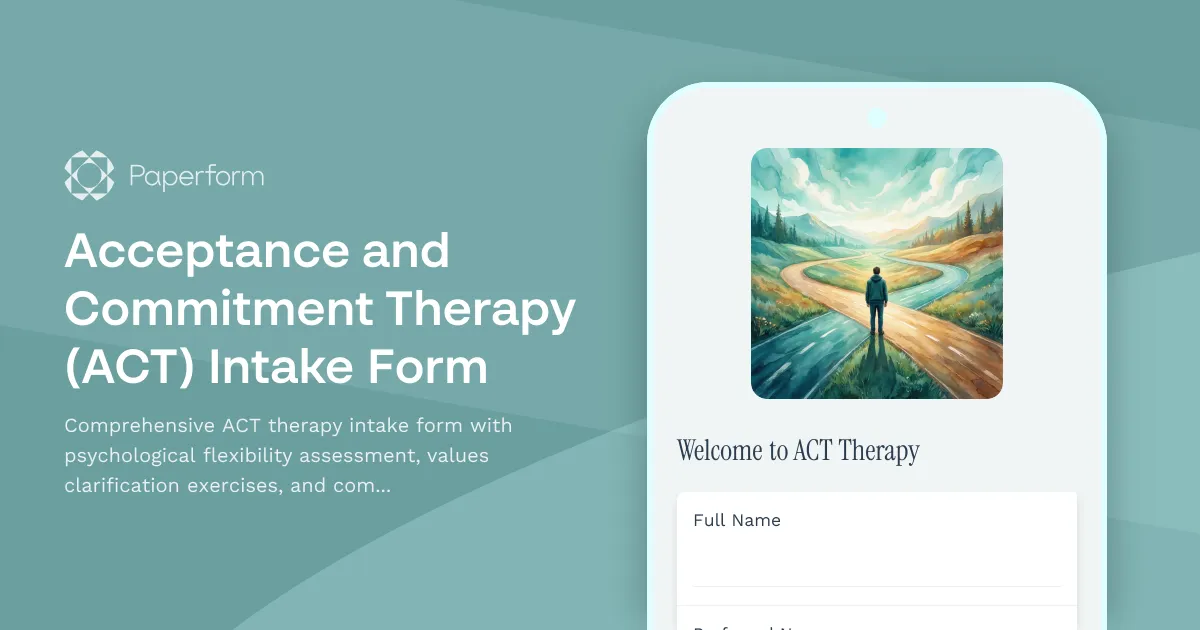
Acceptance and Commitment Therapy (ACT) Intake Form
Comprehensive ACT therapy intake form with psychological flexibility assessment, values clarification exercises, and committed action planning to help therapists understand client needs and therapeutic goals.
Addiction Recovery Program Discovery Form
A comprehensive intake form for addiction recovery programs to assess client needs, substance use history, treatment preferences, and recovery goals for personalized care planning.