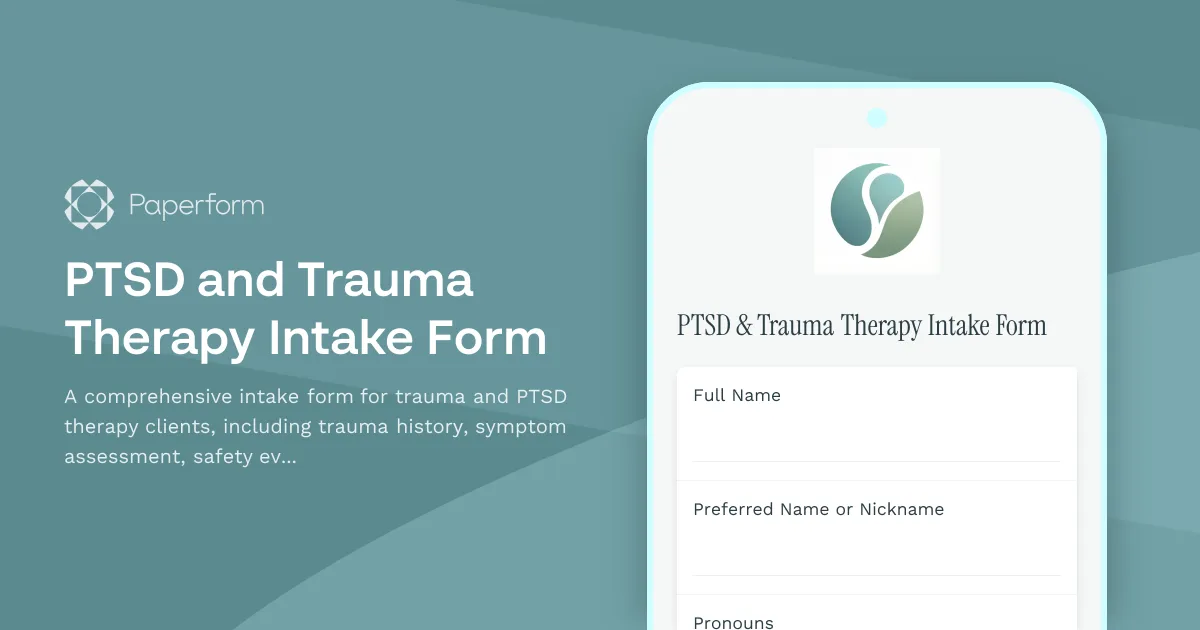
Starting trauma therapy is a courageous first step, and having the right intake process makes all the difference. This PTSD and Trauma Therapy Intake Form is designed for mental health professionals, therapists, and counseling practices who specialize in trauma-informed care.
Built with Paperform, this template helps you gather essential information before the first session—trauma history, symptom severity, safety concerns, and crisis contacts—in a sensitive, organized way that respects your client's experience. The form uses conditional logic to adapt to each client's responses, ensuring you only ask relevant follow-up questions without overwhelming them.
Why this template works for trauma therapists:
This intake form goes beyond basic demographics. It includes a timeline section for documenting traumatic events, a detailed symptom checklist based on PTSD criteria, a safety assessment to identify immediate risks, and dedicated fields for emergency and crisis contacts. You can customize the questions to match your therapeutic approach—whether you practice EMDR, CBT, somatic therapy, or another modality.
Streamline your practice with Paperform and Stepper:
Once a client submits their intake form, you can use Stepper to automate what happens next—send a personalized welcome email, add the client to your practice management system, schedule an initial assessment, or notify your admin team. Everything stays connected, so you can focus on providing excellent care instead of managing paperwork.
With Paperform's SOC 2 Type II compliance and secure data handling, you can trust that sensitive client information is protected. Whether you're a solo practitioner or part of a larger practice, this template helps you create a professional, compassionate intake experience that sets the tone for healing.



More templates like this
Acceptance and Commitment Therapy (ACT) Intake Form
Comprehensive ACT therapy intake form with psychological flexibility assessment, values clarification exercises, and committed action planning to help therapists understand client needs and therapeutic goals.
Addiction Recovery Therapy Intake Form
A comprehensive intake form for addiction recovery counselors to gather essential information about new clients, including substance use history, previous sobriety attempts, support network, and recovery goals.
Adoption and Foster Care Therapy Intake Form
A comprehensive therapy intake form designed for mental health professionals working with adopted children and foster care placements, capturing placement history, attachment patterns, trauma background, and family integration details.
Amputation Adjustment Therapy Intake Form
A compassionate intake form for therapists working with individuals adjusting to limb loss, covering amputation details, phantom pain, prosthetic use, and emotional wellbeing.

Binge Eating Disorder Therapy Intake Form
A comprehensive intake form for therapists and counselors working with clients experiencing binge eating disorder, collecting information about eating patterns, emotional triggers, diet history, and body image concerns.
Blue Star Family Therapy Intake Form
A comprehensive intake form designed for military families seeking therapy support for deployment-related stress, communication challenges, reunion transitions, and child impact assessments.
Borderline Personality Disorder Assessment Form
A comprehensive clinical assessment tool for screening borderline personality disorder symptoms, including emotion dysregulation, relationship patterns, and behavioral indicators.

Burn Survivor Counseling Intake Form
A compassionate intake form for burn survivors seeking mental health support, covering injury details, physical recovery, emotional challenges, and treatment goals.

Child & Adolescent Mental Health Intake Form
A comprehensive mental health intake form for children and adolescents, collecting developmental history, school performance, family dynamics, and behavioral concerns to support effective treatment planning.

Child and Adolescent Therapy Intake Form
A comprehensive intake form for child and adolescent mental health services, capturing developmental history, behavioral concerns, school performance, and family dynamics to support effective treatment planning.
Chosen Family Therapy Intake Form
A compassionate intake form for therapists working with clients navigating chosen family relationships, biological family rejection, and the complex emotions of building new kinship bonds.
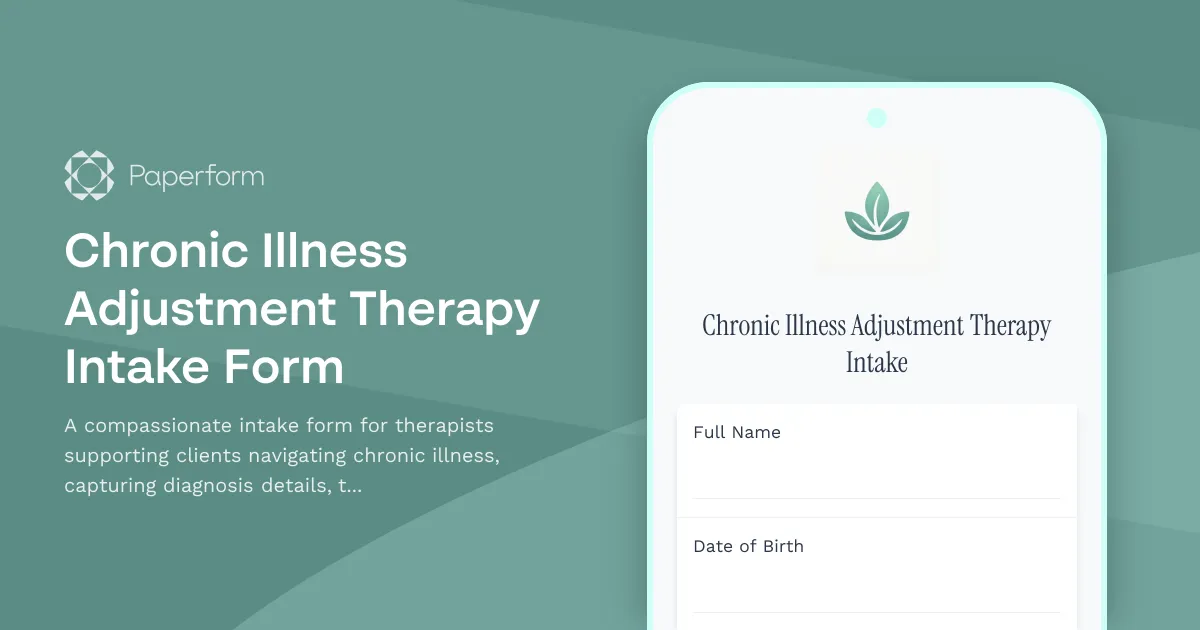
Chronic Illness Adjustment Therapy Intake Form
A compassionate intake form for therapists supporting clients navigating chronic illness, capturing diagnosis details, treatment impact, lifestyle adjustments, and support networks to inform personalized care.