Prolonged Exposure Therapy Intake Form for PTSD
If you're a mental health professional providing prolonged exposure (PE) therapy for PTSD, this Prolonged Exposure Therapy Intake Form helps you conduct thorough assessments, build trauma narratives, and create personalized exposure hierarchies—all in one streamlined, secure form.
Why This Form Matters for Trauma Treatment
Prolonged exposure therapy is a gold-standard, evidence-based treatment for PTSD that requires careful assessment and planning before beginning imaginal and in vivo exposures. This intake form is designed specifically for therapists, psychologists, and counselors who need to:
- Assess PTSD symptoms and trauma history in a structured, trauma-informed way
- Develop initial trauma narratives to understand the index event and its impact
- Create in vivo exposure hierarchies ranked by subjective units of distress (SUDs)
- Evaluate distress tolerance and readiness for exposure-based interventions
- Document safety considerations and contraindications before starting PE therapy
With Paperform, you can replace lengthy PDF intake packets with a professional, conditional form that adapts to each client's responses, ensuring you gather the right clinical information efficiently and compassionately.
Perfect for Mental Health Professionals & Trauma Specialists
This template is ideal for:
- Clinical psychologists and therapists specializing in trauma and PTSD treatment
- Mental health clinics offering evidence-based PTSD interventions
- Veterans' services and military counseling centers supporting those with combat-related trauma
- Private practices providing prolonged exposure therapy and trauma-focused CBT
- Telehealth providers conducting remote trauma assessments and therapy preparation
The form structure follows best practices in PE therapy protocol while remaining HIPAA-aware (note: additional BAA and security measures required for full HIPAA compliance).
How This Form Supports Your Clinical Workflow
Comprehensive PTSD Assessment
The form begins with validated screening questions to assess PTSD symptom clusters—intrusion, avoidance, negative cognitions/mood, and arousal/reactivity. You'll gather baseline symptom severity to track progress throughout treatment.
Trauma Narrative Development
Clients can begin articulating their trauma narrative in their own words, identifying the index trauma event, sensory details, thoughts, and emotions. This initial narrative becomes the foundation for imaginal exposure sessions.
In Vivo Exposure Hierarchy Building
The form guides clients through identifying avoided situations, places, people, and activities related to their trauma, then rating each on a 0-100 SUDs scale. This creates a ready-to-use hierarchy for gradual in vivo exposure assignments.
Distress Tolerance & Safety Screening
Before beginning PE therapy, you need to assess emotional regulation skills, dissociation tendencies, and any contraindications. The form includes questions about substance use, self-harm history, and current safety concerns to ensure clients are appropriate candidates for exposure work.
Conditional Logic for Personalized Assessment
Based on trauma type (single-incident vs. complex trauma), the form adjusts follow-up questions. If clients indicate current safety concerns or active suicidality, the form can flag these responses for immediate clinical attention.
Streamline Your Intake with Paperform + Stepper Automation
This isn't just a static form—it's the start of an integrated clinical workflow:
- Automatic data organization: Submissions flow into your practice management system, EHR, or secure spreadsheet
- Instant notifications: Get alerted immediately when a new PE intake is submitted, especially if safety concerns are flagged
- Follow-up automation: Use Stepper to automatically send pre-session preparation materials, psychoeducation about PE therapy, or appointment confirmations based on intake responses
- Document generation: Convert intake data into clinical assessment summaries or treatment plans using Stepper workflows
With these automations, you spend less time on administrative tasks and more time providing life-changing trauma treatment.
HIPAA Considerations & Security
While Paperform is SOC 2 Type II compliant and offers robust security features, it's important to note that Paperform is not a HIPAA-compliant solution out of the box. Mental health professionals handling protected health information (PHI) should:
- Ensure you have appropriate Business Associate Agreements (BAAs) with all tools in your workflow
- Consider using Paperform for pre-screening and non-PHI administrative tasks
- Store completed forms in HIPAA-compliant systems
- Consult with your compliance officer about your specific use case
For practices that need full HIPAA compliance, consider using this template as a model and adapting it to your compliant platform, or use it for initial contact and scheduling before transitioning to compliant tools.
Built for Therapists Who Value Evidence-Based Care
Prolonged exposure therapy has decades of research supporting its effectiveness for PTSD. This intake form respects the clinical rigor of PE protocol while making your assessment process smoother and more client-friendly. The document-style editor means you can easily customize questions to match your therapeutic style, add your practice branding, and adjust the hierarchy builder to fit your preferred SUDs scale.
Whether you're a seasoned trauma specialist or newly trained in PE therapy, this form gives you a professional, organized foundation for starting this powerful treatment with each new client.
Trusted by Mental Health Professionals Worldwide
Paperform is trusted by over 500,000 teams globally, including therapists, counselors, and mental health clinics who need professional intake forms without the complexity of traditional form builders. With conditional logic, calculation fields, and seamless integrations, you can create clinical workflows that feel as sophisticated as your therapeutic approach.
Ready to transform your PTSD intake process? Start with this Prolonged Exposure Therapy Intake Form template and customize it to match your practice's unique needs.



More templates like this
Bipolar Disorder Intake Form
Comprehensive intake form for bipolar disorder assessment, capturing mood episode history, medication trials, family psychiatric history, and current symptoms to support effective treatment planning.
Acceptance and Commitment Therapy (ACT) Intake Form
Comprehensive ACT therapy intake form with psychological flexibility assessment, values clarification exercises, and committed action planning to help therapists understand client needs and therapeutic goals.
Anxiety Disorder Diagnostic Assessment Form
A comprehensive clinical form for mental health professionals to assess anxiety disorder symptoms, including panic attack frequency, avoidance behaviors, and physical symptom presentation.
Borderline Personality Disorder Assessment Form
A comprehensive clinical assessment tool for screening borderline personality disorder symptoms, including emotion dysregulation, relationship patterns, and behavioral indicators.
Brain Injury Therapy Intake Form
A comprehensive intake form for therapists working with brain injury patients, capturing injury details, cognitive and personality changes, current symptoms, and rehabilitation history to inform personalized treatment planning.

Child & Adolescent Mental Health Intake Form
A comprehensive mental health intake form for children and adolescents, collecting developmental history, school performance, family dynamics, and behavioral concerns to support effective treatment planning.
Cognitive Behavioral Therapy Intake Form
A comprehensive CBT intake form with depression screening, anxiety assessment, and therapy goals to help mental health professionals understand new clients and establish treatment plans.

Couples Therapy Intake Form
A comprehensive couples therapy intake form that assesses relationship dynamics, communication patterns, and individual mental health to help therapists understand and support couples seeking counseling.
Degenerative Disease Counseling Intake Form
A compassionate intake form for counselors supporting clients facing degenerative diseases, covering progressive symptoms, advance care planning, caregiver concerns, and emotional well-being.
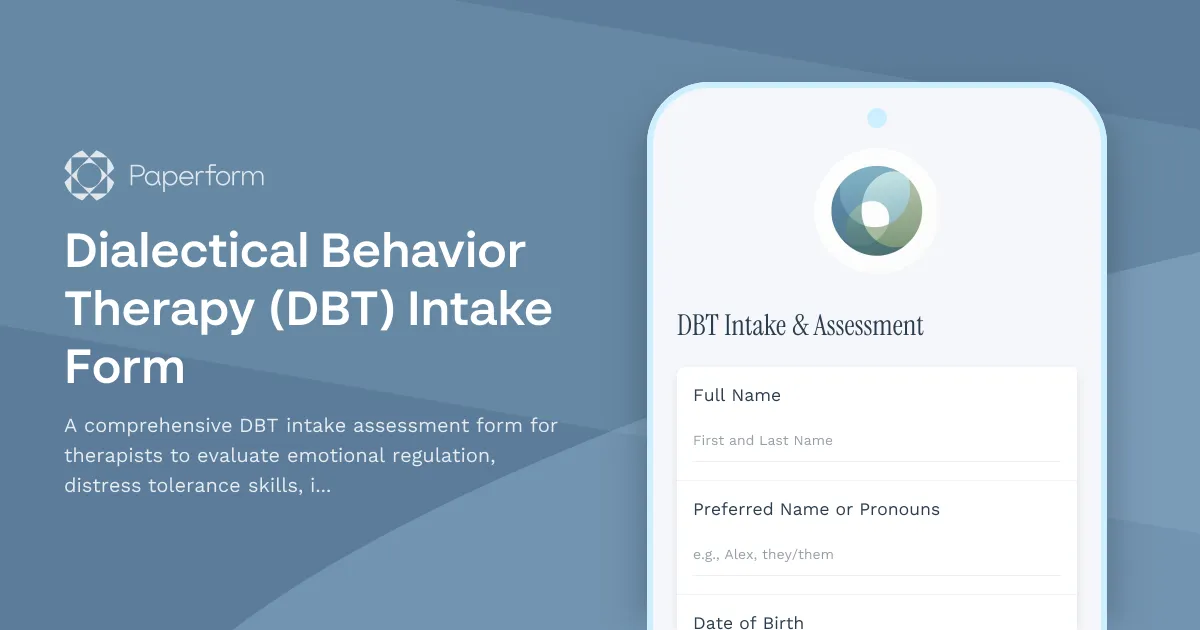
Dialectical Behavior Therapy (DBT) Intake Form
A comprehensive DBT intake assessment form for therapists to evaluate emotional regulation, distress tolerance skills, interpersonal effectiveness, and crisis planning for new clients beginning dialectical behavior therapy.

Eating Disorder Therapy Intake Form
A compassionate intake form for eating disorder therapy that gathers essential information about food relationship history, body image concerns, medical complications, and nutritional habits to support effective treatment planning.

Elder Abuse Counseling Intake Form
A comprehensive intake form for mental health professionals providing counseling services to older adults who have experienced abuse, capturing critical information about the abuse, safety concerns, and reporting considerations.