
Streamline Your Nonprofit Program Waitlist with Paperform
Managing a nonprofit program waitlist requires more than just collecting names—you need to assess eligibility, understand participant needs, verify income qualifications, and prioritize enrollment fairly. This Nonprofit Program Enrollment Waitlist Form template helps community organizations, social services nonprofits, and program coordinators create an organized, equitable waitlist process that serves your community effectively.
Built with Paperform's intuitive form builder, this template collects comprehensive participant demographics, assesses program fit through targeted questions, gathers income verification documents, and uses conditional logic to calculate priority scores based on your organization's criteria. Whether you're managing youth programs, housing assistance, food security initiatives, educational services, or health and wellness programs, this waitlist form ensures every applicant receives fair consideration.
The form seamlessly integrates with your existing nonprofit tools—send submissions to your CRM, log waitlist data in Google Sheets or Airtable, notify your team via Slack, and use Stepper (stepper.io) to automate follow-up workflows like sending confirmation emails, scheduling intake appointments, or updating applicants when spots become available. For programs requiring additional documentation or agreements, Papersign (papersign.com) can transform submissions into consent forms or enrollment contracts that participants can sign electronically.
This template is ideal for nonprofit directors, program coordinators, community organizers, and social workers who need to manage limited program capacity while maintaining transparency and equity in their enrollment process. With Paperform's calculation engine, you can implement priority scoring based on factors like income level, family size, urgency of need, or time on waitlist—ensuring your services reach those who need them most.
Paperform is trusted by thousands of nonprofits worldwide and offers SOC 2 Type II compliance, GDPR readiness, and secure data handling to protect sensitive participant information. Start with this template and customize it to match your specific program requirements, branding, and eligibility criteria—no coding required.
More templates like this
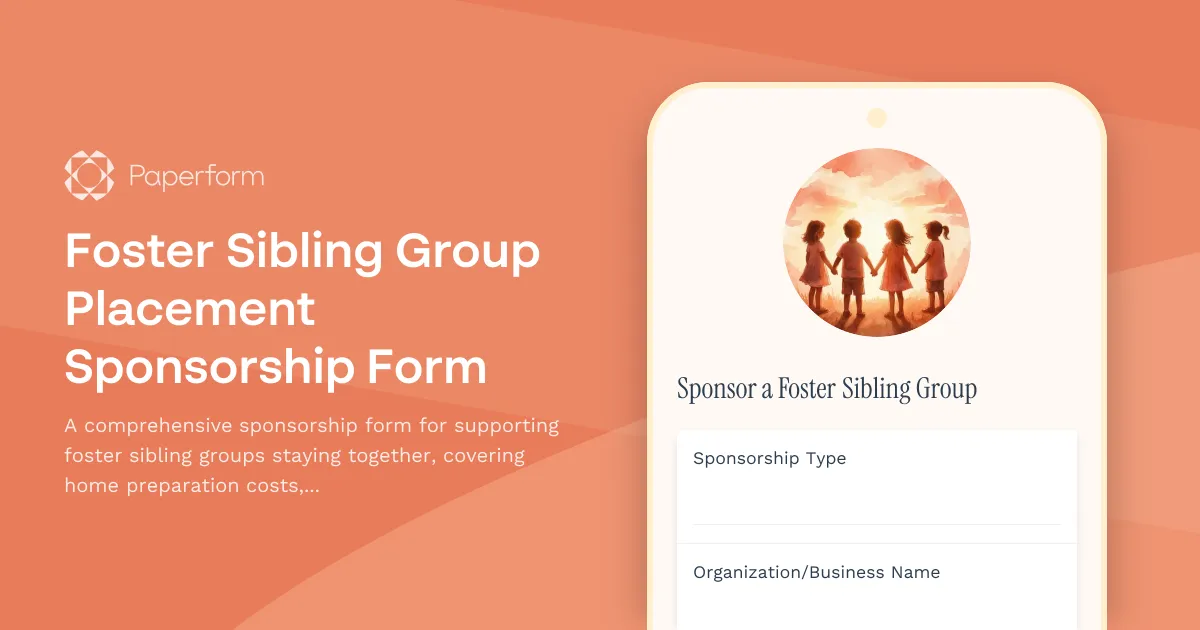
Foster Sibling Group Placement Sponsorship Form
A comprehensive sponsorship form for supporting foster sibling groups staying together, covering home preparation costs, celebration support, and ongoing family needs.
Teen Parent Support Sponsorship Form
A comprehensive sponsorship form for nonprofit organizations supporting teen parents through childcare funding, parenting classes, and graduation celebrations.
Abolitionist Grant Application Form
A comprehensive grant application form for organizations working toward decarceration, prison abolition, community-based accountability systems, and reinvestment in community resources.
Abolitionist Re-Entry Program Donation Form
Support formerly incarcerated individuals through community-led re-entry support, organizer stipends, and surveillance-free reintegration programs rooted in abolitionist principles.
Addiction Recovery Program Impact Report
Track treatment outcomes, sobriety milestones, employment rates, and family reunification data to demonstrate the impact of your addiction recovery programs to donors and stakeholders.
Affordable Childcare Advocacy Sign-Up
Join the movement for affordable, accessible childcare. Share your story, calculate your childcare burden, and support universal pre-K and fair wages for childcare workers.
Affordable Housing Impact Report Form
Document and share the impact of rent stabilization programs, eviction prevention efforts, tenant organizing victories, housing code enforcement actions, and community land preservation initiatives.
Alzheimer's Support Group Volunteer Facilitator Application
A comprehensive application form for individuals interested in facilitating Alzheimer's and dementia support groups. Screens for care experience, leadership skills, training background, and availability.
Anteater Rescue Sponsorship Form
Support rescued anteaters through monthly sponsorships. Choose your anteater companion, fund their enrichment, and receive exclusive updates and videos of their care and feeding.
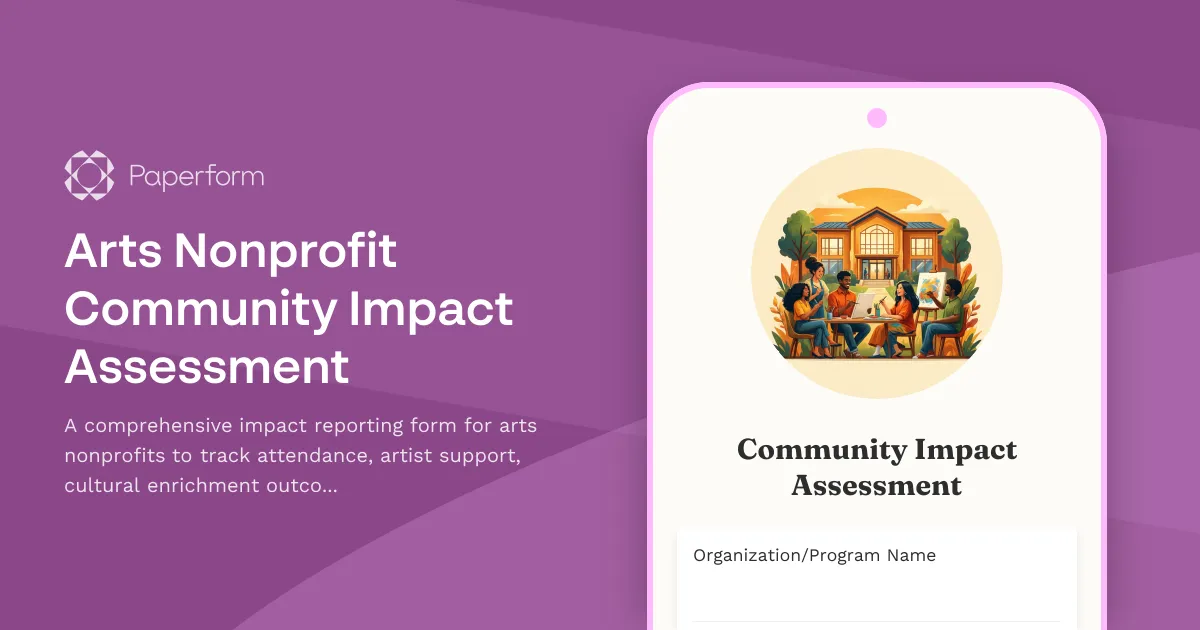
Arts Nonprofit Community Impact Assessment
A comprehensive impact reporting form for arts nonprofits to track attendance, artist support, cultural enrichment outcomes, and economic contributions for donors and stakeholders.
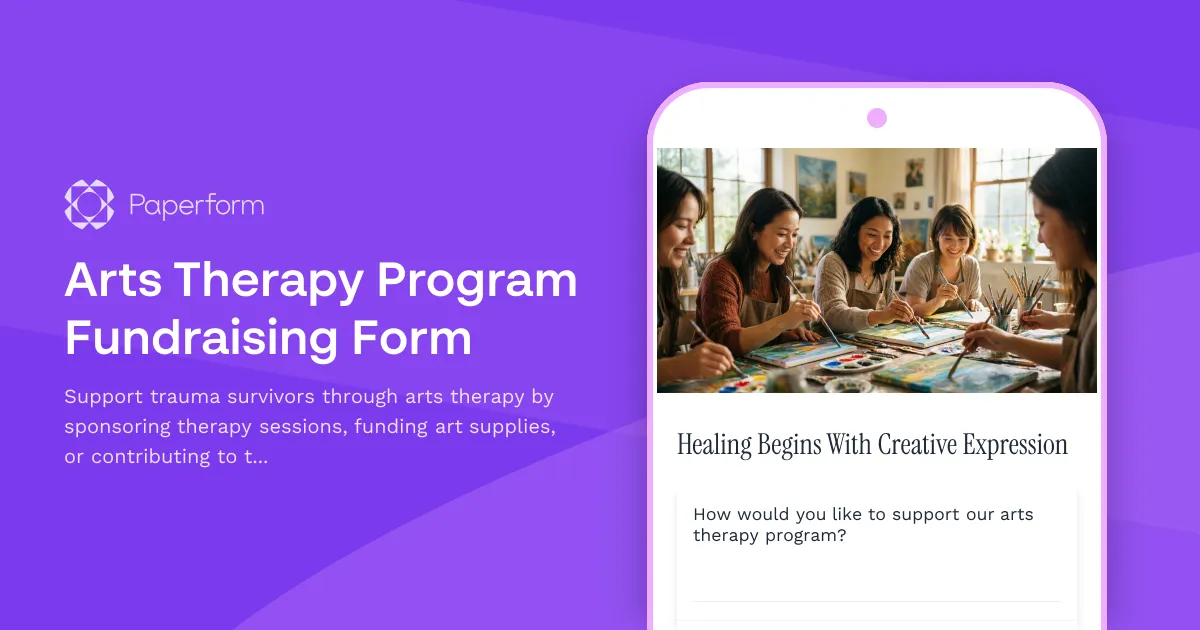
Arts Therapy Program Fundraising Form
Support trauma survivors through arts therapy by sponsoring therapy sessions, funding art supplies, or contributing to therapist training programs.
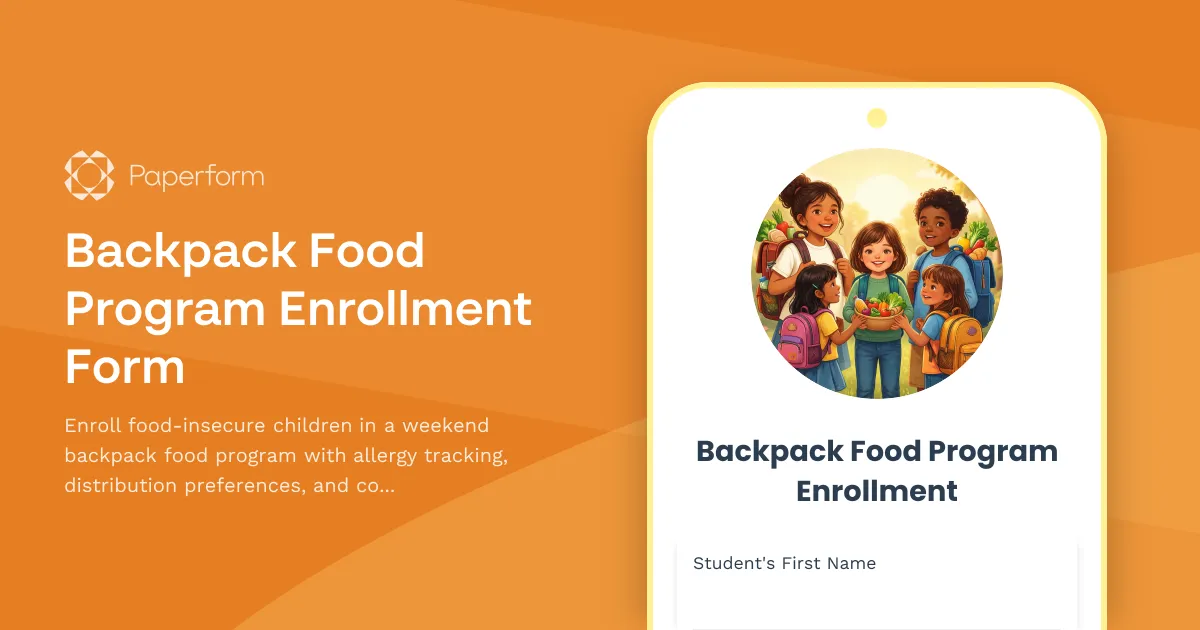
Backpack Food Program Enrollment Form
Enroll food-insecure children in a weekend backpack food program with allergy tracking, distribution preferences, and confidential eligibility verification.