Professional Intermittent Explosive Disorder Intake Forms for Mental Health Professionals
When treating clients with intermittent explosive disorder (IED), thorough intake documentation is essential for developing effective treatment plans and ensuring client safety. This intermittent explosive disorder therapy intake form template helps mental health professionals, therapists, and counselors gather comprehensive information about explosive episodes, violence history, relationship impacts, and legal consequences in a structured, compassionate format.
Why Mental Health Professionals Choose This IED Intake Template
Specialized for anger and impulse control disorders: Unlike generic mental health intake forms, this template addresses the specific clinical markers of IED—frequency and intensity of rage episodes, triggers, warning signs, and patterns of aggressive behavior that are essential for diagnosis and treatment planning.
Comprehensive risk assessment: The form covers violence history, self-harm ideation, substance use patterns, and legal consequences to help clinicians conduct thorough risk assessments and develop appropriate safety protocols.
Relationship and functional impact assessment: Understanding how explosive episodes affect relationships, employment, and daily functioning helps therapists develop holistic treatment approaches that address the full scope of IED's impact on clients' lives.
Secure, HIPAA-aware workflows: Built on Paperform's SOC 2 Type II compliant platform, you can collect sensitive mental health information with confidence, then use conditional logic to route high-risk cases appropriately and trigger follow-up workflows through Stepper for appointment scheduling, care coordination, and treatment plan documentation.
How Therapists Use This IED Intake Form
Pre-appointment screening: Send this intake form to new clients before their first session so you can review explosive episode patterns, violence history, and safety concerns ahead of time, allowing you to prepare appropriate interventions and safety protocols.
Treatment planning foundation: Use the detailed information about triggers, episode frequency, consequences, and coping strategies to develop individualized anger management protocols, cognitive-behavioral interventions, and medication considerations.
Ongoing assessment: For existing clients, modified versions of this form can track treatment progress by monitoring changes in episode frequency, intensity, relationship quality, and functional outcomes over time.
Referral and collaboration: When working with psychiatrists, primary care providers, or legal professionals, this structured intake creates clear documentation of the client's presentation, history, and needs for coordinated care.
Built for Mental Health Practices of All Sizes
Whether you're a solo practitioner, group practice, or community mental health center, Paperform gives you the flexibility to customize this template with your practice branding, modify questions to match your clinical approach, and integrate with your EHR, scheduling system, or case management tools. The doc-style editor makes it easy to add psychoeducational content, consent language, or practice policies directly into your intake flow.
With Paperform's conditional logic, you can create dynamic experiences—asking follow-up questions only when relevant, displaying crisis resources when risk factors are identified, and routing urgent cases to immediate attention. This means you collect comprehensive information without overwhelming clients with unnecessary questions.
Ready to streamline your IED intake process? Start with this template and customize it to match your practice's clinical protocols, theoretical orientation, and documentation requirements. No coding required—just professional intake forms that help you provide better care from the very first interaction.



More templates like this
Acceptance and Commitment Therapy (ACT) Intake Form
Comprehensive ACT therapy intake form with psychological flexibility assessment, values clarification exercises, and committed action planning to help therapists understand client needs and therapeutic goals.
Addiction Recovery Therapy Intake Form
A comprehensive intake form for addiction recovery counselors to gather essential information about new clients, including substance use history, previous sobriety attempts, support network, and recovery goals.
Adoption and Foster Care Therapy Intake Form
A comprehensive therapy intake form designed for mental health professionals working with adopted children and foster care placements, capturing placement history, attachment patterns, trauma background, and family integration details.
Amputation Adjustment Therapy Intake Form
A compassionate intake form for therapists working with individuals adjusting to limb loss, covering amputation details, phantom pain, prosthetic use, and emotional wellbeing.

Binge Eating Disorder Therapy Intake Form
A comprehensive intake form for therapists and counselors working with clients experiencing binge eating disorder, collecting information about eating patterns, emotional triggers, diet history, and body image concerns.
Blue Star Family Therapy Intake Form
A comprehensive intake form designed for military families seeking therapy support for deployment-related stress, communication challenges, reunion transitions, and child impact assessments.
Borderline Personality Disorder Assessment Form
A comprehensive clinical assessment tool for screening borderline personality disorder symptoms, including emotion dysregulation, relationship patterns, and behavioral indicators.

Burn Survivor Counseling Intake Form
A compassionate intake form for burn survivors seeking mental health support, covering injury details, physical recovery, emotional challenges, and treatment goals.

Child & Adolescent Mental Health Intake Form
A comprehensive mental health intake form for children and adolescents, collecting developmental history, school performance, family dynamics, and behavioral concerns to support effective treatment planning.

Child and Adolescent Therapy Intake Form
A comprehensive intake form for child and adolescent mental health services, capturing developmental history, behavioral concerns, school performance, and family dynamics to support effective treatment planning.
Chosen Family Therapy Intake Form
A compassionate intake form for therapists working with clients navigating chosen family relationships, biological family rejection, and the complex emotions of building new kinship bonds.
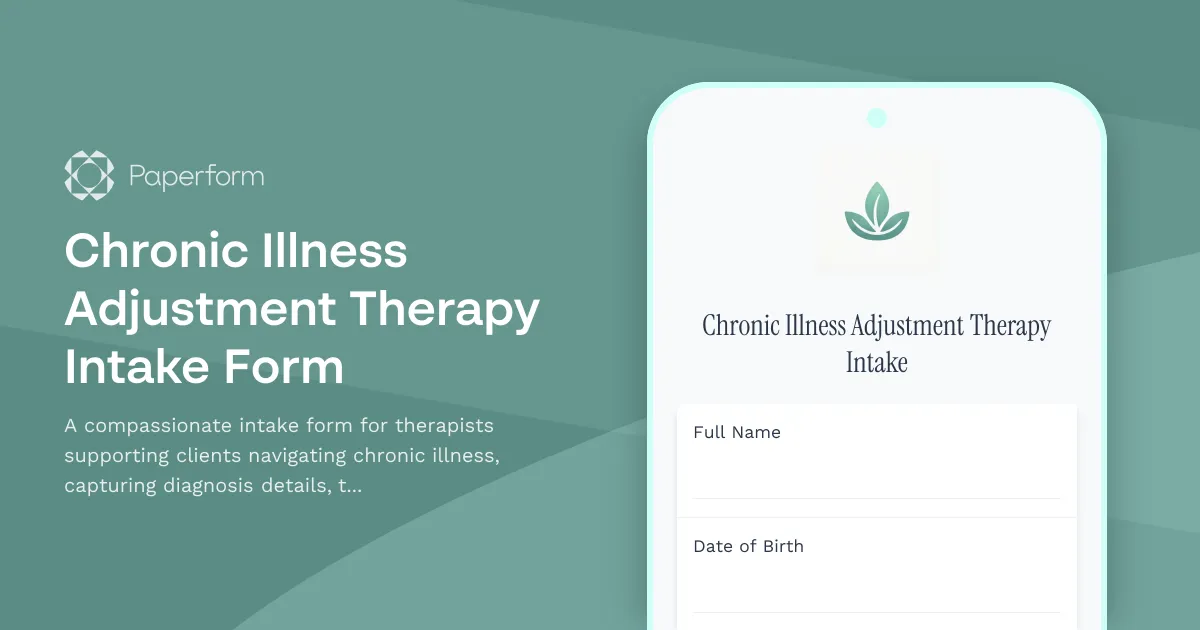
Chronic Illness Adjustment Therapy Intake Form
A compassionate intake form for therapists supporting clients navigating chronic illness, capturing diagnosis details, treatment impact, lifestyle adjustments, and support networks to inform personalized care.