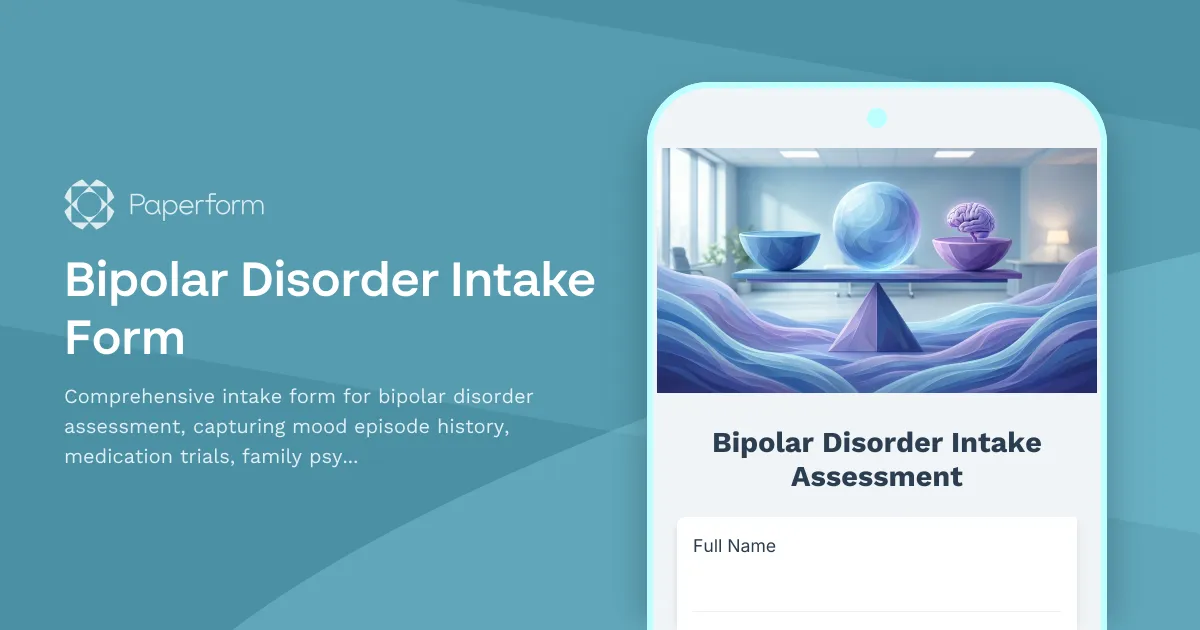
Streamline Bipolar Disorder Assessments with a Comprehensive Digital Intake Form
Managing bipolar disorder requires a thorough understanding of each patient's unique history, symptoms, and treatment responses. For mental health professionals, psychiatrists, and behavioral health clinics, gathering comprehensive intake information is essential for accurate diagnosis and effective treatment planning. A well-designed bipolar disorder intake form helps you collect detailed mood episode history, medication trials, family psychiatric background, and current symptomatry—all before the first appointment.
Why Mental Health Professionals Choose Paperform for Bipolar Disorder Intakes
Traditional paper intake forms or static PDFs create friction in the patient journey and add administrative burden to your practice. Paperform transforms this critical first step into a professional, compassionate experience that patients can complete on any device, with responses flowing directly into your practice management system.
Built for mental health workflows: Our bipolar disorder intake template is specifically designed for psychiatric and counseling practices that need to gather sensitive clinical information efficiently. The form uses conditional logic to adapt questions based on patient responses—if someone indicates they've experienced manic episodes, they'll see detailed follow-up questions about duration, severity, and impact. This intelligent branching creates a more conversational experience while ensuring you capture all the clinical detail you need.
HIPAA-friendly and secure: While Paperform is not HIPAA compliant, it offers robust security features including SSL encryption, SOC 2 Type II compliance, and data residency controls. For practices requiring HIPAA compliance, we recommend consulting with your compliance team about appropriate use cases or considering our enterprise security options.
Comprehensive Mood Episode Documentation
The template captures detailed information about both manic and depressive episodes, including onset dates, duration, severity ratings, hospitalizations, and functional impairment. Patients can document trigger patterns, seasonal variations, and the impact on work, relationships, and daily activities—giving you a complete clinical picture before your initial consultation.
Medication history that matters: Track previous medication trials with fields for medication names, dosages, duration of treatment, effectiveness ratings, side effects experienced, and reasons for discontinuation. This comprehensive medication history helps you avoid repeating unsuccessful trials and identify patterns in treatment response.
Family Psychiatric History and Risk Factors
Understanding genetic and environmental risk factors is crucial for bipolar disorder assessment. The form includes structured questions about family psychiatric history, including specific diagnoses in first and second-degree relatives, substance use disorders, and completed suicides—providing valuable context for diagnosis and treatment planning.
Seamless Integration with Your Clinical Workflow
Connect your Paperform intake directly to your practice management software, EHR system, or clinical documentation tools. Send completed intakes to Google Sheets, Airtable, or your CRM, trigger welcome emails with appointment preparation instructions, or use Stepper (stepper.io) to automate your entire intake workflow—from form submission to chart creation to appointment confirmation.
Automate with Stepper: When a patient completes their bipolar disorder intake, Stepper can automatically create their chart in your EHR, send a welcome email with resources about bipolar disorder, notify your scheduling team to book the initial assessment, and trigger a reminder workflow 24 hours before their appointment. This no-code automation keeps your team focused on patient care rather than administrative tasks.
Professional, Compassionate Patient Experience
First impressions matter in mental health care. Paperform's document-style editor lets you create an intake form that feels warm, professional, and aligned with your practice brand. Add your logo, choose calming colors, include welcome messages that set expectations, and create custom success pages with next steps and crisis resources.
Mobile-friendly for today's patients: Over 60% of patients will complete your intake form on their phone. Paperform's mobile-optimized design ensures a smooth experience on any device, with autosave functionality so patients can complete the form in multiple sessions if needed.
Designed for Psychiatrists, Therapists, and Behavioral Health Clinics
Whether you're a solo psychiatrist, group therapy practice, community mental health center, or integrated behavioral health clinic, this template adapts to your specific needs. Modify questions to match your assessment protocols, add practice-specific screening tools, include consent language that meets your state requirements, and customize the workflow to integrate with your existing systems.
Trusted by mental health professionals: Paperform serves over 500,000 teams worldwide with enterprise-grade security (SOC 2 Type II certified), reliable uptime, and dedicated support. Our platform scales with your practice—from individual providers to multi-location behavioral health organizations.
Get Started in Minutes
Use this bipolar disorder intake template as your starting point, customize it to match your clinical protocols and branding, embed it on your practice website or send it via email, and start receiving structured, comprehensive intake information that improves your diagnostic accuracy and treatment planning. With Paperform, you'll reduce no-shows, decrease administrative time, and create a more professional patient experience from the very first interaction.
Ready to modernize your mental health intake process? Start with our bipolar disorder intake template and discover why mental health professionals choose Paperform for forms that work as hard as they do.



More templates like this
Ketamine-Assisted Psychotherapy Screening Form
A comprehensive screening form for ketamine-assisted psychotherapy programs, evaluating treatment-resistant depression history, medical clearance requirements, and integration session planning for prospective patients.
Ketamine Therapy for Depression - Patient Intake Form
Comprehensive intake form for patients seeking ketamine therapy for treatment-resistant depression, including psychiatric history, medication trials, and safety screening.
Psychosis Early Intervention Assessment Form
A comprehensive first-episode psychosis screening and coordinated specialty care enrollment form for mental health services, including clinical assessment, family education needs, and treatment planning.
Anxiety Disorder Diagnostic Assessment Form
A comprehensive clinical form for mental health professionals to assess anxiety disorder symptoms, including panic attack frequency, avoidance behaviors, and physical symptom presentation.
Blast Injury and TBI Therapy Intake Form
A comprehensive intake form for mental health professionals treating blast injury and traumatic brain injury (TBI) patients, capturing injury mechanisms, cognitive symptoms, personality changes, and rehabilitation history.
Borderline Personality Disorder Assessment Form
A comprehensive clinical assessment tool for screening borderline personality disorder symptoms, including emotion dysregulation, relationship patterns, and behavioral indicators.

Brain Injury Therapy Intake Form
A comprehensive intake form for therapists working with brain injury patients, capturing injury details, cognitive and personality changes, current symptoms, and rehabilitation history to inform personalized treatment planning.
Cognitive Behavioral Therapy Intake Form
A comprehensive CBT intake form with depression screening, anxiety assessment, and therapy goals to help mental health professionals understand new clients and establish treatment plans.

Eating Disorder Therapy Intake Form
A compassionate intake form for eating disorder therapy that gathers essential information about food relationship history, body image concerns, medical complications, and nutritional habits to support effective treatment planning.

Mental Health Intake & Symptom Assessment
A comprehensive mental health intake form with PHQ-9 depression screening, GAD-7 anxiety assessment, and automated crisis intervention routing for safer, more informed care.

Palliative Care Mental Health Intake Form
A compassionate intake form for mental health professionals supporting palliative care patients, covering illness severity, symptom management, existential concerns, and legacy planning.
Panic Disorder Assessment Form
A comprehensive pre-visit assessment form to screen for panic disorder, track panic attack frequency, evaluate physical symptoms, and assess for agoraphobia.