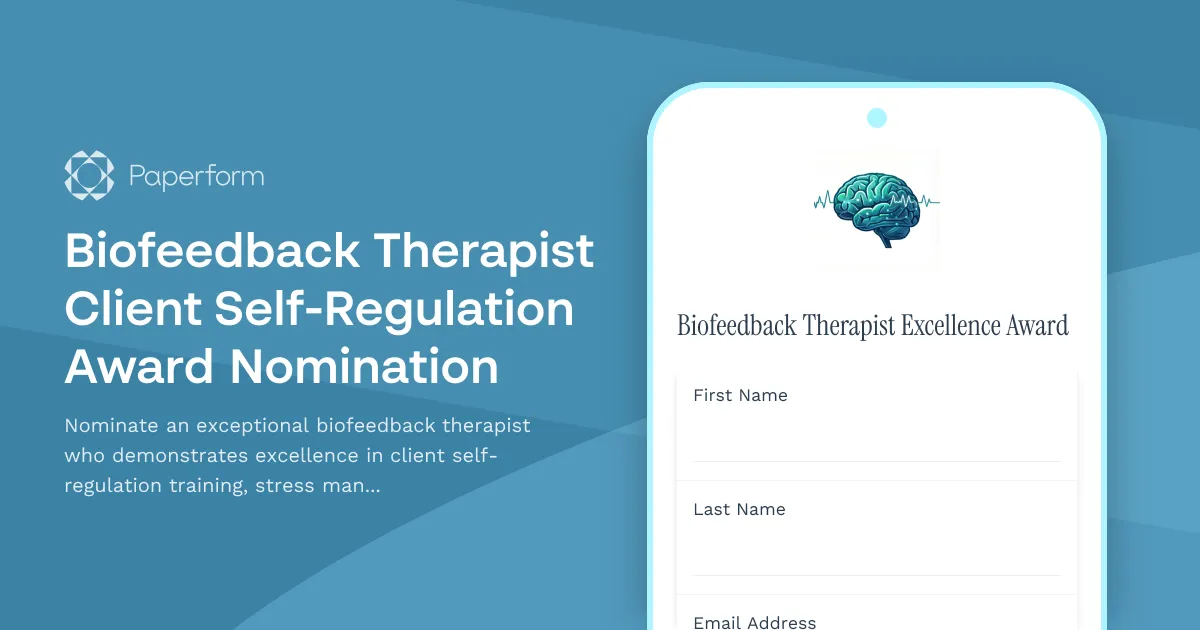
Recognize Excellence in Biofeedback Therapy
This nomination form helps identify and honor outstanding biofeedback therapists who demonstrate exceptional skill in helping clients achieve self-regulation, measurable stress management outcomes, and sustainable home practice habits.
Biofeedback therapy requires a unique blend of clinical expertise, technology proficiency, and patient education skills. The best practitioners don't just operate equipment—they empower clients to understand their physiological responses and develop lasting self-regulation techniques.
Why This Award Matters
Biofeedback therapists work at the intersection of healthcare, technology, and behavioral coaching. They help clients with anxiety, chronic pain, PTSD, migraines, and numerous other conditions gain control over their stress responses. Recognizing therapists who excel in this field encourages best practices and highlights the profound impact of biofeedback on patient outcomes.
Who Should Be Nominated
Consider nominating therapists who:
- Achieve measurable client improvements in stress management and self-regulation
- Demonstrate expertise with biofeedback technology and equipment
- Excel at teaching home practice techniques that clients can sustain
- Show innovation in treatment approaches and client engagement
- Maintain strong therapeutic relationships and patient satisfaction
Powered by Paperform
This nomination form is built on Paperform, the flexible form builder designed for healthcare professionals, wellness providers, and professional organizations. With conditional logic, you can capture detailed nomination information while keeping the form experience smooth and professional. Once submitted, you can use Stepper to automate your award review workflow—routing nominations to committee members, scoring submissions, and managing communication with nominators and nominees throughout your selection process.
Whether you're a professional association, healthcare organization, or wellness institution, this template provides a comprehensive framework for recognizing therapeutic excellence in biofeedback and mind-body medicine.
More templates like this

Mental Health Therapist Excellence Award Nomination Form
Nominate an outstanding mental health therapist for recognition based on client outcomes, evidence-based practices, and community education contributions.
ABA Therapy Insurance Claim Form
Professional ABA therapy insurance claim form for autism treatment reimbursement. Captures patient diagnosis, BCBA supervision details, treatment hours, progress data, and insurance mandate compliance documentation.
ACC Post-Traumatic Stress Disorder Claim Form
Comprehensive ACC claim form for PTSD resulting from an accident, including psychological assessment, trauma details, and treatment recommendations for New Zealand regulatory compliance.
Accelerated Resolution Therapy (ART) Session Booking Form
Book your Accelerated Resolution Therapy session for rapid trauma processing and PTSD symptom reduction. Complete treatment typically takes 1-5 sessions using evidence-based techniques.
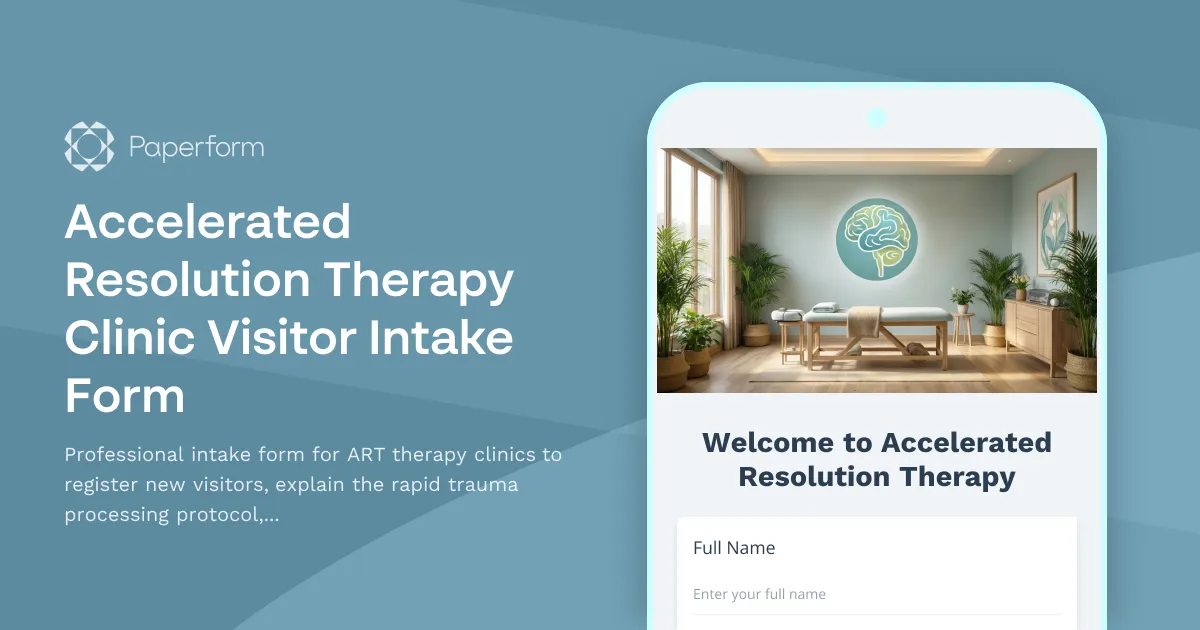
Accelerated Resolution Therapy Clinic Visitor Intake Form
Professional intake form for ART therapy clinics to register new visitors, explain the rapid trauma processing protocol, eye movement techniques, voluntary image replacement, and set session expectations.
Addiction Counseling Client Referral Form
A comprehensive referral intake form for addiction counseling practices to capture client information, treatment preferences, insurance details, and therapy options for substance abuse and behavioral addiction services.
Addiction Counseling Practice Client Referral Form
A comprehensive client referral form for addiction counseling practices to collect essential information about potential clients, including addiction type, treatment preferences, insurance details, and group therapy eligibility.
Addiction Recovery Monitoring & Sobriety Tracker
Track sobriety milestones, identify relapse triggers, and monitor support group attendance for addiction recovery programs. A comprehensive check-in form for patients and counselors.
Addiction Recovery Therapy Intake Form
A comprehensive intake form for addiction recovery counselors to gather essential information about new clients, including substance use history, previous sobriety attempts, support network, and recovery goals.
Addiction Screening & Assessment Quiz
A comprehensive screening tool for substance abuse counselors to assess usage patterns, evaluate life impact, and provide evidence-based treatment recommendations.
Addiction Treatment Counselor Burnout & Compassion Fatigue Self-Assessment
A comprehensive self-assessment tool for addiction treatment counselors to evaluate burnout levels, compassion fatigue, secondary trauma, and self-care effectiveness to support professional longevity and wellbeing.
Adolescent Depression Prevention Program Research Participation Form
A comprehensive research participation form for adolescent depression prevention studies, including mental health screening consent, therapy randomization, and parent communication preferences for school-based interventions.