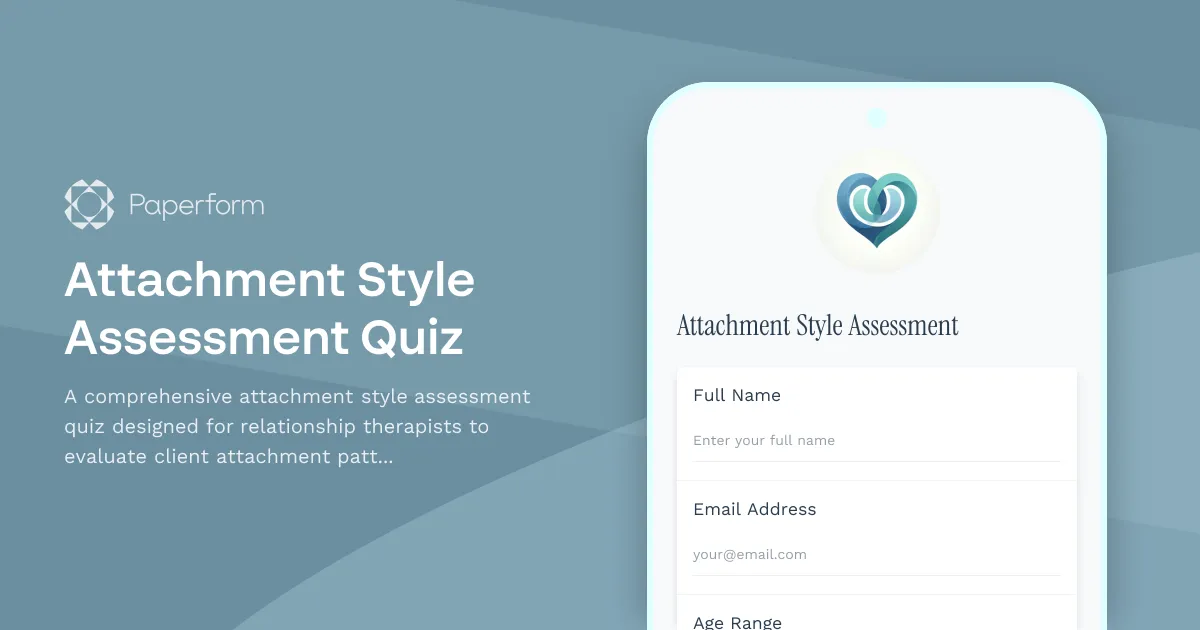
Understanding Attachment Styles in Relationship Therapy
Attachment theory is foundational to understanding how individuals form and maintain romantic relationships. This Attachment Style Assessment Quiz is specifically designed for relationship therapists, counselors, and mental health professionals who work with couples and individuals seeking to improve their relational dynamics.
Why Use This Assessment Template?
This comprehensive quiz evaluates the four primary attachment styles—secure, anxious-preoccupied, dismissive-avoidant, and fearful-avoidant—through carefully crafted questions that explore relationship patterns, communication preferences, emotional regulation, and intimacy comfort levels.
With Paperform's intuitive form builder, therapists can create a professional, on-brand assessment that clients can complete before their first session or as part of ongoing therapy work. The quiz uses conditional logic to tailor follow-up questions based on responses, providing deeper insights into each client's unique attachment profile.
Streamline Your Therapeutic Practice
Beyond data collection, this template helps you:
- Save session time by having clients complete assessments before appointments
- Customize therapy approaches based on detailed attachment and communication style analysis
- Track progress by having clients retake the assessment at intervals
- Improve client outcomes through targeted, attachment-informed interventions
Paperform integrates seamlessly with your existing practice management tools, allowing you to automatically send assessment results to your CRM, EMR, or project management system. You can also use Stepper to automate follow-up workflows—like sending personalized resource packets based on attachment style or scheduling appropriate session types.
Professional, GDPR-Compliant and Secure
With SOC 2 Type II compliance and robust data protection features, Paperform ensures that sensitive client information remains confidential and secure. Customize the assessment with your practice branding, add your logo, and adjust the colour scheme to create a seamless client experience that builds trust from the first interaction.
Whether you're a solo practitioner or part of a larger therapy practice, this Attachment Style Assessment template provides the foundation for deeper therapeutic work and more effective relationship interventions.



More templates like this
Relationship Health Assessment Quiz
A comprehensive diagnostic quiz for couples to assess relationship health, communication patterns, conflict resolution styles, and readiness for therapy. Perfect for marriage counselors and therapists.
Addiction Screening & Assessment Quiz
A comprehensive screening tool for substance abuse counselors to assess usage patterns, evaluate life impact, and provide evidence-based treatment recommendations.
Addiction Treatment Counselor Burnout & Compassion Fatigue Self-Assessment
A comprehensive self-assessment tool for addiction treatment counselors to evaluate burnout levels, compassion fatigue, secondary trauma, and self-care effectiveness to support professional longevity and wellbeing.
Chronic Nausea & Hyperemesis Mental Health Intake Form
A specialized mental health intake form for patients experiencing chronic nausea and hyperemesis, assessing symptom severity, nutritional status, medical history, and quality of life impact.
Couples Therapy Intake & Appointment Booking Form
A comprehensive intake form for couples therapy that collects relationship history, individual concerns, therapy goals, and schedules appointments for both partners.
Emotion-Focused Therapy Couples Intake & Booking
A comprehensive intake and booking form for couples seeking Emotion-Focused Therapy (EFT) to address attachment injuries, emotional accessibility issues, and relationship patterns.
Emotionally Focused Therapy (EFT) Couples Intake Form
Comprehensive EFT intake form for couples therapy that assesses attachment patterns, identifies negative interaction cycles, and explores bonding moments to inform therapeutic intervention.
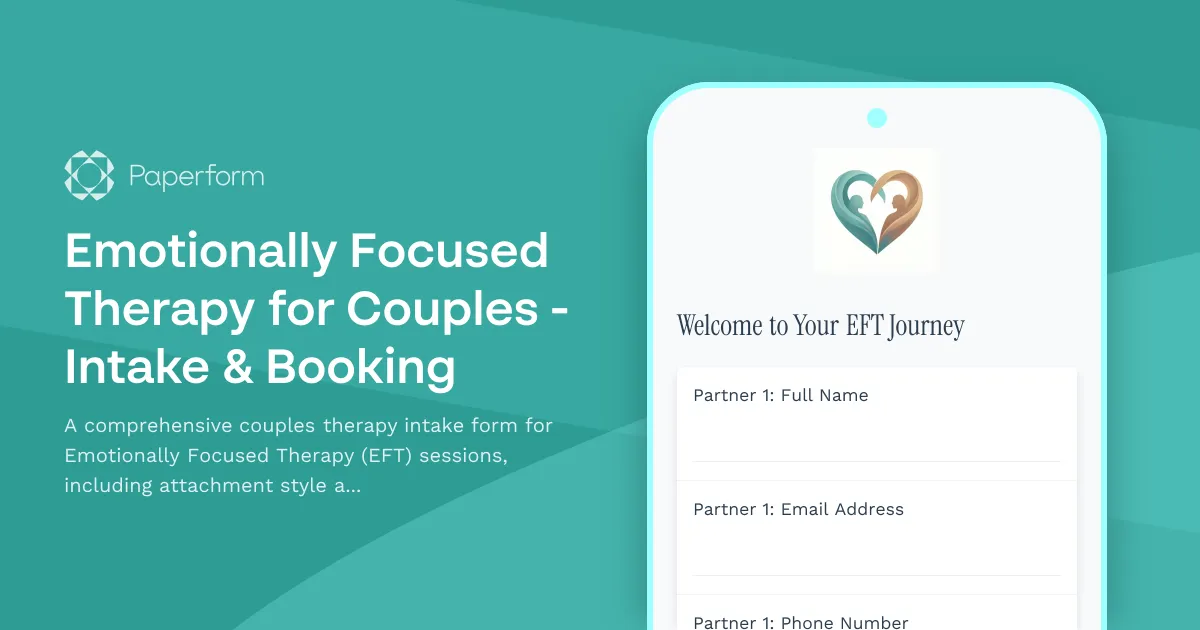
Emotionally Focused Therapy for Couples - Intake & Booking
A comprehensive couples therapy intake form for Emotionally Focused Therapy (EFT) sessions, including attachment style assessment, cycle mapping introduction, and vulnerability readiness evaluation to prepare couples for their therapeutic journey.
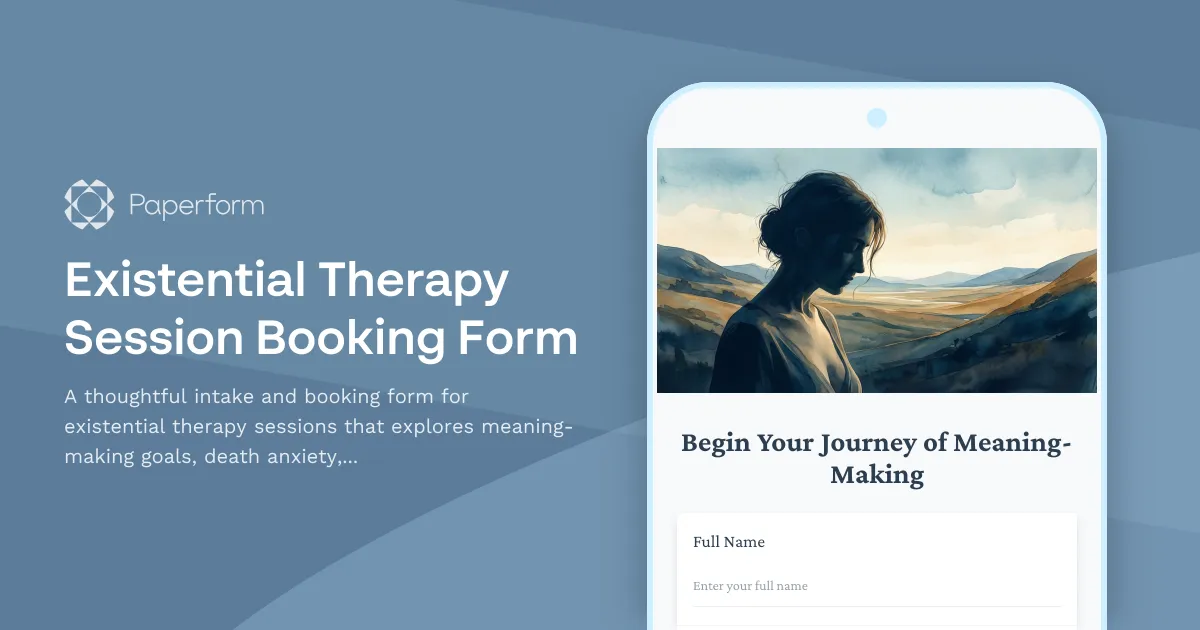
Existential Therapy Session Booking Form
A thoughtful intake and booking form for existential therapy sessions that explores meaning-making goals, death anxiety, freedom, responsibility, and connection themes.
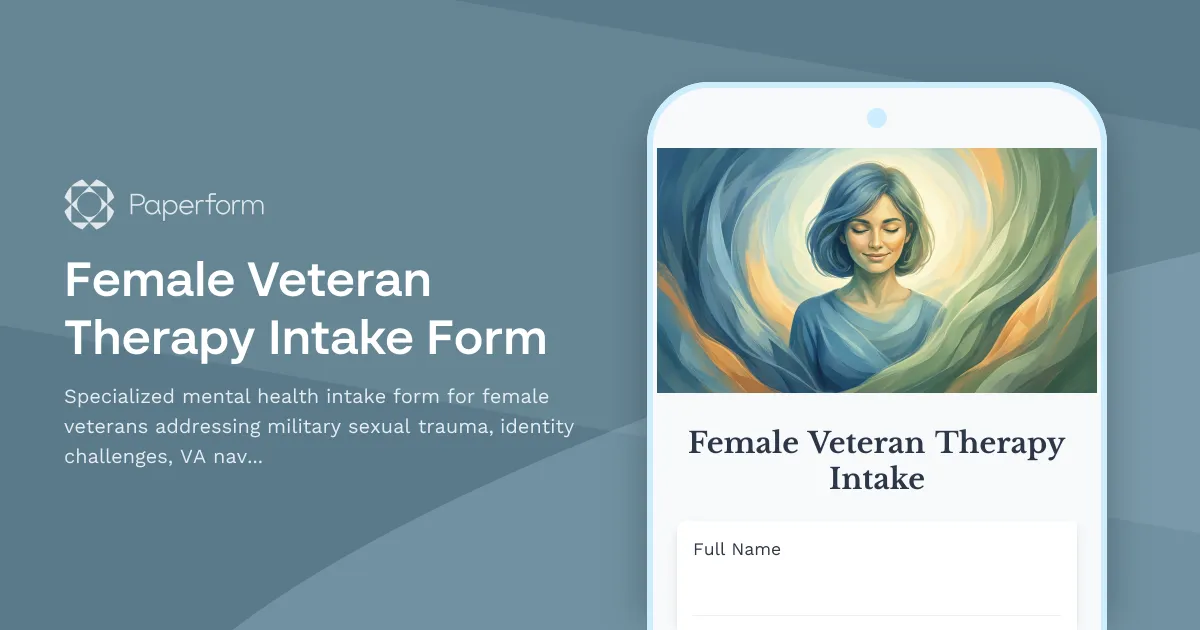
Female Veteran Therapy Intake Form
Specialized mental health intake form for female veterans addressing military sexual trauma, identity challenges, VA navigation, and recognition issues in a safe, supportive environment.
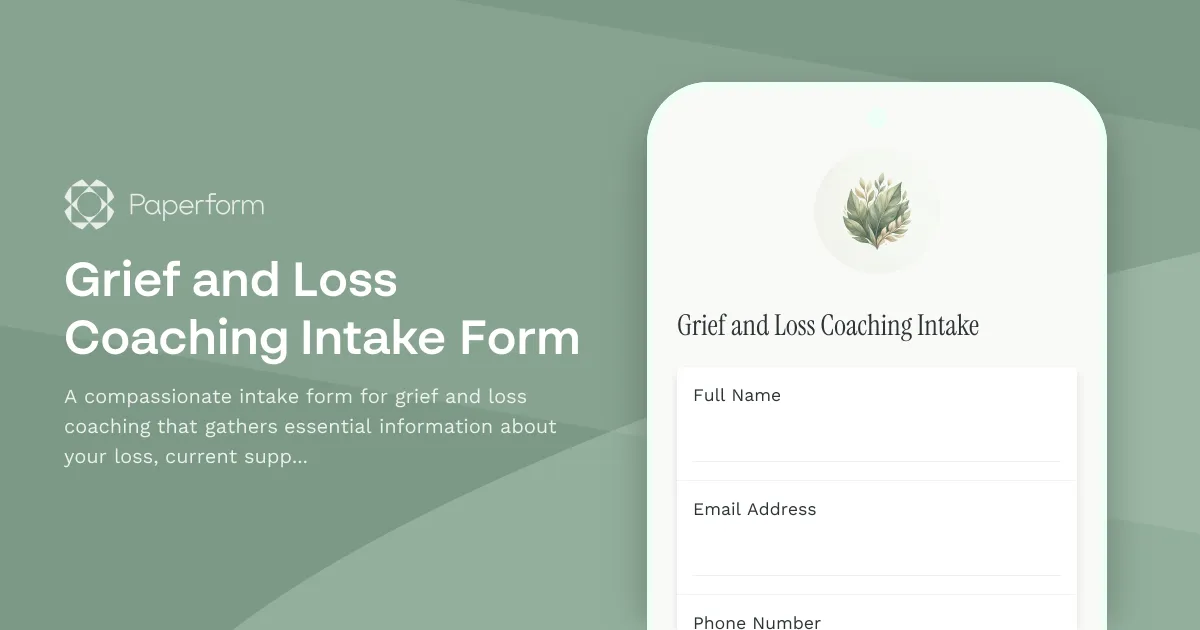
Grief and Loss Coaching Intake Form
A compassionate intake form for grief and loss coaching that gathers essential information about your loss, current support system, coping mechanisms, and healing goals to create a personalized coaching journey.
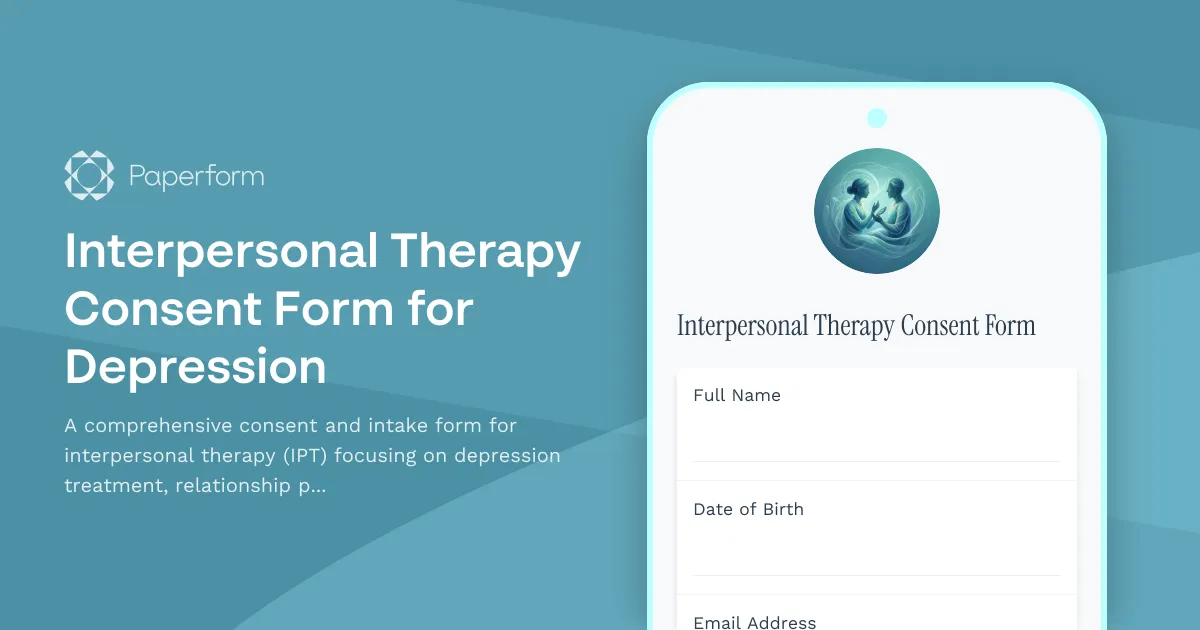
Interpersonal Therapy Consent Form for Depression
A comprehensive consent and intake form for interpersonal therapy (IPT) focusing on depression treatment, relationship patterns, role transitions, and grief processing.