Protect Your Community's Tree Canopy with a Professional Appeal Form
Municipal tree canopy preservation is a critical issue for communities facing urban development. When development projects threaten existing trees, heritage specimens, or neighborhood green space, residents and stakeholders need a clear, organized way to submit formal appeals to local government.
This Municipal Tree Canopy Preservation Appeal Form provides a structured process for citizens, environmental groups, and concerned parties to document their concerns about tree removal permits, challenge inadequate replacement plans, request heritage tree designation, and call for comprehensive environmental impact reviews.
Why Paperform for Civic Engagement
Paperform makes it simple for municipal governments and environmental advocacy groups to create professional, accessible forms that encourage community participation. The form builder's document-style editor lets you explain complex environmental policies in plain language, add visual context with images or maps, and organize multi-part appeals into logical sections.
With conditional logic, you can tailor the form experience based on appeal type—whether someone is challenging a specific development permit, nominating a tree for heritage status, or requesting a broader environmental review. This ensures appellants provide all the relevant information upfront, reducing back-and-forth and speeding up the review process.
Streamline the Appeal Process with Automation
Once submitted, appeals need to reach the right people fast. Using Stepper (stepper.io), Paperform's AI-native workflow automation, you can automatically route appeals to the appropriate municipal department, notify relevant council members, log the submission in your case management system, and send acknowledgment emails to appellants with next steps and timelines.
For governments using Papersign (papersign.com), you can even collect formal attestations or affidavits digitally, ensuring legally compliant documentation without printing, scanning, or mailing.
Built for Transparency and Compliance
Tree preservation appeals often involve public records, open meeting requirements, and formal review timelines. Paperform's SOC 2 Type II compliance, data residency controls, and robust permissions system ensure that sensitive information is handled securely while remaining accessible to authorized staff and, when required, the public.
Whether you're a municipal sustainability office, planning department, environmental nonprofit, or neighborhood association, this template helps you facilitate informed, respectful civic participation—giving every voice a clear path to be heard on the issues that shape your community's future.



More templates like this
Gene Drive Moratorium Petition
Professional petition form for collecting signatures supporting a moratorium on gene drive technology deployment, with ecological risk documentation and regulatory framework tracking for EPA/USDA routing.
Landfill Expansion Opposition Witness Statement Form
A comprehensive witness statement form for community members opposing landfill expansion, documenting environmental concerns, community impact, and public hearing testimony.
Rain Tax and Stormwater Fee Credit Program Public Comment Form
Submit public comments on proposed rain tax and stormwater fee credit programs, including impervious surface calculations, green infrastructure incentives, and appeals processes for municipal stormwater management regulations.
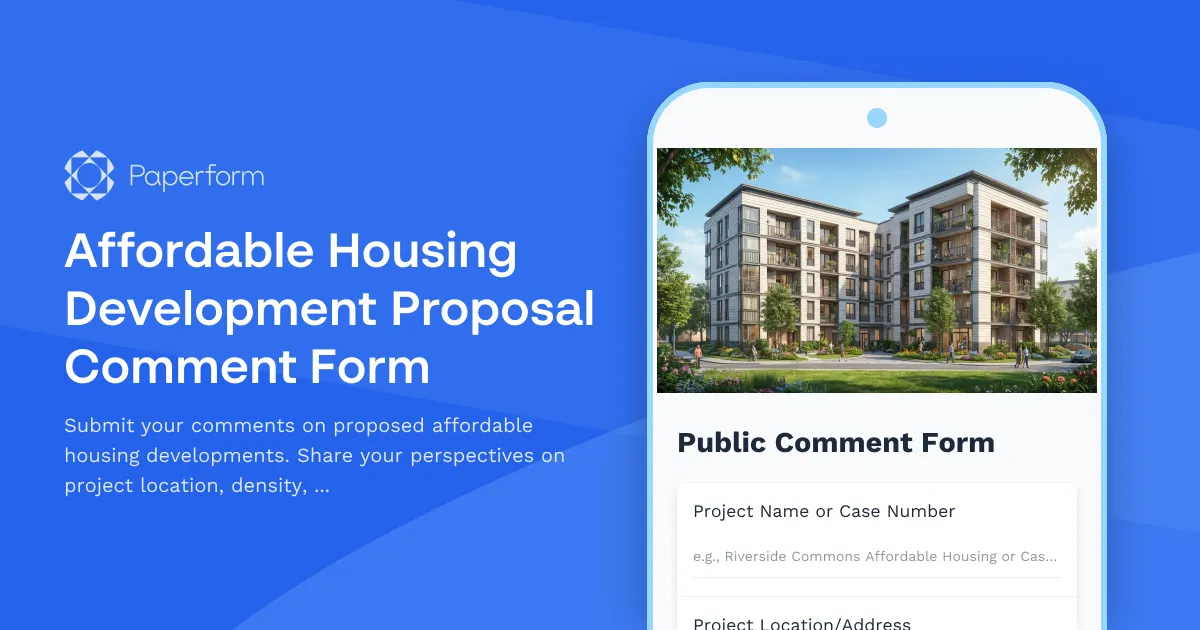
Affordable Housing Development Proposal Comment Form
Submit your comments on proposed affordable housing developments. Share your perspectives on project location, density, parking, traffic impact, and community benefits.
Anonymous Pollution Discharge Report
Report suspected pollution discharges anonymously to environmental authorities. Document environmental violations, health impacts, and provide evidence while maintaining complete confidentiality.
City Planning Public Hearing Comment Form
Submit your comments, concerns, and suggestions on proposed development projects during city planning public hearings. Share feedback on environmental impact, traffic, and community character preservation.
Climate Action Plan Implementation Comment Form
A comprehensive public comment form for gathering community feedback on proposed climate action plans, including emission reduction targets, sector-specific strategies, and environmental justice considerations.
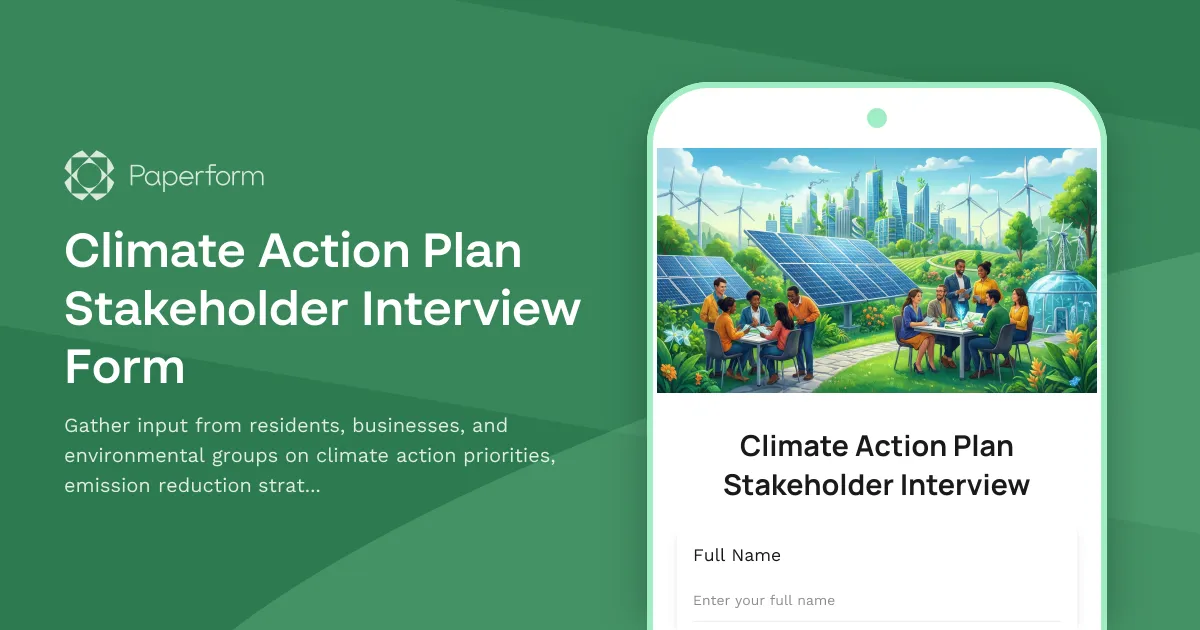
Climate Action Plan Stakeholder Interview Form
Gather input from residents, businesses, and environmental groups on climate action priorities, emission reduction strategies, adaptation plans, and implementation timelines for your community's climate action plan.
Coastal Zone Management Public Hearing Comment Form
Submit public comments on coastal zone management proposals, including shoreline access, environmental protection, and development regulations for public hearing consideration.
Community Development Block Grant Allocation Public Input Form
A public input form for gathering community feedback on Community Development Block Grant (CDBG) allocation priorities, eligible project categories, neighborhood needs, and equity considerations.
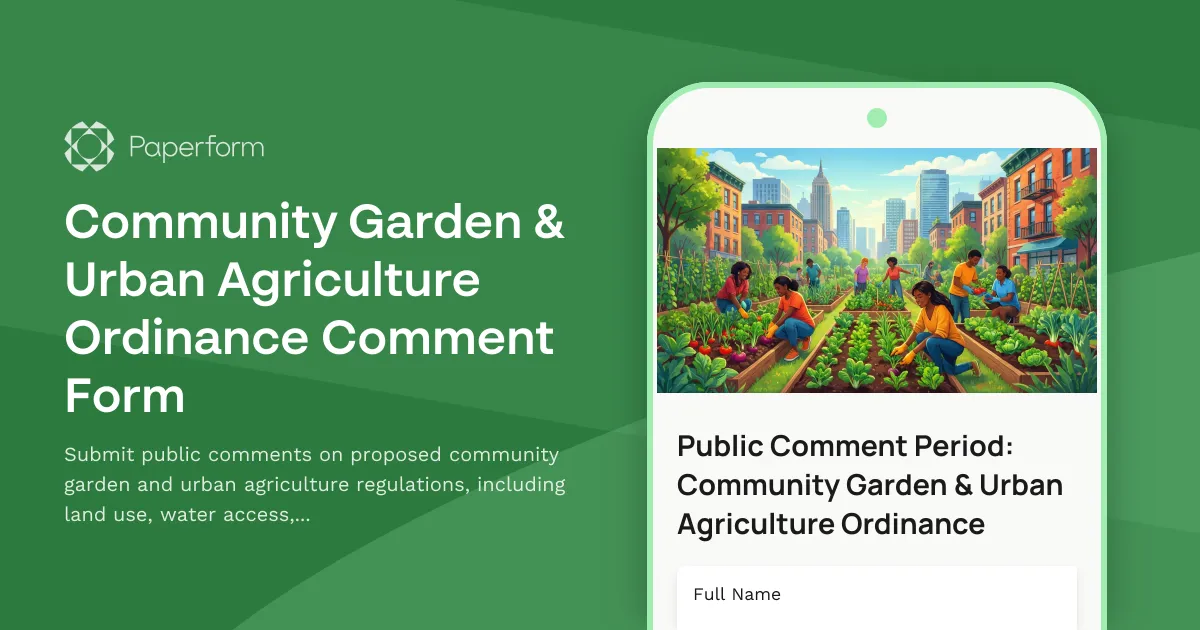
Community Garden & Urban Agriculture Ordinance Comment Form
Submit public comments on proposed community garden and urban agriculture regulations, including land use, water access, and livestock provisions.
Disaster Debris Management Plan Public Comment Form
Submit public comments on proposed disaster debris management plans, including collection priorities, temporary staging areas, and hazardous material handling procedures.