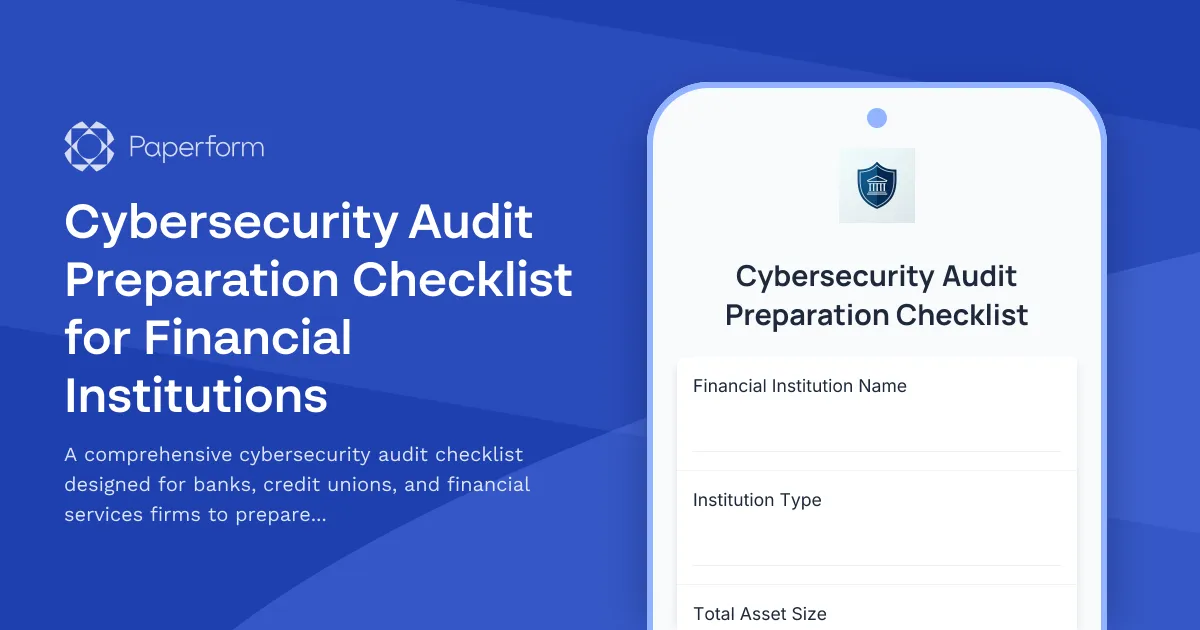
Streamline Your Cybersecurity Audit with a Comprehensive Digital Checklist
Financial institutions face increasingly complex cybersecurity audit requirements from regulators including FFIEC, FDIC, OCC, NCUA, and state banking authorities. This Cybersecurity Audit Preparation Checklist helps compliance officers, IT security teams, and risk managers organize audit preparation, map regulatory requirements, and maintain a clear documentation trail.
Why Financial Institutions Choose This Template
Banks, credit unions, fintech companies, and financial services firms use this template to:
- Centralize audit preparation across information security, risk management, and compliance teams
- Map controls to specific regulatory frameworks including GLBA, SOX, PCI DSS, and FFIEC guidelines
- Track documentation status and identify gaps before auditors arrive
- Create accountability by assigning preparation tasks to specific team members
- Maintain audit history with timestamped submissions and automated confirmations
Built for Regulated Financial Environments
The checklist covers essential audit preparation areas including access controls, incident response planning, vendor risk management, data protection, business continuity, penetration testing results, security awareness training, and regulatory reporting. Conditional logic adapts the form based on your institution's size, regulatory scope, and audit type.
Automate Your Audit Workflow with Stepper
Connect this form to Stepper to automatically route submissions to compliance officers, trigger task assignments in your project management system, send reminders for outstanding documentation, and create a centralized audit preparation dashboard. When audit season approaches, your team already has a clear view of readiness.
Secure, Compliant, and Enterprise-Ready
Built on Paperform's SOC 2 Type II certified platform with data residency controls, SSO, and role-based permissions, this template meets the security standards financial institutions require. Track every submission, maintain version control, and ensure audit readiness without spreadsheet chaos.
Whether you're preparing for your annual FFIEC examination, SOX 404 assessment, or state regulatory review, this template gives your team a systematic approach to cybersecurity audit preparation that auditors will appreciate.



More templates like this
Data Breach Incident Report Form
Document and manage data breach incidents with comprehensive system impact analysis, user assessment, response tracking, and regulatory notification timelines.
Cryptocurrency Wallet Security Audit Form
A comprehensive security audit form designed for fintech companies to assess cryptocurrency wallet infrastructure, evaluate private key management protocols, verify multi-signature implementations, and validate cold storage security measures.
Corporate Data Breach Whistleblower Report
A secure, anonymous form for employees and stakeholders to report suspected data breaches and security incidents with full GDPR compliance and incident severity assessment.
Cybersecurity Exception Approval Request Form
A comprehensive form for requesting cybersecurity policy exceptions with risk assessment, compensating controls, business justification, and remediation plans requiring CISO authorization.
Third-Party Vendor Data Sharing Access Request Form
A comprehensive form for managing third-party vendor data access requests, including data processing agreement requirements, security assessments, and purpose limitation controls for IT and compliance teams.
Anti-Money Laundering (AML) Software Request Form
Request access to anti-money laundering software solutions with transaction monitoring, sanctions screening, case management, and regulatory reporting capabilities for compliance teams.
Catastrophic Data Loss Incident Report
Report critical data loss incidents, activate business continuity protocols, and manage customer notification and regulatory disclosure requirements for corporate emergencies.
Credit Union Loan Origination System Data Access Request Form
A comprehensive form for requesting access to credit decision data, underwriting criteria, adverse action reasons, and fair lending analytics within credit union loan origination systems.
Cyber Insurance Data Breach Claim Form
Submit a comprehensive cyber insurance claim for data breach incidents. Document the timeline, affected records, forensic findings, and notification expenses to expedite your claim processing.
Cybersecurity and Data Privacy Governance Report
A comprehensive ESG reporting form for documenting cybersecurity governance, data privacy measures, breach incidents, and security training compliance across your organization.
Cybersecurity Breach Incident Report
Report and document cybersecurity breaches, data exposures, and security incidents with comprehensive system impact assessment and executive notification workflow.
Identity and Access Management Quarterly Review Form
Conduct comprehensive IAM quarterly reviews with user provisioning audits, role-based access validation, and orphaned account identification to maintain security compliance and minimize access risks.