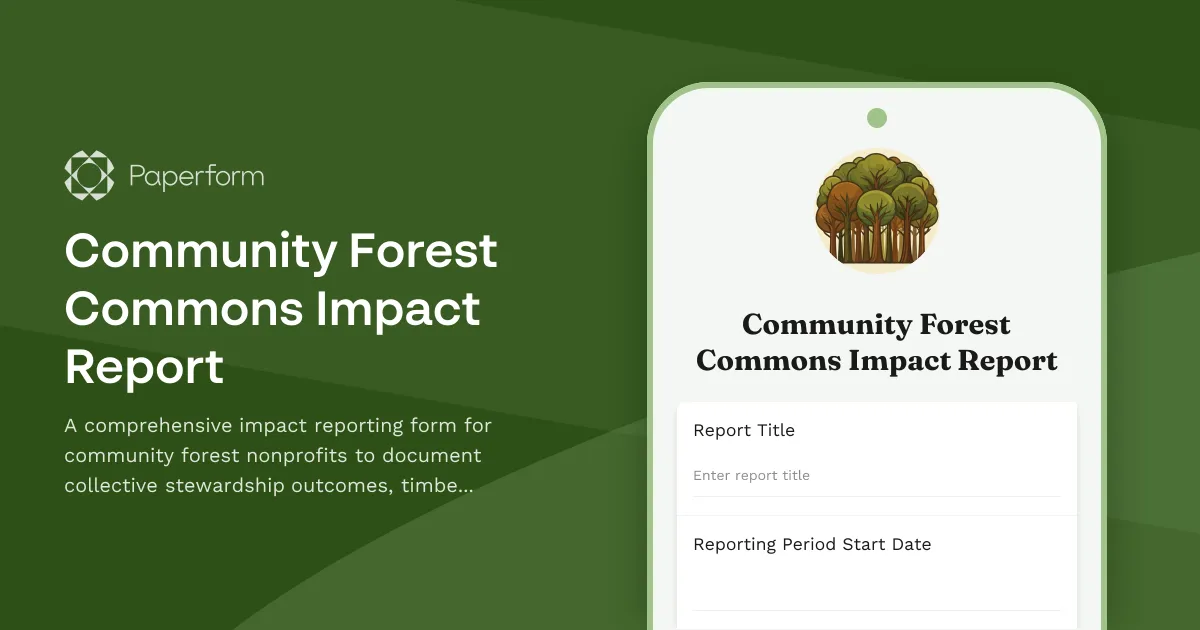
Transparent Forest Stewardship Impact Reporting
Community forest nonprofits play a vital role in preserving our natural ecosystems while honoring traditional land management practices. This Community Forest Commons Impact Report template helps forest stewardship organizations document and share meaningful outcomes with donors, community members, and stakeholders.
Why impact reporting matters for forest conservation
Donors and supporters want to see the tangible difference their contributions make. Whether you're protecting old-growth forests from commercial logging, supporting Indigenous harvesting rights, or improving forest health through community-led restoration, clear impact reporting builds trust and demonstrates accountability.
Built for community-based forest stewardship
This template is designed specifically for nonprofits managing forest commons through collective stewardship models. Track key metrics like:
- Acres protected from timber extraction
- Community members engaged in stewardship activities
- Traditional harvesting practices supported and preserved
- Forest health improvements through restoration work
- Carbon sequestration and biodiversity outcomes
- Educational programs and volunteer participation
Streamline reporting with Paperform
With Paperform's flexible form builder, you can customize this template to match your organization's specific conservation model and reporting needs. Add your branding, adjust questions to reflect your unique initiatives, and use conditional logic to capture different types of impact data based on project categories.
Connect your completed reports directly to your CRM, project management tools, or Google Sheets using Paperform's native integrations or Stepper (stepper.io) to automatically trigger follow-up communications with donors, generate summary reports for your board, or update your impact dashboard.
From data collection to donor engagement
Once submitted, use the data to create compelling donor updates, annual reports, and grant applications. Paperform's AI Insights can help analyze responses across multiple reporting periods to identify trends, summarize key achievements, and generate talking points for your communications team.
This template helps forest conservation nonprofits demonstrate their impact with clarity and authenticity—showing donors exactly how their support protects forests, empowers communities, and preserves traditional ecological knowledge for future generations.
More templates like this
Botanical Garden Conservation Impact Report
A comprehensive impact reporting form for botanical gardens and plant conservation nonprofits to track rare species propagation, seed banking initiatives, habitat restoration projects, and conservation education outreach.
Climate Action Impact Report
A comprehensive impact reporting form for climate action nonprofits to track and share emissions reduction achievements, renewable energy projects, policy advocacy wins, and community education reach with donors and stakeholders.
Community Composting Impact Report
Track and measure the environmental impact of your community composting program with metrics for organic waste diverted, soil created, carbon sequestration, and circular economy participation.
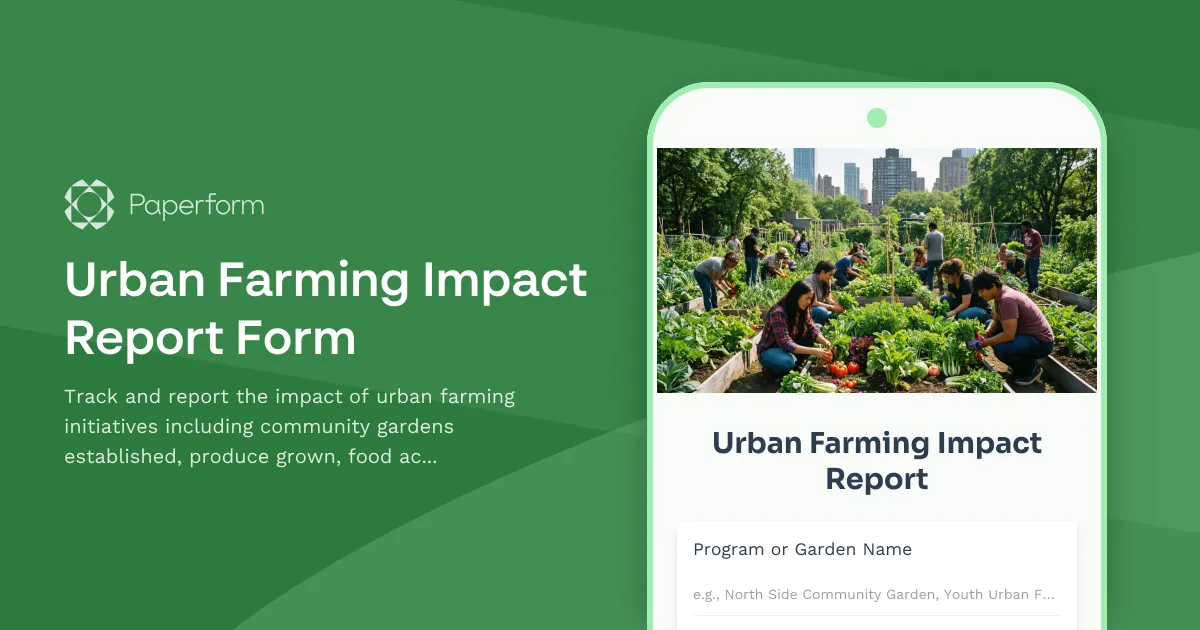
Urban Farming Impact Report Form
Track and report the impact of urban farming initiatives including community gardens established, produce grown, food access improvements, and nutrition education outcomes.
Circular Economy Advocacy Registration Form
Join the circular economy movement and advocate for zero waste goals, product stewardship laws, and regenerative production systems in your community.
Climate Action Advocacy Form
A comprehensive climate action form that calculates your carbon footprint, collects advocacy pledges, and tracks corporate accountability commitments to drive meaningful environmental change.
Community Composting Program Donation Form
Support local composting initiatives by donating to education workshops, purchasing compost bins for residents, or funding compost distribution to community gardens.
Environmental Carbon Offset Impact Calculator
Calculate and report the environmental impact of carbon offset projects including trees planted, CO2 reduction, habitat restoration, and geographic reach for donors and stakeholders.
Environmental Justice Pollution Reduction Impact Report
Track and report pollution reduction outcomes, toxic exposure decreases, regulatory enforcement actions, and community health improvements for environmental justice initiatives.
Green Infrastructure Grant Final Report
A comprehensive final reporting form for green infrastructure grants tracking rain garden installations, permeable pavement, stormwater capture, and combined sewer overflow reduction achievements.
Post-Growth Transition Pledge Form
A commitment form for individuals and organizations pledging to embrace degrowth principles, wellbeing economics, and sustainable consumption reduction for a just transition to a post-growth society.
Urban Greening Grant Outcomes Report
A comprehensive grant reporting form for urban greening initiatives, tracking trees planted, community gardens established, heat reduction metrics, and environmental education program outcomes.