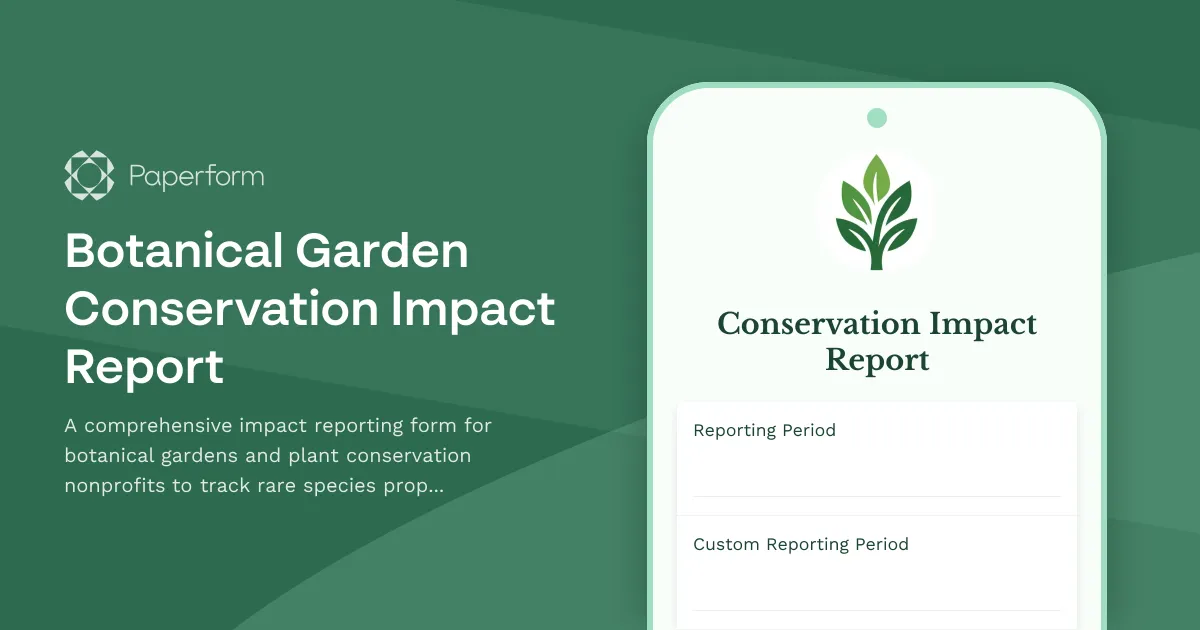
Track Your Plant Conservation Impact with Paperform
Botanical gardens and plant conservation nonprofits play a vital role in preserving global biodiversity, yet demonstrating impact to donors and stakeholders can be complex. This Botanical Garden Conservation Impact Report template gives conservation organizations a professional, comprehensive way to document rare species propagation, seed banking efforts, habitat restoration outcomes, and educational reach—all in one streamlined form.
Built for conservation teams and development directors
Whether you're reporting quarterly outcomes to major donors, preparing annual impact summaries, or documenting grant deliverables, this template helps you capture the metrics that matter: species saved, seeds preserved, habitats restored, and communities educated. The form is organized into clear sections covering propagation success, seed banking statistics, restoration milestones, and education program reach, making it easy for program managers to complete and simple for donors to understand.
Automate reporting and donor communications
Use Stepper (stepper.io) to automatically route completed impact reports to your development team, trigger personalized donor thank-you emails with impact highlights, update your CRM or grants management system, and generate summary dashboards. You can also set up conditional logic to flag exceptional outcomes or areas needing attention, ensuring the right stakeholders see the most relevant data.
Professional, on-brand reporting
Customize the form's theme to match your botanical garden's visual identity—add your logo, use your brand colors, and include compelling images of conservation work. Embed the form on your website's donor portal or send it as a standalone link to program staff. With Paperform's flexible design options, your impact reporting looks as professional as the conservation work you do.
Trusted by conservation nonprofits worldwide, this template helps you demonstrate measurable impact, strengthen donor relationships, and celebrate the critical work of plant preservation for future generations.



More templates like this
Climate Action Impact Report
A comprehensive impact reporting form for climate action nonprofits to track and share emissions reduction achievements, renewable energy projects, policy advocacy wins, and community education reach with donors and stakeholders.
Community Composting Impact Report
Track and measure the environmental impact of your community composting program with metrics for organic waste diverted, soil created, carbon sequestration, and circular economy participation.
Community Forest Commons Impact Report
A comprehensive impact reporting form for community forest nonprofits to document collective stewardship outcomes, timber extraction prevention, traditional harvesting practices, and forest health improvements for donors and stakeholders.
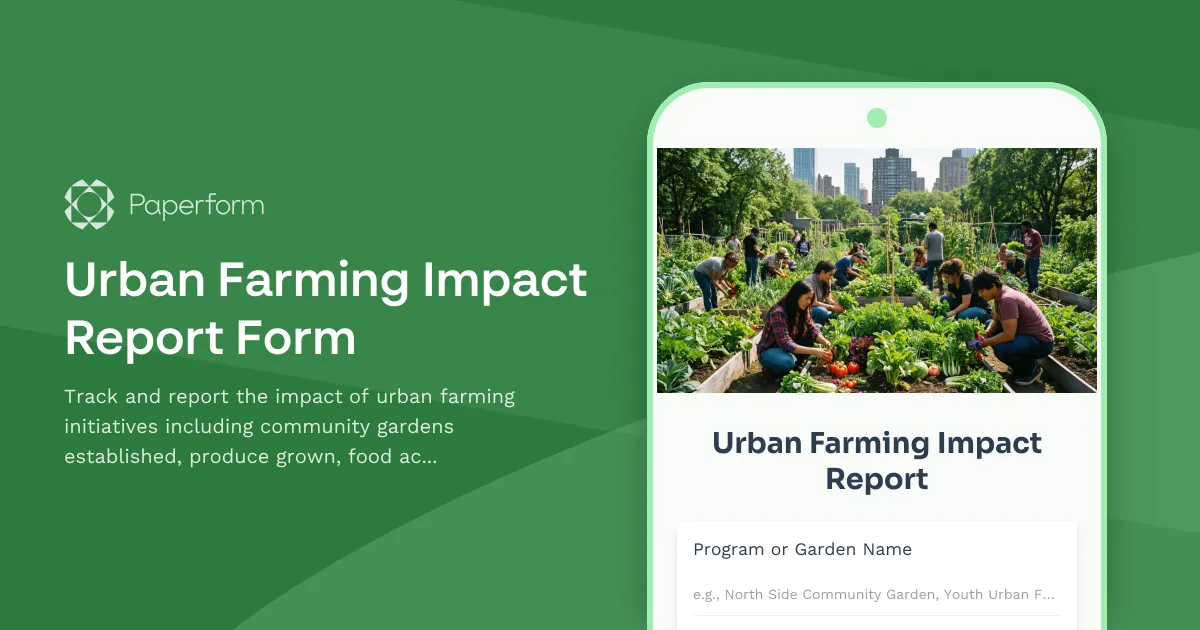
Urban Farming Impact Report Form
Track and report the impact of urban farming initiatives including community gardens established, produce grown, food access improvements, and nutrition education outcomes.
Circular Economy Advocacy Registration Form
Join the circular economy movement and advocate for zero waste goals, product stewardship laws, and regenerative production systems in your community.
Climate Action Advocacy Form
A comprehensive climate action form that calculates your carbon footprint, collects advocacy pledges, and tracks corporate accountability commitments to drive meaningful environmental change.
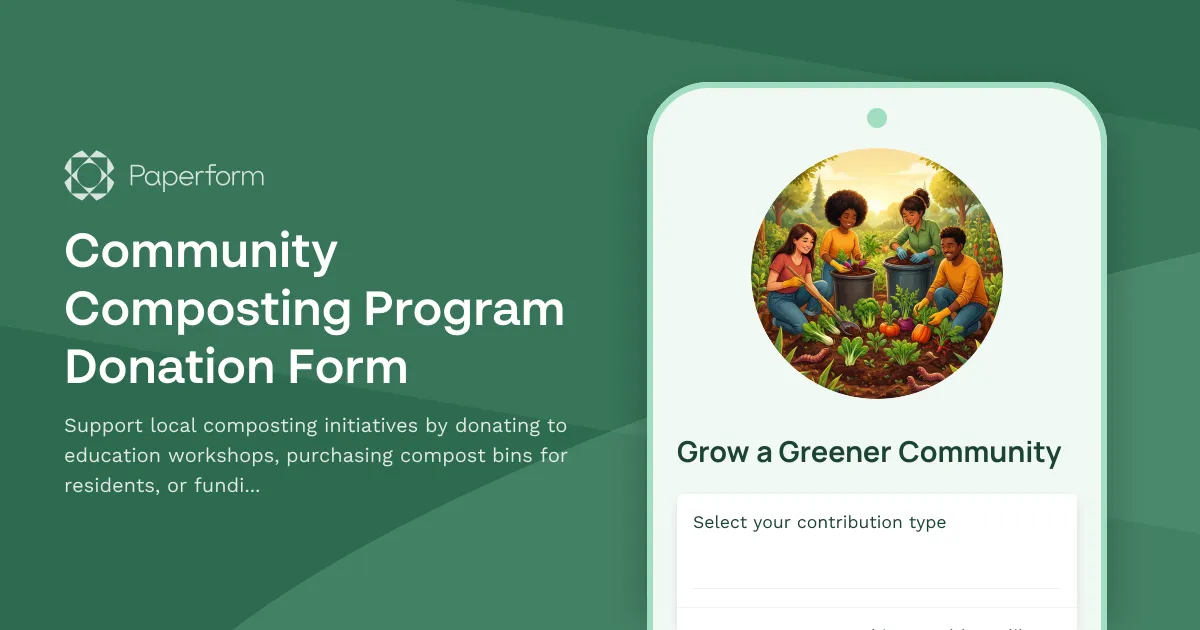
Community Composting Program Donation Form
Support local composting initiatives by donating to education workshops, purchasing compost bins for residents, or funding compost distribution to community gardens.
Environmental Carbon Offset Impact Calculator
Calculate and report the environmental impact of carbon offset projects including trees planted, CO2 reduction, habitat restoration, and geographic reach for donors and stakeholders.
Environmental Conservation Grant Proposal Form
A comprehensive grant application form designed for environmental organizations seeking funding for conservation projects, featuring land acquisition details, species protection plans, and measurable sustainability outcomes.
Environmental Justice Pollution Reduction Impact Report
Track and report pollution reduction outcomes, toxic exposure decreases, regulatory enforcement actions, and community health improvements for environmental justice initiatives.
Green Infrastructure Grant Final Report
A comprehensive final reporting form for green infrastructure grants tracking rain garden installations, permeable pavement, stormwater capture, and combined sewer overflow reduction achievements.
Post-Growth Transition Pledge Form
A commitment form for individuals and organizations pledging to embrace degrowth principles, wellbeing economics, and sustainable consumption reduction for a just transition to a post-growth society.