
Best Form Builders for Airtable in 2026
The best form builder for Airtable is Fillout, because its native connector updates existing records rather than only creating them, and the Airtable integration is on its free plan. Paperform is the better choice once the base is one step in a process involving payments, contracts or approvals. Airtable's own form view is fine for single-page internal intake.
Every tool here was ranked on one question: how cleanly does it get a response into an Airtable base and keep it there. That breaks down into whether the connector is native or routed through Zapier, whether it can update a record or only append one, whether calculated values and payment data survive the trip, and how the form behaves once embedded in a Softr portal, an Airtable interface or a marketing page. Generic form-builder merit came second.
The reason this page exists at all is that Airtable's form view is the thinnest part of a very capable platform. Submissions land as structured, linked records with views, automations and formulas behind them, which is genuinely hard to beat. The form in front of that is single-page, takes no payments, shows no calculated fields to the respondent, and puts conditional groups behind the $45 per editor Business plan. The gap between the backend and the intake layer is what the five other tools on this list are selling into.
Pricing, feature and compliance data was re-verified against live vendor pricing pages on 22 September 2026. For a broader shortlist that is not tied to Airtable, see our best form builders ranking.
| Feature | Fillout | Paperform | Airtable Forms | Tally | Jotform | Typeform |
|---|---|---|---|---|---|---|
| Form Building | ||||||
| Document-style editor | No | Yes | No | Yes | No | No |
| AI form creation | Yes | Yes | No | Yes | Yes starter | Yes |
| AI agent in the form editor (Form Agent) | Yes | No | No | No | No | No |
| Field types | 50+ | 26+ | Yes | 20+ | 30+ (starter) | 20+ |
| Multi-page forms | Yes | Yes | No | Yes | Yes starter | Yes basic |
| Payments | ||||||
| Stripe payments | Yes | Yes | No | Yes | Yes starter | Yes basic |
| PayPal payments | No | Yes | No | No | Yes starter | No |
| Square payments | No | Yes | No | No | Yes starter | No |
| Braintree payments | No | Yes | No | No | Yes starter | No |
| Google Pay | No | Yes | No | No | Yes starter | No |
| Design & Customization | ||||||
| Template gallery | Yes | 30,000+ | No | Yes | 20,000+ (starter) | 1,500+ |
| Unsplash and Giphy integration | No | Yes | No | No | No | Yes |
| Image editor | No | Yes | No | No | No | No |
| Adobe Creative Cloud | No | Yes | No | No | No | No |
| Language translation | No | Yes | No | Yes | Yes starter | Yes basic |
| Analytics | ||||||
| AI report insights | No | Yes pro | No | No | No | Yes business |
| Paperform analytics | Yes business | Yes pro | No | Yes pro | No | No |
| Google Analytics & Facebook Pixel | Yes | Yes pro | No | Yes pro | No | Yes basic |
| Custom analytics scripts | Yes business | Yes pro | No | No | No | Yes basic |
| Partial submissions | Yes business | Yes pro | No | Yes pro | No | Yes plus |
| Collaboration | ||||||
| Advanced permissions & admin | Yes team | Yes enterprise | Yes enterprise | No | Yes enterprise | Yes enterprise |
| Form sharing (templates) | Yes | Yes | Yes | Yes | No | Yes |
| Spaces and tag management | Yes | Yes | No | Yes pro | No | No |
| Workspace organization | No | No | Yes | No | No | Yes |
| Form sharing | No | No | No | No | Yes starter | No |
| Security | ||||||
| SOC 2 Type II | Yes | Yes | Yes | No | Yes enterprise | Yes |
| ISO 27001 | No | No | No | No | No | Yes |
| Audit logs | Yes enterprise | No | No | No | No | No |
| Two-factor authentication | Yes | Yes | Yes | No | Yes starter | Yes |
| Enforce 2FA for all users | Yes team | Yes business | No | No | No | No |
| Integrations & API | ||||||
| Native integrations | 50+ | 4,000+ | No | 17+ | 150+ (starter) | 120+ (basic) |
| Standard API | Yes | Yes pro | No | Yes | No | No |
| Business API | No | Yes business | No | No | No | No |
| WordPress plugin | Yes | Yes | No | Yes | Yes starter | Yes |
| oEmbed support | Yes | Yes | No | Yes | No | No |
 #1 Fillout — Best Airtable Connector, Including Record Updates
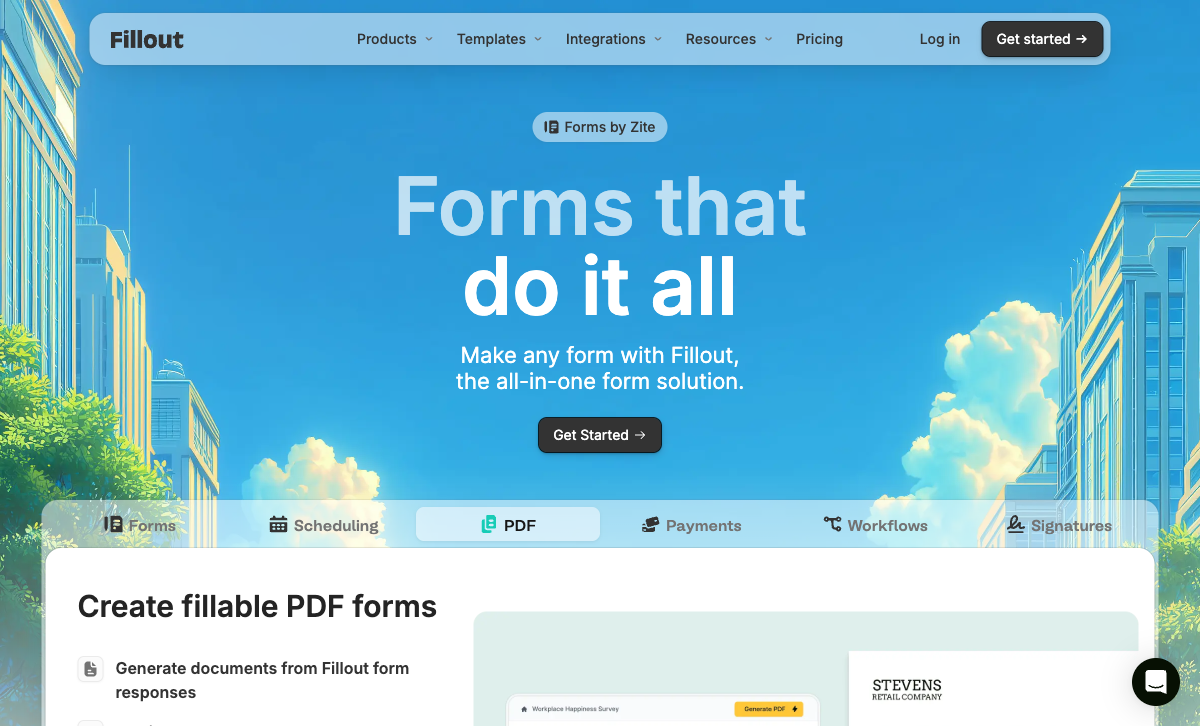
Fillout has the only Airtable integration in this group that updates existing records as well as creating them, and it is available on the free plan alongside 1,000 submissions a month and unlimited seats. That single capability changes what a form can be used for. A create-only connector gives you an inbox; an update-capable one lets a form act as an edit surface on a base, which is how renewal forms, status updates and multi-stage applications actually work.
The rest of the fit is good too. Forms are multi-page with conditional logic, calculations and answer piping on the free tier, responses can be resumed, and PDF generation means a submission can produce a document as well as a record. Fillout counts 50+ native integrations, which is modest next to the rest of this list, but Airtable is the one it has invested in most.
Two things to weigh. Response caps sit on every paid tier below $75/month: Starter at $15/month annual stops at 2,000 responses and Pro at $40 stops at 5,000, so the bill tracks how well the form performs. Payments are Stripe only, and lead-generation features such as abandonment recovery and enrichment sit in a separate $100/month Conversion Kit. Fillout was founded in 2022 and now trades inside the Zite app platform, which is a short track record for a system your intake depends on.
- Best for Airtable: Teams that need a form to modify records in an existing base, not just add to it.
- Pricing: Free (1,000 responses/month). Starter $19/month, $15 annually. Pro $49/$40. Business $89/$75 with unlimited responses.
- Key limitation: Response caps below Business, Stripe-only payments, no HIPAA, and a four-year-old vendor.
 #2 Paperform — Best When the Airtable Record Is the Start of a Process

Paperform has a native Airtable integration and 4,000+ integrations in total, and it is the only tool here where the steps after the record are in the same subscription. Papersign turns the submission into a signed contract; Stepper runs the approval chain and the handoff. An Airtable base is an excellent place to see the state of a process. It is not where the signature, the payment and the routing happen, and the usual answer to that is three more vendors with you in the middle.
The calculation engine is the other reason it beats the native form view for anything customer-facing. Formulas are Excel-style and they drive question and page visibility, conditional emails, what gets sent to each integration and what appears on the success page. Airtable can compute a rollup beautifully and then cannot show it to the person filling in the form. Paperform computes the number in front of the respondent, charges it through one of five gateways with coupons, tax and inventory applied, and passes the result into the base. The document-style editor also means the embedded form reads as part of the page rather than a widget dropped into it.
Pricing is the argument in one line: Pro is $59/month, or $49/month billed annually, with unlimited submissions and unlimited seats under fair use, and Business is $149/$124 with 10 workspaces, SSO and the Business API. Set that against Airtable's per-editor model, where every person who can build or approve adds $20 or $45 a month. Paperform has been shipping since 2016, bootstrapped and profitable, and holds SOC 2 Type II, GDPR and CCPA.
Stated plainly: Paperform is not HIPAA compliant and signs no BAAs, its $49 entry is the highest here, and Stepper automation runs are metered in credits, 20,000/month on Pro with overflow at $10 per additional 10,000.
- Best for Airtable: Operators whose base is a reporting layer over a workflow with money, contracts and approvals in it.
- Pricing: Pro $59/month, $49 annually. Business $149/$124. Enterprise on quote.
- Key limitation: No HIPAA, no record-update writeback to Airtable, and the highest entry price in this group.
 #3 Airtable Forms — Best for Zero-Setup Internal Intake
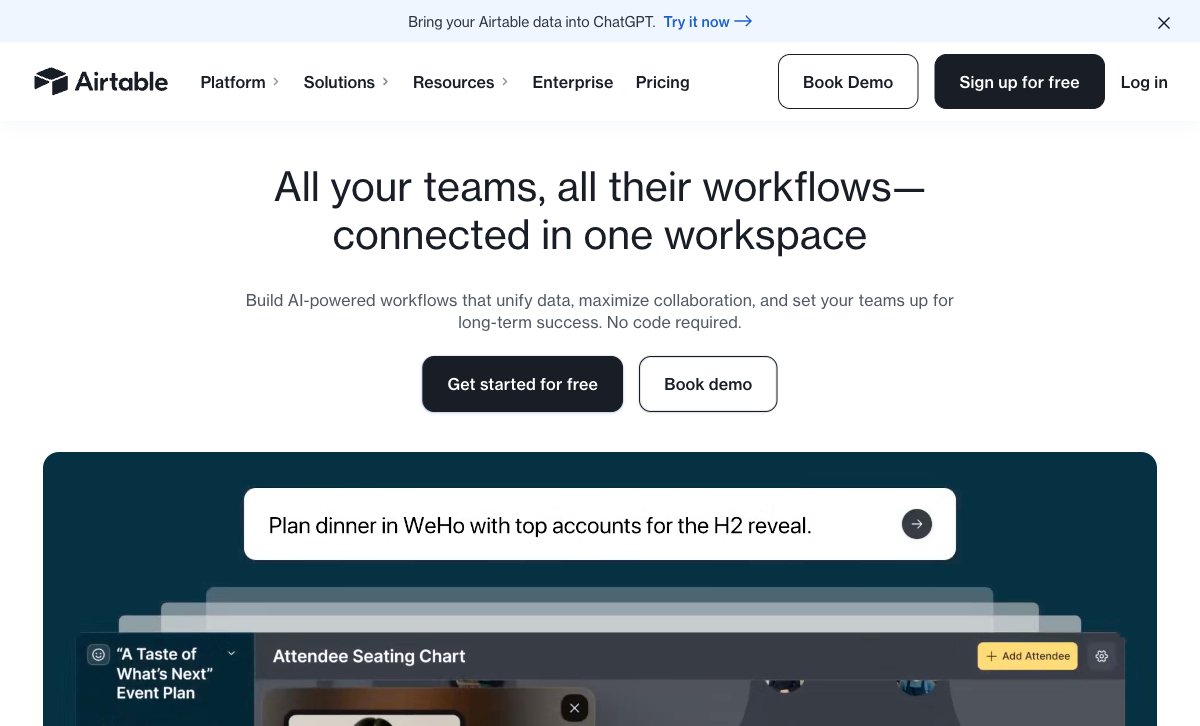
Airtable's own form view is a view type on the base, so there is no connector to configure, no field mapping to maintain and no third-party account in the path. Nothing else on this list can match that. The schema is the form, which means a renamed field or a new select option appears in the intake immediately instead of silently breaking a mapping.
It also sits on the strongest compliance posture here: SOC 2 Type 2, ISO/IEC 27001:2022, ISO/IEC 27701:2019, TX-RAMP Level 2, GDPR, CCPA, plus HIPAA, EKM and data residency on Enterprise Scale. For an internal request form inside a regulated organisation that is a meaningful head start.
The limits are structural rather than cosmetic. Forms are single-page with no page-level branching, no answer piping, no scoring and no save and resume. Conditional field visibility works on all plans but conditional groups need Business. No payments of any kind. No calculated, lookup or rollup fields shown to respondents. Customisation stops at a cover image, a logo and colours, with custom branding also gated to Business at $45 per editor per month. It ranks third rather than first because the form is the thinnest part of what Airtable sells.
- Best for Airtable: Internal request and intake forms where the base schema is the spec and nobody pays anything.
- Pricing: Free (1,000 records/base). Team $24/user/month, $20 annually. Business $54/$45. Enterprise Scale on quote.
- Key limitation: Single-page only, no payments, no respondent-visible calculations, and per-editor pricing on everything above Free.
 #4 Tally — Best Free Route Into a Base
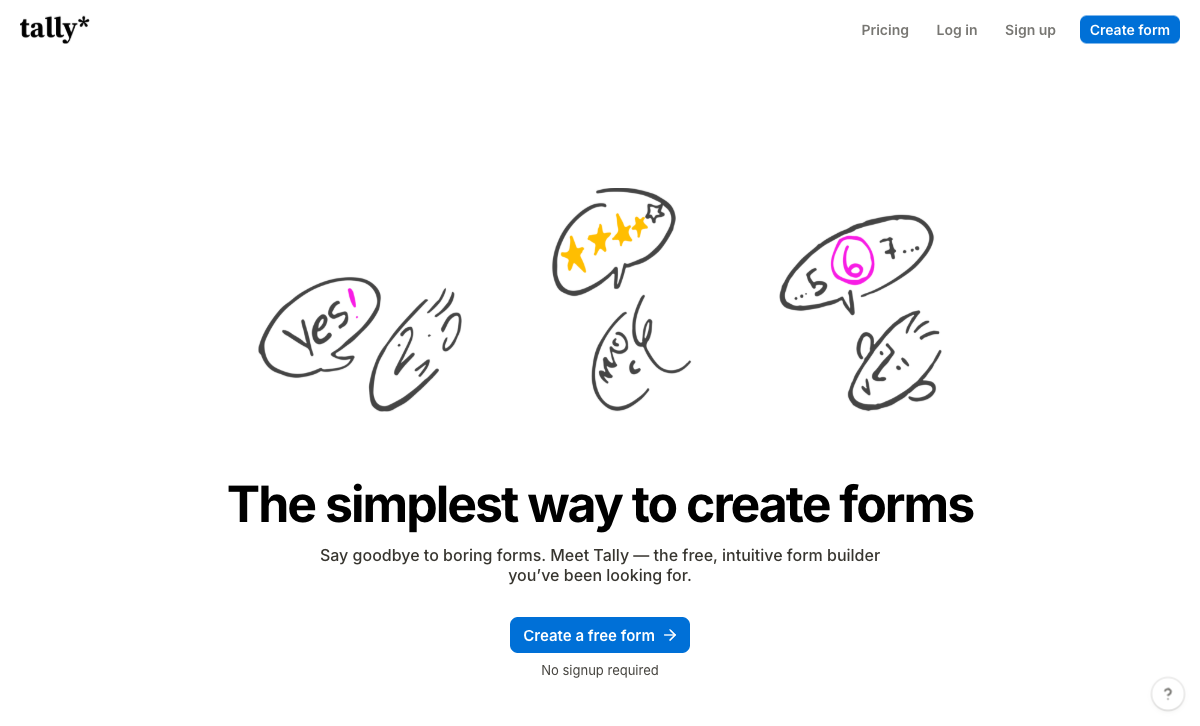
Tally connects natively to Airtable on its free plan, and that free plan carries unlimited forms and unlimited submissions under a fair use policy. For a team that wants a better-looking front end on an Airtable base and nothing more, the cost of trying it is zero and the editor takes about ten minutes to learn, since it works like typing a Notion page.
It is well matched to Airtable in temperament. Both reward people who like building their own systems, and Tally ships integration failure alerts that name Airtable explicitly, so a deleted destination or an expired token surfaces as an email rather than a gap in the base you notice three weeks later. Calculations, conditional logic, e-signatures and Stripe payments are all on the free tier.
Where it stops: the free plan is one user, payments are Stripe only with no coupons, tax or invoicing, and there is no SOC 2, no SSO and no 2FA at any tier including Business at $74/month annual. If Airtable is in your stack because procurement approved it, Tally will not clear the same review. Our Tally alternatives guide covers where teams go next.
- Best for Airtable: Solo builders and small teams who want a polished public form feeding a base for nothing.
- Pricing: Free (unlimited submissions, 1 user). Pro $29/month, $24 annually. Business $89/$74.
- Key limitation: No SOC 2, SSO or 2FA, Stripe-only payments, and a single seat until Pro.
 #5 Jotform — Best for Payments and PHI Landing in Airtable
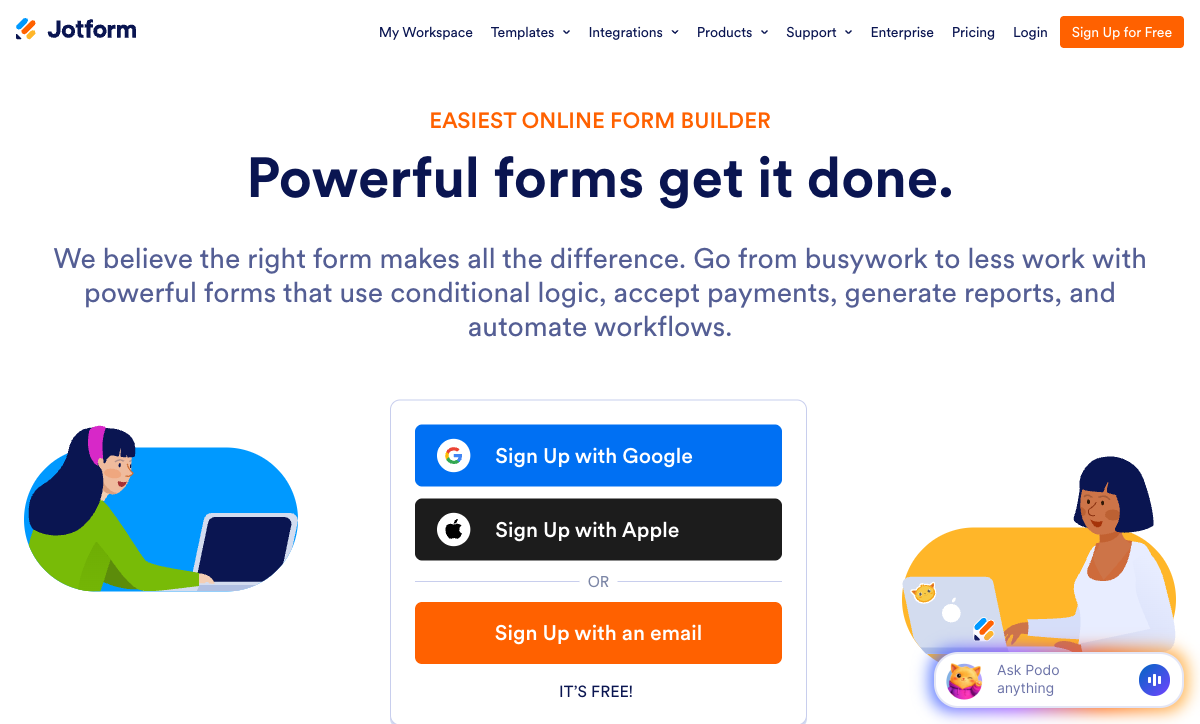
Jotform has a native Airtable integration, 40+ payment processors and HIPAA compliance with a BAA from the Gold plan at $99/month billed annually. If your Airtable intake takes money through an unusual regional gateway, or carries protected health information, it is the only tool here that covers both, and it has been bootstrapped since 2006.
The feature list is enormous and the metering underneath it is equally thorough. Submissions, forms, form views, submission storage, fields per form and signed documents are all capped on every self-serve tier, so Bronze at $34/month annual stops accepting responses at 1,000 a month and Silver at $39 stops at 2,500. More awkward for an Airtable team: Starter through Gold are single-user, and real multi-user access means an Enterprise quote. Airtable teams are collaborative by nature, and a form platform that gives you one seat sits badly alongside a base that everybody edits.
The Airtable connector itself is competent rather than deep, creating records rather than updating them, and reviewers regularly note that the breadth of Jotform's catalogue does not translate into equal polish on every individual integration.
- Best for Airtable: Payment-heavy or HIPAA-bound intake where the base is the reporting destination.
- Pricing: Free (100 submissions/month). Bronze $39/month, $34 annually. Silver $49/$39. Gold $129/$99. Enterprise on quote.
- Key limitation: Everything is metered, every self-serve plan is single-user, and the Airtable connector is create-only.
 #6 Typeform — Best Respondent Experience, Weakest Airtable Path
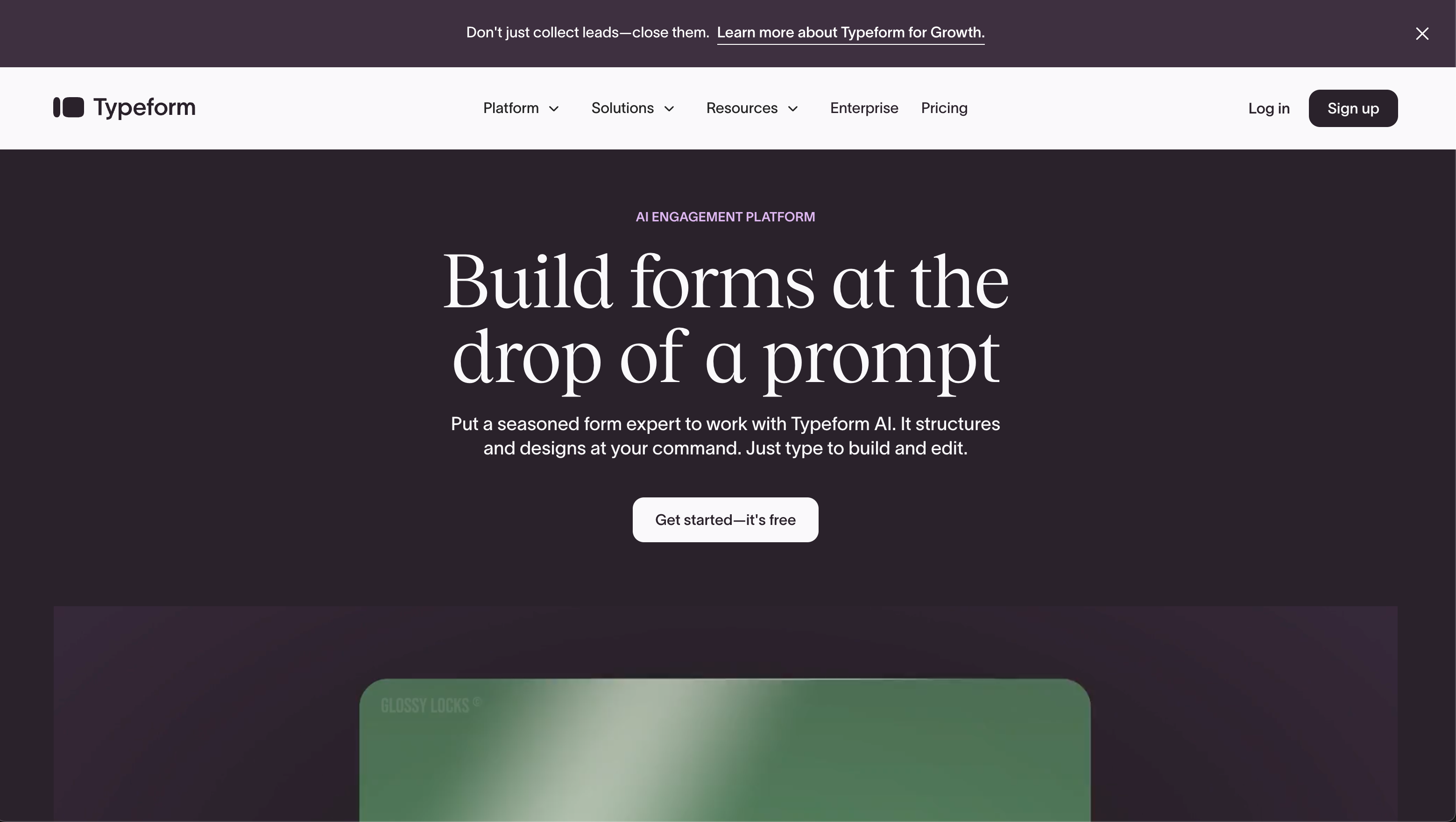
Typeform has no native Airtable integration, so every record arrives through Zapier, Make or a webhook you maintain. That is the reason it ranks last here despite being the best-looking product on the page. An automation platform in the middle adds a second subscription, a task quota and a class of failure that shows up as missing rows nobody notices until a report looks wrong.
What it does offer is real. The guided, one-question-at-a-time experience still converts better than a wall of fields for short public forms, the brand recognition helps on customer-facing surveys, and the compliance stack is the strongest of the form-native tools here: HIPAA, SOC 2 Type II, ISO 27001, 27017, 27018 and ISO/IEC 42001, certified in June 2026.
Pricing is metered on both axes at every tier. Basic is $28/month annual for 100 responses and one user, Plus is $56 for 1,000 responses and three users, Business is $91 for 10,000 and five, and Growth Flow at $266 raises neither of those numbers. Payments are Stripe only. For a lead-capture form that happens to log to Airtable it is defensible; for operational intake it is the long way around.
- Best for Airtable: Public-facing campaign and research forms where presentation outranks the integration path.
- Pricing: Free (10 responses/month). Basic $39/month, $28 annually. Plus $79/$56. Business $129/$91. Growth Flow $379/$266.
- Key limitation: No native Airtable connector, responses and seats capped on every plan, Stripe-only payments.
See Them in Action
The Five Dimensions That Decide It
Pricing model
Airtable charges per editor at $20 (Team) or $45 (Business) per user per month billed annually, and four of the five form tools here meter something else on top. Fillout caps responses below its $75/month Business tier, Jotform and Typeform cap both responses and seats on every self-serve plan, and Tally meters neither on paid plans but gives you one seat on Free. Paperform is unlimited on submissions and seats on Pro ($49/month annual) and Business ($124) under fair use. Model the bill at three times today's volume with two more editors before you compare entry prices.
Integrations and API
Native integration counts run from 50 to 4,000-plus: Paperform lists 4,000+, Tally 1,000+, Jotform 150+, Typeform 120+, Fillout 50+, and Airtable Forms needs none because it is the destination. Four of the five form tools connect to Airtable natively; Typeform is the exception and routes through Zapier or Make. All five expose a REST API and webhooks, and Airtable's own API is the most capable of the group for reading and writing records programmatically.
Conditional logic
Airtable Forms supports conditional field visibility on all plans but puts conditional groups behind Business and offers no page-level branching at all, because every form is a single page. Paperform, Fillout, Tally, Jotform and Typeform all branch across pages. The real separation is what happens to numbers: Paperform's Excel-style calculations control question and page visibility, conditional emails, integration payloads and success pages, Fillout and Tally have solid calculation fields, Typeform gates calculations behind Plus at $56/month annual, and Airtable cannot show a respondent a calculated value at all.
Payments
Airtable Forms supports zero payment processors. Jotform supports 40+, Paperform five (Stripe, PayPal, Square, Braintree and Google Pay) with subscriptions, coupons, tax and inventory in the form, and Fillout, Tally and Typeform are Stripe only. If money has to move at the point of intake, the native form view is disqualified immediately, and if the amount depends on the answers, the shortlist is Paperform, Fillout or Tally.
Compliance
Airtable is HIPAA compliant on Enterprise Scale and holds SOC 2 Type 2, ISO/IEC 27001:2022, ISO/IEC 27701:2019, TX-RAMP Level 2, GDPR and CCPA. Among the form tools, Jotform (Gold and above) and Typeform (Enterprise) are HIPAA compliant; Paperform, Fillout and Tally are not, and Paperform signs no BAAs. SOC 2 is held by Paperform, Fillout, Jotform, Typeform and Airtable, and is absent from Tally, which also has no SSO or 2FA on any tier. All six claim GDPR compliance.

Full Pricing Comparison
Every published tier across the six tools. Airtable's Team and Business rates are per user per month; the rest are per workspace.
Paperform
Fillout
| Product | Plan | Monthly Price | Annual Price (per month) | Free Plan | Free Trial | Limits |
|---|---|---|---|---|---|---|
| Fillout | Free | Free | Free | Yes | No | forms: Unlimited, submissions: 1,000/month, storage: N/A, users: Unlimited, file uploads: 20 MB per file |
| Fillout | Starter | $19/mo | $15/mo billed annually | forms: Unlimited, submissions: 2,000/month, storage: N/A, users: Unlimited, file uploads: 20 MB per file | ||
| Fillout | Pro | $49/mo | $40/mo billed annually | forms: Unlimited, submissions: 5,000/month, storage: N/A, users: Unlimited, file uploads: 20 MB per file | ||
| Fillout | Business | $89/mo | $75/mo billed annually | forms: Unlimited, submissions: Unlimited, storage: N/A, users: Unlimited, file uploads: 1 GB+ | ||
| Fillout | Team bundle | $300/mo | $250/mo billed annually | forms: Unlimited, submissions: Unlimited, storage: 1,000,000 records, users: Unlimited, file uploads: 1 GB+ | ||
| Paperform | Free | Free | Free | Yes | 7 days | forms: Unlimited, submissions: 30/month, storage: Unlimited, users: Unlimited, file uploads: 100 MB |
| Paperform | Pro | $59/mo | $49/mo billed annually | forms: Unlimited, submissions: Unlimited, storage: Unlimited, users: Unlimited, file uploads: 10 GB | ||
| Paperform | Business | $149/mo | $124/mo billed annually | forms: Unlimited, submissions: Unlimited, storage: Unlimited, users: Unlimited, file uploads: 100 GB | ||
| Airtable Forms | Free | Free | Free | Yes | 14 days | None listed |
| Airtable Forms | Team | $24/mo | $20/mo billed annually | None listed | ||
| Airtable Forms | Business | $54/mo | $45/mo billed annually | None listed | ||
| Airtable Forms | Enterprise Scale | Custom | Custom | None listed | ||
| Tally | Free | Free | Free | Yes | No | forms: Unlimited, submissions: Unlimited, storage: N/A, users: 1, file uploads: 10 MB per file |
| Tally | Pro | $29/mo | $24/mo billed annually | forms: Unlimited, submissions: Unlimited, storage: N/A, users: Unlimited, file uploads: Unlimited | ||
| Tally | Business | $89/mo | $74/mo billed annually | forms: Unlimited, submissions: Unlimited, storage: N/A, users: Unlimited | ||
| Jotform | Starter | Free | Free | Yes | No | forms: 5, submissions: 100/month, storage: 100 MB, users: 1 |
| Jotform | Bronze | $39/mo | $34/mo billed annually | forms: 25, submissions: 1,000/month, storage: 1 GB, users: 1 | ||
| Jotform | Silver | $49/mo | $39/mo billed annually | forms: 50, submissions: 2,500/month, storage: 10 GB, users: 1 | ||
| Jotform | Gold | $129/mo | $99/mo billed annually | forms: 100, submissions: 10,000/month, storage: 100 GB, users: 1 | ||
| Typeform | Free | Free | Free | Yes | No | forms: 10, submissions: 10/month, users: 1 |
| Typeform | Basic | $39/mo | $28/mo billed annually | forms: Unlimited, submissions: 100/month, users: 1 | ||
| Typeform | Plus | $79/mo | $56/mo billed annually | forms: Unlimited, submissions: 1,000/month, users: 3 | ||
| Typeform | Business | $129/mo | $91/mo billed annually | forms: Unlimited, submissions: 10,000/month, users: 5 | ||
| Typeform | Growth Flow | $379/mo | $266/mo billed annually | forms: Unlimited, submissions: 10,000/month, users: 5 | ||
| Typeform | Talent | $169/mo | $119/mo billed annually | forms: Unlimited, users: HR teams |
Full Feature Comparison
Every tracked capability across the six tools, grouped by category.
| Feature | Fillout | Paperform | Airtable Forms | Tally | Jotform | Typeform |
|---|---|---|---|---|---|---|
| Form Building | ||||||
| Document-style editor | No | Yes | No | Yes | No | No |
| AI form creation | Yes | Yes | No | Yes | Yes starter | Yes |
| AI agent in the form editor (Form Agent) | Yes | No | No | No | No | No |
| Field types | 50+ | 26+ | Yes | 20+ | 30+ (starter) | 20+ |
| Multi-page forms | Yes | Yes | No | Yes | Yes starter | Yes basic |
| Guided mode (one question at a time) | No | Yes | No | No | Yes starter | Yes |
| Conditional logic | Yes | Yes | Yes | Yes | Yes starter | Yes basic |
| Calculations field | Yes | Yes pro | No | Yes | Yes starter | Yes plus |
| AI calculations assistant | No | Yes pro | No | No | No | No |
| Scoring | Yes | Yes pro | No | Yes | Yes starter | Yes plus |
| Answer piping | Yes | Yes | No | Yes | Yes starter | Yes basic |
| Pre-filling and hidden fields | Yes | Yes pro | Yes | Yes | Yes starter | Yes basic |
| Save and resume | Yes | Yes | No | No | Yes starter | No |
| Auto-close by number | Yes | Yes pro | No | Yes | Yes starter | Yes basic |
| Auto-close by date | Yes | Yes pro | No | Yes | Yes starter | Yes basic |
| Appointment/booking field | Yes starter | Yes | No | No | Yes starter | Yes basic |
| Signature field | Yes starter | Yes | No | Yes | Yes starter | Yes basic |
| Color picker field | No | Yes | No | No | No | No |
| API-powered dropdowns | No | Yes business | No | No | No | No |
| Google address search | Yes conversion-kit | Yes business | No | No | No | No |
| File uploads | Yes | Yes | No | Yes | Yes starter | Yes basic |
| Formula editor | No | No | No | Yes | No | No |
| Import from other form builders | No | No | No | Yes | No | No |
| PDF generation | No | No | No | Yes | No | No |
| Drag-and-drop builder | No | No | No | No | Yes starter | No |
| Form widgets | No | No | No | No | Yes starter | No |
| Template gallery | No | No | No | No | 20,000+ (starter) | No |
| Question display logic | No | No | No | No | No | Yes basic |
| AI follow-up questions | No | No | No | No | No | Yes business |
| AI extended thinking & memory | No | No | No | No | No | Yes growth |
| Typeform AI connectors | No | No | No | No | No | Yes growth |
| Workflow / automation builder | No | No | No | No | No | Yes growth |
| AI-moderated research (Research Flow) | No | No | No | No | No | Yes enterprise |
| Video questions | No | No | No | No | No | Yes basic |
| Payments | ||||||
| Stripe payments | Yes | Yes | No | Yes | Yes starter | Yes basic |
| PayPal payments | No | Yes | No | No | Yes starter | No |
| Square payments | No | Yes | No | No | Yes starter | No |
| Braintree payments | No | Yes | No | No | Yes starter | No |
| Google Pay | No | Yes | No | No | Yes starter | No |
| Product sales (eCommerce) | Yes | Yes pro | No | Yes | Yes starter | No |
| Subscriptions | Yes | Yes pro | No | Yes | Yes starter | Yes basic |
| Coupons and discounts | Yes | Yes pro | No | No | Yes starter | No |
| Custom pricing rules | Yes | Yes pro | No | Yes | Yes starter | No |
| Tax calculations | No | Yes | No | No | Yes starter | No |
| Quotes/invoices | No | Yes | No | No | No | No |
| Refunds | No | Yes | No | No | No | No |
| 3D Secure | No | Yes | No | No | No | Yes basic |
| 40+ payment gateways | No | No | No | No | Yes starter | No |
| No transaction fees | No | No | No | No | Yes starter | No |
| Design & Customization | ||||||
| Template gallery | Yes | 30,000+ | No | Yes | 20,000+ (starter) | 1,500+ |
| Rich media (images, GIFs, videos) | Yes | Yes | Yes | Yes | Yes starter | Yes |
| Unsplash and Giphy integration | No | Yes | No | No | No | Yes |
| Image editor | No | Yes | No | No | No | No |
| Adobe Creative Cloud | No | Yes | No | No | No | No |
| Language translation | No | Yes | No | Yes | Yes starter | Yes basic |
| Advanced theming | Yes starter | Yes pro | Yes business | Yes pro | Yes starter | Yes plus |
| Custom form URL | Yes pro | Yes pro | No | Yes | No | Yes plus |
| Custom domains | Yes business | Yes pro | No | Yes pro | Yes enterprise | Yes enterprise |
| Custom HTML & CSS | Yes pro | Yes pro | No | Yes pro | Yes starter | Yes business |
| Remove branding | Yes pro | Yes pro | Yes business | Yes pro | Yes bronze | Yes plus |
| Custom email domains | Yes pro | Yes business | No | Yes pro | No | No |
| Adobe CC | No | No | No | No | No | No |
| Redirect after submit | No | No | Yes team | No | No | No |
| Form themes | No | No | No | No | Yes starter | No |
| Analytics | ||||||
| Submission results and reports | Yes | Yes | Yes | Yes | Yes starter | Yes |
| AI report insights | No | Yes pro | No | No | No | Yes business |
| Paperform analytics | Yes business | Yes pro | No | Yes pro | No | No |
| Google Analytics & Facebook Pixel | Yes | Yes pro | No | Yes pro | No | Yes basic |
| Custom analytics scripts | Yes business | Yes pro | No | No | No | Yes basic |
| Partial submissions | Yes business | Yes pro | No | Yes pro | No | Yes plus |
| Drop-off analysis | No | Yes pro | No | No | No | Yes business |
| Form analytics | No | No | No | No | Yes starter | No |
| Field data validation | No | No | Yes team | No | No | No |
| Answer Insights | No | No | No | Yes | No | No |
| Google Analytics integration | No | No | No | No | Yes starter | No |
| Cross-form Insights dashboard | No | No | No | No | No | Yes business |
| Collaboration | ||||||
| Multi-user accounts | Yes | Yes pro | Yes | Yes pro | Yes bronze | Yes plus |
| User permissions and management | Yes | Yes pro | Yes team | Yes pro | Yes enterprise | Yes plus |
| Advanced permissions & admin | Yes team | Yes enterprise | Yes enterprise | No | Yes enterprise | Yes enterprise |
| Form sharing (templates) | Yes | Yes | Yes | Yes | No | Yes |
| Spaces and tag management | Yes | Yes | No | Yes pro | No | No |
| Workspace organization | No | No | Yes | No | No | Yes |
| Form sharing | No | No | No | No | Yes starter | No |
| Assign forms | No | No | No | No | Yes enterprise | No |
| Security | ||||||
| SOC 2 Type II | Yes | Yes | Yes | No | Yes enterprise | Yes |
| HIPAA compliance / BAA | No | No | No | No | No | No |
| ISO 27001 | No | No | No | No | No | Yes |
| Audit logs | Yes enterprise | No | No | No | No | No |
| GDPR compliant | Yes | Yes | Yes | Yes | Yes starter | Yes |
| SSL encryption | Yes | Yes | Yes | Yes | Yes starter | Yes |
| Two-factor authentication | Yes | Yes | Yes | No | Yes starter | Yes |
| Enforce 2FA for all users | Yes team | Yes business | No | No | No | No |
| SSO (SAML) | Yes enterprise | Yes business | Yes business | No | Yes enterprise | Yes enterprise |
| reCAPTCHA | Yes starter | Yes | No | Yes | Yes starter | Yes business |
| Local data residency | Yes enterprise | Yes enterprise | No | Yes | No | No |
| Custom S3 storage (BYO) | Yes | Yes business | No | No | No | No |
| Enforce 2FA | No | No | Yes enterprise | No | No | No |
| Data residency | No | No | Yes enterprise | No | Yes enterprise | No |
| Custom S3 | No | No | No | No | No | No |
| HIPAA compliant | No | No | No | No | Yes gold | Yes enterprise |
| 256-bit SSL | No | No | No | No | Yes starter | No |
| Form encryption | No | No | No | No | Yes starter | No |
| PCI DSS | No | No | No | No | Yes starter | Yes |
| Integrations & API | ||||||
| Native integrations | 50+ | 4,000+ | No | 17+ | 150+ (starter) | 120+ (basic) |
| Zapier | Yes | Yes | Yes | Yes | Yes starter | Yes basic |
| Make (Integromat) | Yes | Yes | Yes | Yes | Yes starter | Yes basic |
| Webhooks | Yes | Yes pro | Yes team | Yes | Yes starter | Yes basic |
| Standard API | Yes | Yes pro | No | Yes | No | No |
| Business API | No | Yes business | No | No | No | No |
| WordPress plugin | Yes | Yes | No | Yes | Yes starter | Yes |
| oEmbed support | Yes | Yes | No | Yes | No | No |
| API | No | No | Yes | No | Yes starter | Yes basic |
| Embed options | No | No | Yes | No | Yes starter | Yes |
| AI assistant connectors (MCP / ChatGPT / Claude) | No | No | No | Yes | No | No |
| Integration failure alerts | No | No | No | Yes | No | No |
| Smartsheet integration | No | No | No | No | Yes starter | No |
| Canvas LMS integration | No | No | No | No | Yes enterprise | No |
| Salesforce AppExchange | No | No | No | No | Yes starter | No |
| Mobile apps | No | No | No | No | Yes starter | No |
| Claude / MCP server | No | No | No | No | No | Yes basic |
| AI data enrichment | No | No | No | No | No | Yes growth |
| Automations integrations (Contacts & Automations) | No | No | No | No | No | Yes growth |
Review Ratings Across Platforms
Aggregated ratings from G2, Capterra, GetApp, Trustpilot and TrustRadius, weighted by review count so small samples do not distort the picture.
How We Evaluated These Tools for Airtable
Five weighted criteria, applied the same way to all six tools:
- Airtable integration depth (30%): Native connector or Zapier hop, create-only or update-capable, field mapping maintenance, how files, calculated values and payment data survive the write, and whether integration failures are reported.
- Form capability the base lacks (25%): Multi-page branching, respondent-visible calculations, answer piping, scoring, save and resume, and signature capture. These are the specific gaps in Airtable's form view, so closing them is the reason to add a tool at all.
- Pricing model (20%): What the vendor charges more for as you grow, on top of Airtable's per-editor bill. Response caps, seat caps and per-editor gating of basic features scored down.
- Embedding and presentation (15%): How the form behaves inside an Airtable interface, a Softr or Glide portal, or a marketing page, including custom CSS, custom domains and branding removal, and what those cost.
- Compliance and vendor stability (10%): HIPAA, SOC 2, ISO 27001, SSO and 2FA, taken from published trust documentation, plus company age, funding model and ownership changes.
Each tool was tested against four Airtable jobs: a single-page internal request, a multi-page public application with branching, a paid order form with calculated pricing, and an intake that has to produce a signed document. Pricing was read live from each vendor's pricing page on 22 September 2026.
If your shortlist is down to two, Paperform vs Typeform works through the metering question in detail, and our Airtable Forms alternatives guide goes further into what the native form view cannot do.
Frequently Asked Questions
Do I have to pay for Airtable seats for everyone who fills in a form?
No. Airtable charges only for users with edit permissions on at least one base, so respondents and read-only collaborators are free. That is the single most misunderstood line in Airtable's pricing and it works in your favour.
The charge lands on the other side. Editors are $20 per user per month on Team billed annually and $45 on Business, and the builders, reviewers and approvers in your process are all editors. Six Business editors is $3,240 a year before you have added a form builder on top. Paperform's Pro plan is $49/month billed annually with unlimited team members, so the people who touch the form do not change the invoice.
Can Airtable's native form view take a payment?
No. Airtable Forms supports no payment gateway at all: no Stripe, no PayPal, nothing. If your intake form has to collect money, the native form view is out before you compare anything else.
Among the tools that write into Airtable, Jotform has the widest coverage at 40+ processors, Paperform has five (Stripe, PayPal, Square, Braintree and Google Pay) with products, subscriptions, coupons, tax rules and inventory handled in the form, and Fillout, Tally and Typeform are Stripe only. If the amount is calculated rather than fixed, the calculation engine matters more than the gateway list, and that narrows the field to Paperform, Fillout and Tally.
Which form builder writes back to existing Airtable records rather than only creating new ones?
Fillout. Its Airtable integration can update existing records as well as create them, which is why it sits at the top of this ranking; update-in-place is what turns a form into an edit interface for a base you already run.
Paperform, Tally and Jotform all have native Airtable integrations that create records reliably and can pass through calculated values, files and payment data. Typeform has no native Airtable connector at all and needs Zapier or Make in the middle, which is one more account, one more failure point and one more bill.
Is Airtable Forms enough on its own for internal intake?
For a single-page internal request that lands in a base, yes, and we would not talk anyone out of it. It is included on every Airtable plan including Free, it inherits the base schema so the fields can never drift, and conditional field visibility now works on all plans.
The ceiling arrives quickly. Forms are single-page with no page-level branching, no answer piping, no scoring and no save and resume. Calculated, lookup and rollup fields exist in the base but cannot be shown to a respondent, so the person filling in the form never sees the number their answers produce. Conditional groups need Business at $45 per editor per month.
What is the cheapest way to get a good form in front of an Airtable base?
Fillout's free plan, at 1,000 submissions a month with unlimited seats, conditional logic, calculations and the Airtable connector included. Tally's free plan is unlimited on submissions under a fair use policy and also connects natively to Airtable, though it gives you one user until you reach Pro at $24/month annual.
Paperform is the most expensive door of the group at $49/month billed annually and has no cheaper paid rung beneath it. That price buys unlimited submissions, unlimited seats and the eSignature and workflow products in the same subscription, which is worth it for a revenue process and is not worth it for a survey. Use the cheap tool for the cheap job.
Which of these tools can be used for protected health information going into Airtable?
Airtable itself is HIPAA compliant on Enterprise Scale, and holds SOC 2 Type 2, ISO/IEC 27001:2022, ISO/IEC 27701:2019, TX-RAMP Level 2, GDPR and CCPA. On the form side, Jotform is HIPAA compliant from the Gold plan ($99/month annual) and Typeform on Enterprise.
Paperform, Fillout and Tally are not HIPAA compliant. Paperform signs no Business Associate Agreements, so for PHI intake into an Airtable base the honest answer is Jotform on Gold or above with an Airtable Enterprise Scale contract behind it. Paperform holds SOC 2 Type II, GDPR and CCPA, which clears most non-PHI procurement reviews, and Tally has neither SOC 2 nor SSO at any tier.
When does it make sense to move the process out of Airtable entirely?
When the base has stopped being the destination and become one stop on a chain. The tell is usually a signature: an application that has to be approved, countersigned and filed, or an order that needs a contract behind it. At that point the Airtable stack grows an eSignature vendor, an automation vendor and a reconciliation problem, and you are the one keeping the three in sync.
Paperform covers forms, Papersign eSignatures and Stepper workflow automation in one subscription, and still writes to Airtable natively when the base is where reporting lives. Keep Airtable for what it is genuinely good at, which is the structured view of the data, and stop paying three vendors for the steps around it.
Sources & References
- Exploring Airtable Forms and Alternatives: Pros & Cons — Feathery, 2026
- 7 Best Airtable Forms Alternatives in 2026: Tested and Compared — Zite, March 2026
- Airtable Forms (2026): Collect Data Straight Into Your Database — The Professional's Toolkit, August 2026
- Airtable Forms Review 2026: features, limits, and when to use them — Free Survey Makers, April 2026
Updates
We re-audit the form builders we compare on a regular cadence and log every change here — a public record of what changed and when.
- Updated September 22, 2026 — First publication. Six tools ranked on Airtable fit against a live pricing re-audit: Airtable at $20/$45 per editor per month, Fillout's response caps below Business, Paperform's September 2026 platform pricing (Pro $49 annual, unlimited submissions and seats), and Airtable's newly added conditional fields on all plans.
Last updated September 22, 2026
Ready to try Paperform?
Create beautiful forms, payment pages, and workflows — no code required.